Study of a “nudge” to use hand sanitizer retracted

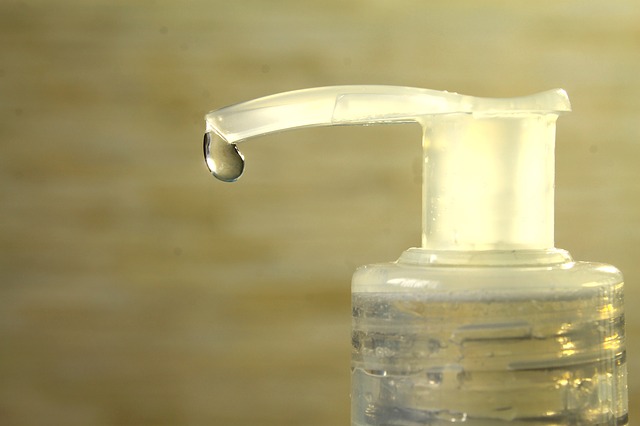
Image by Adriano Gadini from Pixabay

A group of researchers in the United States and China have retracted their 2018 paper on hand hygiene, admitting that they can’t account for “data anomalies” in their work.

The article in question, “The decoy effect as a nudge: Boosting hand hygiene with a worse option,” appeared in Psychological Science last May. Meng Li, of the Department of Health and Behavioral Sciences at the University of Colorado Denver, and Hui Chen, of the Chinese Academy of Sciences, reported results from experiments designed to increase the use of hand sanitizer in the workplace through the use of a “decoy” bottle:

Continue reading Study of a “nudge” to use hand sanitizer retracted

Chaos as Chaos retracts paper it apparently never should have published in the first place

Apologies in advance for the headache that might come your way after reading this post, but the journal Chaos has a mindbending retraction.

The editors have pulled an article they published in January 2019 over concerns about contaminated peer review and other problems. The paper, “Neglecting nonlocality leads to unrealistic numerical scheme for fractional differential equation: Fake and manipulated results,” was a broadside against an article that had appeared in a different journal.

According to the author, Muhammad Altaf Khan, of the City University of Science and Information Technology in Peshawar, Pakistan:

Continue reading Chaos as Chaos retracts paper it apparently never should have published in the first place

CrossFit demands retraction of paper claiming their participants are more likely to be injured

via U.S. Army

Saying that a paper has “fatal and disqualifying errors,” CrossFit is demanding the retraction of a recently published article that claimed those participating in CrossFit “are more likely to be injured and to seek medical treatment compared with participants in traditional weightlifting.”

The paper, “Likelihood of Injury and Medical Care Between CrossFit and Traditional Weightlifting Participants,” was published on May 7 in the Orthopaedic Journal of Sports Medicine.

In a May 17 letter to the journal’s editor and the paper’s corresponding author, CrossFit general counsel Marshall Brenner said the article

Continue reading CrossFit demands retraction of paper claiming their participants are more likely to be injured

Too much skin in the game: Derm journal calls out author for duplication

We often praise authors for doing the right thing by retracting with transparency. Here’s a journal that deserves recognition for its handling of a case of duplicate publication.

Acta Dermatovenerologica Alpina, Pannonica et Adriatica (ADAPA), a European derm publication, has retracted a 2018 article in smack-down fashion, calling out a co-author for deceit. The paper was a case study titled “Inflamed bilateral linear atrophoderma of Moulin in an adult woman: a case report.” According to ADAPA, a reader noticed that a virtually identical article — with the same title — had appeared in a Turkish dermatology publication in late 2017.

In an lengthy editorial, Jovan Miljković, the editor-in-chief of the journal, explained what happened after a review of the two papers found them to be “virtually identical”: Continue reading Too much skin in the game: Derm journal calls out author for duplication

University of Texas lacks authority to revoke PhDs, judge rules

The University of Texas (UT) at Austin does not have the authority to revoke degrees, a Texas judge ruled yesterday in a case involving a chemist whom the university alleges committed misconduct.

UT revoked Suvi Orr’s PhD in 2014, two years after the retraction of a paper that made up part of her thesis because, according to the retraction notice, some of the study was not reproducible. The university told Orr  — who earned her PhD in 2008 and is now a researcher at Pfizer — that “scientific misconduct occurred in the production of your dissertation,” according to a letter to Orr from Judith Langlois, senior vice provost and dean of graduate studies.

Orr sued UT, which reversed its decision but then tried to again revoke her degree, at which point she sued again, this time also requesting the university cover her legal expenses. Orr alleges in the suit that she was being used as a “sacrificial lamb” to protect her former advisor, who she said made the errors in the paper. Continue reading University of Texas lacks authority to revoke PhDs, judge rules

Chem journal yanks paper because authors had stolen it as peer reviewers

The UK’s Royal Society of Chemistry has retracted a 2017 paper in one of its journals after learning that the authors stole the article from other researchers during peer review.

The offending article, “Typical and interstratified arrangements in Zn/Al layered double hydroxides: an experimental and theoretical approach,” appeared in CrystalEngComm, and was written by Priyadarshi Roy Chowdhury and Krishna G. Bhattacharyya, of Gauhati University in Jalukbari.

Well, that’s not really true, is it? The retraction notice lays out the transgression in detail: Continue reading Chem journal yanks paper because authors had stolen it as peer reviewers

Carlo Croce loses a round in legal bid to be reinstated as dep’t chair

Carlo Croce

Carlo Croce, a professor at The Ohio State University in Columbus who has faced multiple investigations into misconduct allegations, has been denied a temporary restraining order that he sought in order to be reinstated as chair of his department.

Croce was forced to step down from the post last year. Magistrate Jennifer D. Hunt, of the Franklin County civil court, wrote in a January 23 decision that

third parties and the public interest will be harmed if a temporary restraining order is granted and Dr. Croce is reinstated as Chair.

Croce, OSU said Continue reading Carlo Croce loses a round in legal bid to be reinstated as dep’t chair

Food packaging journal to retract paper by researchers in Thailand

A food packaging journal plans to retract a 2018 article by Thai researchers who tried to repackage (ahem) a virtually identical article of theirs, Retraction Watch has learned.

That’s not particularly unusual; duplication, sometimes inaccurately called “self-plagiarism,” happens, as they say. What makes the case more interesting is the back-and-forth between the journal and the authors.   

Early last December, the editor of the Food Packaging & Shelf Life, Ali Abas Wani, sent a letter to Chiravoot Pechyen, of Thammasat University, the senior author on a paper FPSL had recently published online (but not yet in print): Continue reading Food packaging journal to retract paper by researchers in Thailand

“This is something that we have never seen before in any study:” Group loses two more papers

Alexandria University, via Wikimedia

A group of rheumatology researchers in Egypt that lost a paper in 2016 for a variety of problems has lost two more.

The authors common to the two papers, Anna Abou-Raya and Suzan Abou-Raya, are based at the University of Alexandria, which did not find evidence of scientific misconduct, according to one of the retraction notices. The journal that published the two papers, The Journal of Rheumatology, however, found several other issues that led them to retract the papers.

Among them was that for one of the studies to have proceeded as described, all 125 subjects would have had to been enrolled and randomized on a single day: Continue reading “This is something that we have never seen before in any study:” Group loses two more papers

OSU cancer researcher who has faced misconduct allegations sues to regain lost department chairmanship

Carlo Croce

Carlo Croce, the embattled cancer researcher at The Ohio State University (OSU), is suing the institution to reclaim the department chair he lost late last year for reasons that he says are unclear.

In a filing with the Franklin County civil court, Croce and his attorneys, from the Columbus firm of James E. Arnold and Associates, argue that the university failed to follow its own rules for demoting faculty members last year when it stripped Croce of his position of chair of the Department of Cancer Genetics and Biology. Croce had held the post for more than three consecutive four-year terms, starting in October 2004.

The nut of Croce’s claim centers on the alleged failure of K. Craig Kent, the university’s Dean of the College of Medicine, to consult with the college’s faculty members before demoting him in early November 2018 — a move Croce opposed. Continue reading OSU cancer researcher who has faced misconduct allegations sues to regain lost department chairmanship