WHO formally retracts opioid guidelines that came under fire

via Flickr

The World Health Organization has officially retracted its controversial guidelines on the use of opioid analgesics. 

The agency’s move applies to two statements, issued in 2011 and 2012. Last June, WHO announced that it was “discontinuing” the guidelines in the wake of a critical report which said the documents were heavily tainted by commercial bias. According to a BMJ story published at the time

Continue reading WHO formally retracts opioid guidelines that came under fire

Prominent cancer researcher loses nine papers, making 10

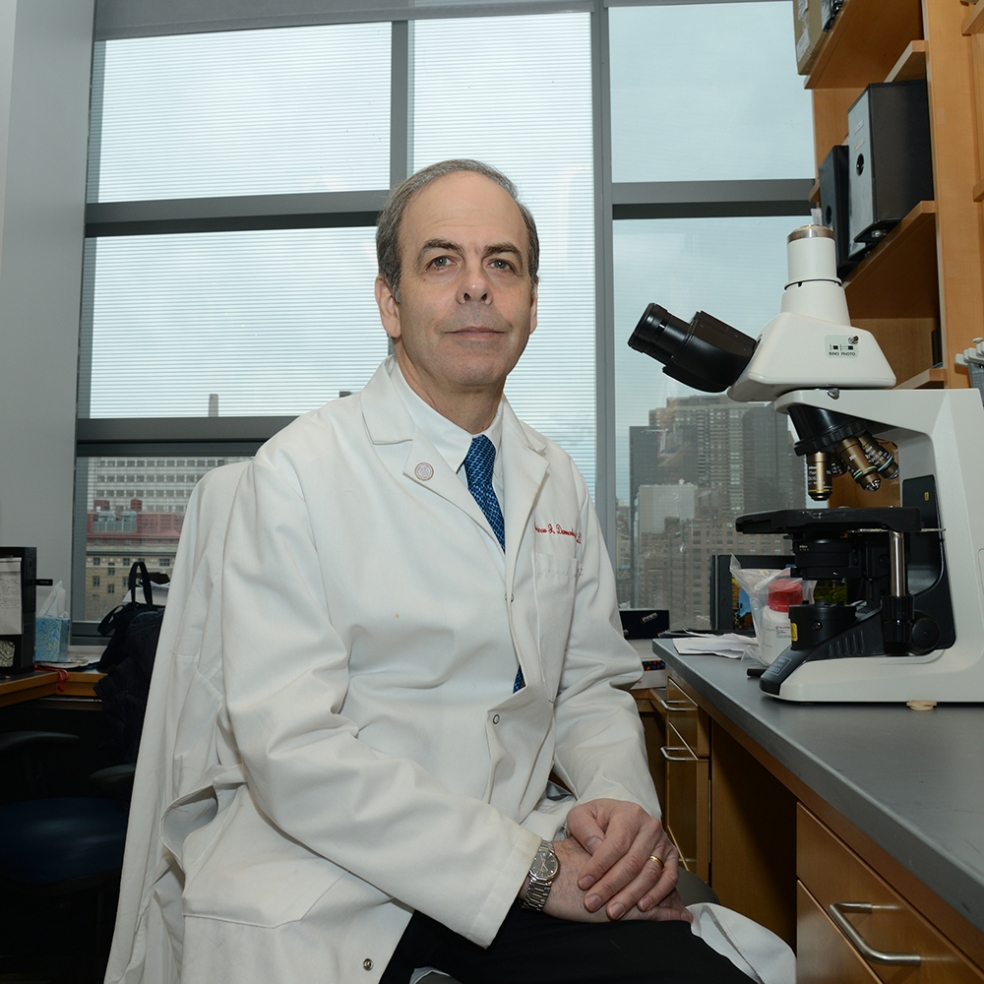
Andrew Dannenberg (credit Patricia Kuharic)

The Journal of Biological Chemistry (JBC) has retracted nine papers in bulk by a group of cancer researchers in New York led by the prominent scientist Andrew Dannenberg

The work of Dannenberg’s group at Weill Cornell — and the figures in particular — has been the subject of scrutiny on PubPeer for more than two years. 

The group also lost an article more than a decade ago in The Lancet, bringing their total so far to 10. Cancer Discovery subjected a paper to an expression of concern in August. Much of the tainted work was funded by grants from the U.S. government, as well as from funding authorities in other countries.  

According to the notice for 2014’s “p53 protein regulates Hsp90 ATPase activity and thereby Wnt signaling by modulating Aha1 expression“:

Continue reading Prominent cancer researcher loses nine papers, making 10

Nobel winner retracts paper from Science

Frances Arnold

A Caltech researcher who shared the 2018 Nobel Prize in Chemistry has retracted a 2019 paper after being unable to replicate the results.

Frances Arnold, who won half of the 2018 prize for her work on the evolution of enzymes, tweeted the news earlier today:

Continue reading Nobel winner retracts paper from Science

How a plagiarized eye image in the NEJM was discovered

via Wikimedia

The Images in Clinical Medicine section of the New England Journal of Medicine (NEJM) is prime real estate for physicians and others wanting to share a compelling picture with their colleagues. But earlier this month, an eye specialist in Michigan saw double when he looked at the Dec. 5, 2019, installment of the feature. 

Depicted was a picture from a pair of eye specialists in India who claimed to have seen a case of a person who’d suffered retinal bleeding after having been struck in the eye by a tennis ball:

Continue reading How a plagiarized eye image in the NEJM was discovered

Neuroscience group retracts Science paper

A group of neuroscientists in Switzerland have retracted a 2019 paper in Science whose first author they say falsified data in the study.

The article, “Insular cortex processes aversive somatosensory information and is crucial for threat learning,” came from the lab of Ralf Schneggenburger, of the Ecole Polytechniqe Federale De Lausanne (EPFL). The first author was Emmanuelle Berret, then a post-doc in the lab. 

EPFL issued a press release about the study when it appeared. According to the release, the research showed that the insular cortex — a region “deep within the lateral sulcus” — is in charge of processing how mice and humans (pace, James Heathers) apparently learn from painful stimuli:

Continue reading Neuroscience group retracts Science paper

‘The policy of Creativity Research Journal is to consider only original material.’ Prominent Cornell professor has another paper retracted for duplication.

via NeedPix

Robert Sternberg, a Cornell psychology professor whose work has earned three retractions for duplication, has had another paper retracted for the same reason.

Here’s the notice:

Continue reading ‘The policy of Creativity Research Journal is to consider only original material.’ Prominent Cornell professor has another paper retracted for duplication.

‘A long and lonely process:’ Whistleblowers in a misconduct case speak out

Last week, we reported on a case at the University of Leiden in which the institution found that a former psychology researcher there had committed research misconduct. In the anonymized report — which we were able to confirm regarded Lorenza Colzato, who is listed as a faculty member at Ruhr University in Bochum and at TU Dresden — the university found a lack of ethics approval for some studies and fabricating results in some grant applications. We asked the three whistleblowers in the case — Bryant Jongkees, Roberta Sellaro, and Laura Steenbergen — to reflect on their experiences. (We should note that they did not confirm it was Colzato named in the report.)

Retraction Watch (RW): What prompted you to come forward?

Continue reading ‘A long and lonely process:’ Whistleblowers in a misconduct case speak out

Authors retract two studies on high blood pressure and supplements after realizing they’d made a common error

A group of researchers from Iran, Italy and the UK have retracted two meta-analyses on supplements and high blood pressure after making what a statistics expert calls a common error.

Both papers were originally published in the Journal of Human Hypertension. Here’s the retraction notice for “Elevated blood pressure reduction after α-lipoic acid supplementation: a meta-analysis of randomized controlled trials:”

Continue reading Authors retract two studies on high blood pressure and supplements after realizing they’d made a common error

Journal retracts two papers linking exposure to violence to aggressive behavior

Image by OpenClipart-Vectors from Pixabay

A journal on adolescent issues has retracted a pair of papers linking exposure to violent media to aggressive behavior in youth after critics questioned the validity of the data. 

The studies, which appeared in Youth & Society, were led by Qian Zhang, of Southwest University in Chongqing, China and were published in 2018. 

According to the retraction notice, which covers both “Short-term exposure to movie violence and implicit aggression during adolescence,” and “The priming effect of violent game play on aggression among adolescents”:

Continue reading Journal retracts two papers linking exposure to violence to aggressive behavior

Psychology researcher committed misconduct, says university

Lorenza Colzato

A Dutch university has found a former psychology researcher at the institution guilty of misconduct for several offenses, including lack of ethics approval for some of her studies and fabricating results in grant applications. 

In a Nov. 11, 2019, report, officials at the University of Leiden stated that the researcher, whom it does not identify, violated academic integrity in the following ways: 

Continue reading Psychology researcher committed misconduct, says university