More than a dozen book reviews by a history PhD student are under scrutiny for plagiarism concerns.
The reviews are published in the Al-Masāq Journal of the Medieval Mediterranean, a Society for the Medieval Mediterranean journal published by Taylor & Francis. The majority of the papers appear to be stolen whole works from other authors published in different historical journals.
The society posted a retraction notice today saying that the reviews had been removed, but at the time of this writing, all 14 are still available on publisher Taylor & Francis’s site, without any editor’s notes or other flags.
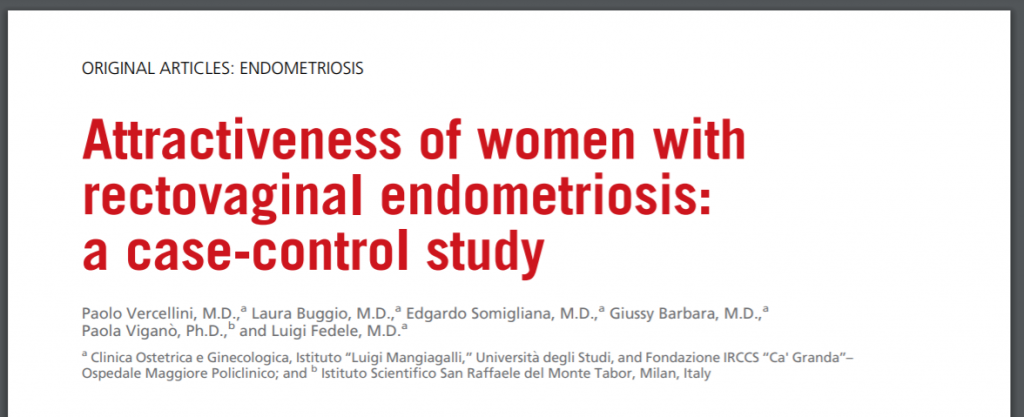
Despite media reports announcing the retraction of a much-criticized study of whether women with endometriosis were more attractive than other women, the study has yet to be retracted by the journal.
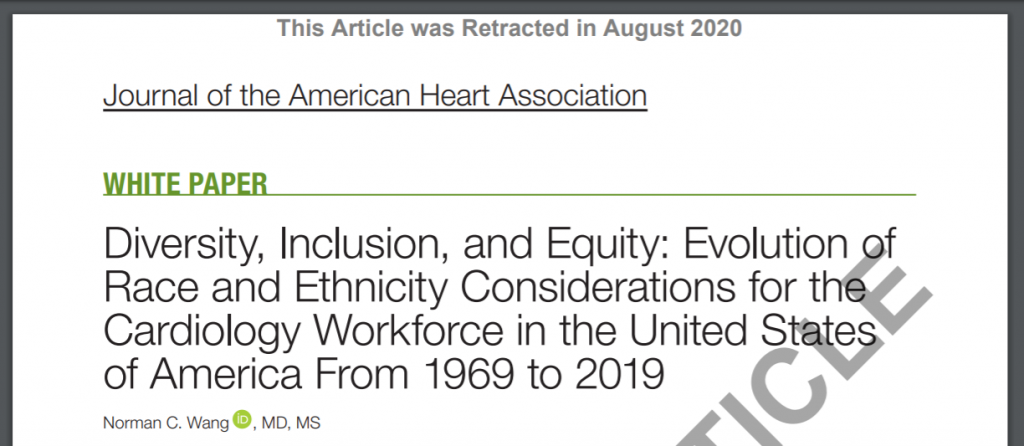
Overweight people are more dishonest, women with endometriosis are more attractive, and affirmative action needs to stop: Papers with these three conclusions have come under intense scrutiny on social media in recent days, with at least one retracted.
First up, a study — widely criticized for being sexist — which claimed to find that
Women with rectovaginal endometriosis were judged to be more attractive than those in the two control groups. Moreover, they had a leaner silhouette, larger breasts, and an earlier coitarche.
After whistleblowers in China prompted the retraction of a 2018 paper that overstated the number of patients treated in a study, another journal says it’s investigating a second article by the same group.
Last month, as we reported, the Journal of Surgical Oncology retracted “Long‐term outcomes of 530 esophageal squamous cell carcinoma patients with minimally invasive Ivor Lewis esophagectomy.” The move was prompted by whistleblowers who notified the journal that the 530 cases could not have been performed at the authors’ institution, Zhejiang University, in Hangzhou.
After our post, a Twitter user pointed us to a second article by the group, in BMC Cancer, which claimed to report data on 697 subjects over just one additional year — a highly improbable figure.
As Retraction Watch readers may recall, we’ve been highlighting — and championing — the work of anonymous whistleblowers throughout the 10-year history of the blog. Our support for such anonymity, however, is not universally shared.
In 2011, for example, in our column at Lab Times (unfortunately no longer online), we wrote:
Xavier Argemi first heard the claim that tea made from artemisia herbs could be useful in the treatment of malaria from a TV documentary in 2017.
The documentary, featuring Lucile Cornet-Vernet, the director of the La Maison de l’Artemisia, a non-profit organization that grows artemisia and promotes its use in centers across Africa, focused on the Democratic Republic of the Congo (DRC). The film claimed that for decades major pharmaceutical companies have been profiting from expensive malaria drugs based on artemisinin — the antimalarial for which Tu Youyou won a Nobel Prize in 2015, after distilling it from the Artemisia annua plant — while the tea itself, an ancient Chinese herbal remedy, was just as effective at treating the disease.
His interest piqued, Argemi reached out to Cornet-Vernet, an orthodontist at Paris’ Descartes University. She shared with him the unpublished manuscript of a study — their first large-scale clinical trial — which she said showed that artemisia outperformed a go-to treatment for schistosomiasis, a different parasite-induced disease.
Argemi immediately saw red flags. “I am not a specialist of malaria or schistosomiasis, but when I read the study I was simply totally surprised by the number of inconsistencies at the very first read,” Argemi, of the Clinique Axium in Strasbourg, France, told Retraction Watch by email.
The journal that recently ran a controversial essay on poverty and race has flagged it with an editor’s note letting readers know about an investigation into the work.
As we reported last week, Society, a Springer Nature title, published a paper by Lawrence Mead, of New York University, who argued that poor Blacks and Hispanics lack certain cultural traits that help European whites succeed in the face of economic adversity:
An infectious diseases researcher found by a federal U.S. watchdog to have “recklessly” faked data in grants worth millions left his job as the investigation was coming to a close, Retraction Watch has learned.
The response to our request for comment from editor in chief Pio Conti reads a bit like a Mad Libs of excuses we hear from publishers when something goes wrong. Read carefully for: