As Retraction Watch readers may recall, we’ve been highlighting — and championing — the work of anonymous whistleblowers throughout the 10-year history of the blog. Our support for such anonymity, however, is not universally shared.
In 2011, for example, in our column at Lab Times (unfortunately no longer online), we wrote:
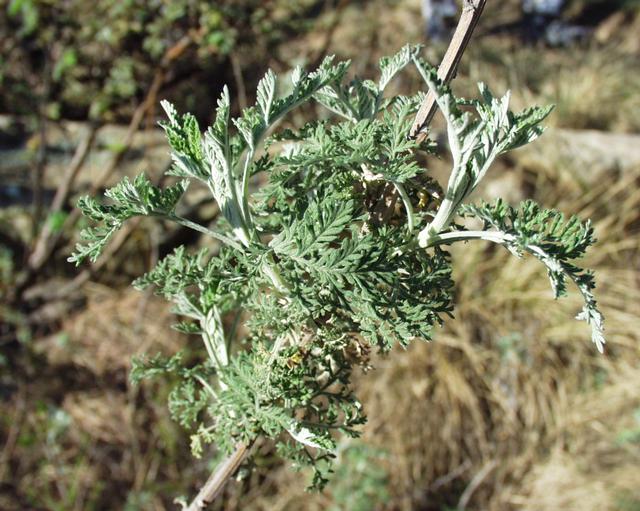
Xavier Argemi first heard the claim that tea made from artemisia herbs could be useful in the treatment of malaria from a TV documentary in 2017.
The documentary, featuring Lucile Cornet-Vernet, the director of the La Maison de l’Artemisia, a non-profit organization that grows artemisia and promotes its use in centers across Africa, focused on the Democratic Republic of the Congo (DRC). The film claimed that for decades major pharmaceutical companies have been profiting from expensive malaria drugs based on artemisinin — the antimalarial for which Tu Youyou won a Nobel Prize in 2015, after distilling it from the Artemisia annua plant — while the tea itself, an ancient Chinese herbal remedy, was just as effective at treating the disease.
His interest piqued, Argemi reached out to Cornet-Vernet, an orthodontist at Paris’ Descartes University. She shared with him the unpublished manuscript of a study — their first large-scale clinical trial — which she said showed that artemisia outperformed a go-to treatment for schistosomiasis, a different parasite-induced disease.
Argemi immediately saw red flags. “I am not a specialist of malaria or schistosomiasis, but when I read the study I was simply totally surprised by the number of inconsistencies at the very first read,” Argemi, of the Clinique Axium in Strasbourg, France, told Retraction Watch by email.
The journal that recently ran a controversial essay on poverty and race has flagged it with an editor’s note letting readers know about an investigation into the work.
As we reported last week, Society, a Springer Nature title, published a paper by Lawrence Mead, of New York University, who argued that poor Blacks and Hispanics lack certain cultural traits that help European whites succeed in the face of economic adversity:
An infectious diseases researcher found by a federal U.S. watchdog to have “recklessly” faked data in grants worth millions left his job as the investigation was coming to a close, Retraction Watch has learned.
The response to our request for comment from editor in chief Pio Conti reads a bit like a Mad Libs of excuses we hear from publishers when something goes wrong. Read carefully for:
Hundreds of academics, anti-poverty advocates and others have signed petitions demanding the journal Society retract a new commentary which argues, in essence, that poor Black and Hispanic people in the United States are poor because they haven’t figured out how to be more white.
One petition, to the editor of the journal, Jonathan Imber, had garnered more than 550 signatories by the time of this writing. Another, to the author of the paper, the editorial board of the journal, and the CEO of Springer Nature, which publishes the journal, was at 400 and counting.
The essay, by Lawrence Mead, a public policy researcher at New York University, argues that racism and a lack of good jobs do not explain why America, the world’s richest country, continues to have a problem with poverty. “More plausible,” Mead states, are differences in “culture”:
A public health journal will be retracting a paper that argued for the adoption of homeopathy in the fight against the coronavirus pandemic, according to the editor in chief.
The authors of a 2019 paper on a lethal type of poultry virus in Asia have retracted the article because of problems with the data collection. But the researchers stand by their findings, which, they say, suggest the pathogen could be harmful to humans.
The paper, titled “Novel orthobunyavirus causing severe kidney disease in broiler chickens, Malaysia, 2014-2017,” appeared in Emerging Infectious Diseases, a publication of the U.S. Centers for Disease Control and Prevention.
The authors were affiliated with Ceva-Phylaxia Veterinary Biologicals Co. Ltd., and the Hungarian Academy of Sciences, both in Budapest. The lead author was Vilmos Palya, a prominent veterinary scientist.
A paper which argued that 5G cellphone technology could lead to infection with the novel coronavirus has been retracted, but not before scientific sleuth Elisabeth Bik wondered whether it was the “worst paper of 2020.”
The article, “5G Technology and induction of coronavirus in skin cells,” came from a group from Italy, the United States and Russia, and appeared in theJournal of Biological Regulators and Homeostatic Agents. The journal is published by Biolife, which asserts that it’s peer reviewed but has not responded to a request for comment. [Please see an update on this post.]
The abstract is now marked “WITHDRAWN” on PubMed and the paper has disappeared from the journal’s website. The abstract has been preserved here. According to the authors: