A new “data thug” is born

Brendan O’Connor

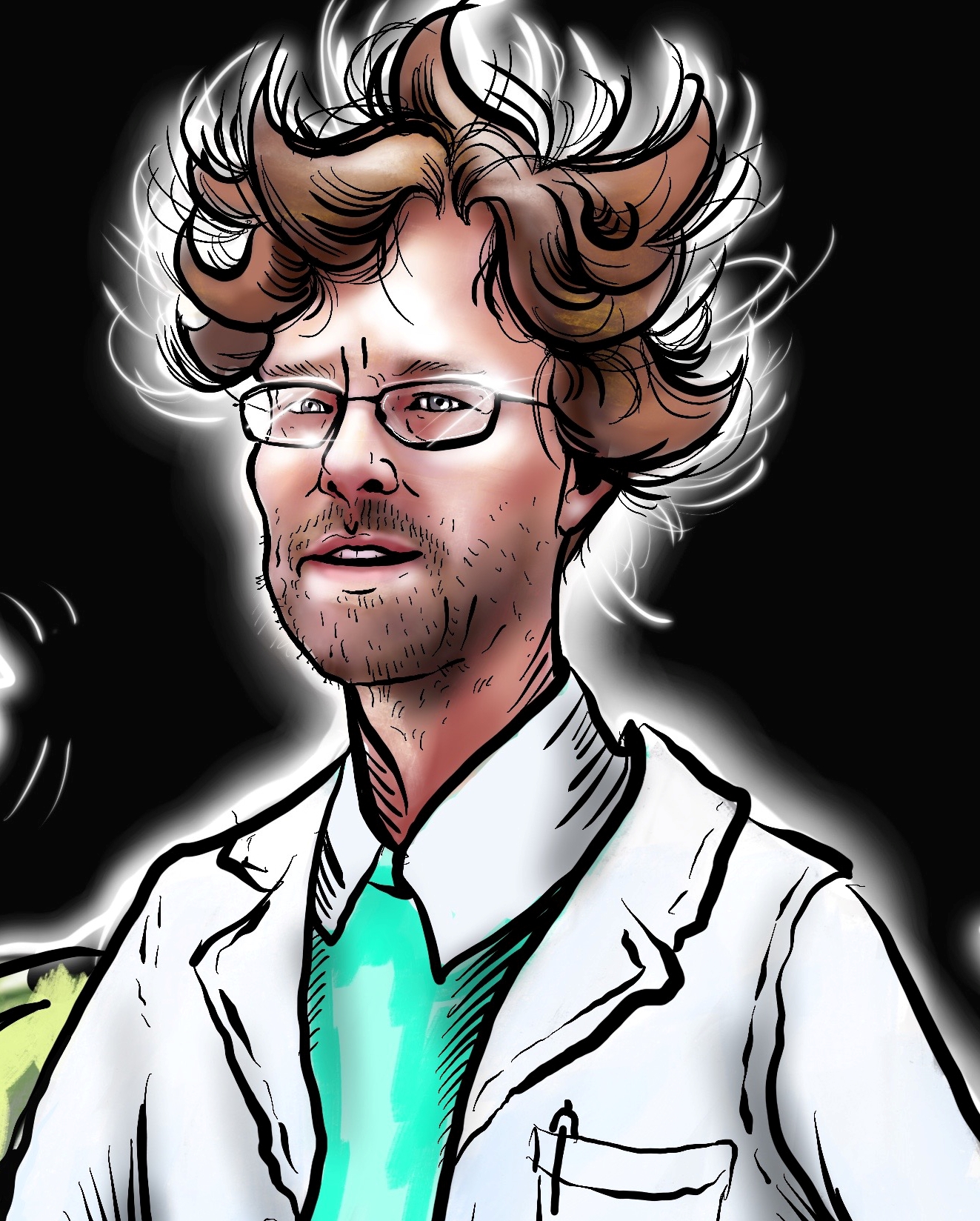
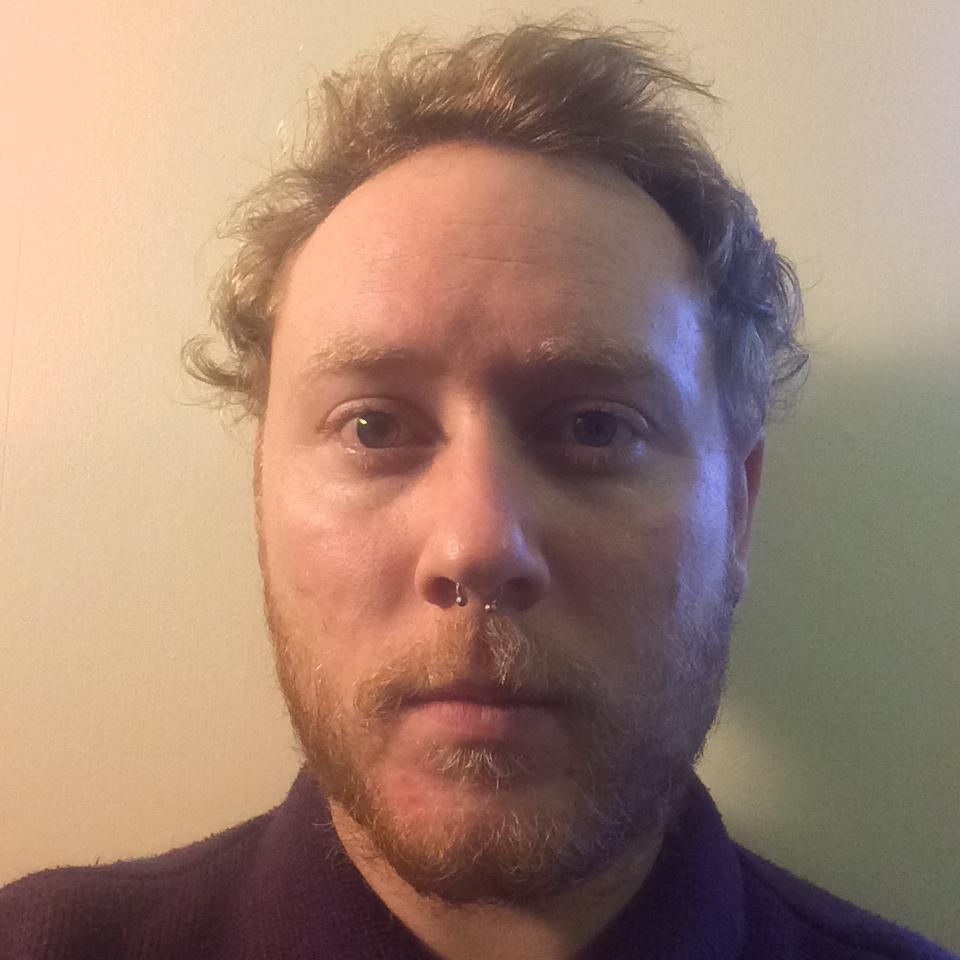
In the last week, a lot more people know the name of Brendan O’Connor. Recently, the graduate student at the University of Leicester in the UK posted allegations on Twitter that a prominent psychologist at Cornell University, Robert Sternberg, had recycled large swaths of text in multiple publications. Since then, other so-called “data thugs” — such as Nick Brown and James Heathers — have added their voices to the discussion. Sternberg recently resigned as editor of Perspectives on Psychological Science, in part over concerns about his practice of frequently citing his own papers. We spoke with O’Connor about the response to his allegations — and why he took to Twitter to raise them. (Note: O’Connor’s opinions are his own, and not necessarily representative of his institution.)

Retraction Watch: How did you stumble upon the alleged text recycling by Dr. Sternberg?

Continue reading A new “data thug” is born

Author under fire has eight papers retracted, including seven from one journal

A researcher whose work on the use of nanomaterials has been heavily scrutinized on PubPeer — with one critic alleging a paper contained “obviously fabricated” images — has lost eight papers. [Editor’s note: See update below.]

The eight articles — seven from Biosensors and Bioelectronics and one from Analytica Chimica Acta, both published by Elsevier — all cite issues related to duplications, and conclude with some version of the following:

Continue reading Author under fire has eight papers retracted, including seven from one journal

“Youth Guru” loses turkey-neck paper that overlapped with book chapter

Ronald Moy

A prominent cosmetic surgeon and his daughter have lost a 2017 paper on treating men with excessive neck flab — otherwise known as “turkey neck” — because much of the work appears to have duplicated a book chapter he co-authored about the topic.

The first author of the retracted article is Ronald L. Moy, a plastic surgeon to the stars in Beverly Hills, Calif., and a past president of both the American Academy of Dermatology and the American Society of Dermatology. In a 2012 article about area plastic surgeons, LA Confidential Magazine dubbed Moy the “youth guru” and a local leader in the use of “new research and a comprehensive approach to restore a youthful complexion—no cutting required.”

His co-author was his daughter, Lauren Moy, who appears to be working with him in his Rodeo Drive dermatology practice.

Continue reading “Youth Guru” loses turkey-neck paper that overlapped with book chapter

Highly cited paper by dep’t chair at Sloan Kettering is corrected — three times

A radiology journal has published an addendum to a 2005 review on cancer imaging techniques, alerting readers to figure duplication.

But that’s not what caught our attention about this case. The addendum, published in January, is the third notice that The British Journal of Radiology (BJR) has issued for the 2005 review by Hedvig Hricak, chair of the Department of Radiology at Memorial Sloan Kettering in New York City. The notices, published between 2014 and 2018, all describe duplication.

Why the series of notices, all describing a similar problem? Continue reading Highly cited paper by dep’t chair at Sloan Kettering is corrected — three times

What if we could scan for image duplication the way we check for plagiarism?

Paul Brookes

Paul Brookes is a biologist with a passion for sleuthing out fraud. Although he studies mitochondria at the University of Rochester, he also secretly ran a science-fraud.org, a site for people to post their concerns about papers. Following legal threats, he revealed he was the author and shut the site in 2013 — but didn’t stop the fight. Recently, he’s co-authored a paper that’s slightly outside his day job: Partnering with computer scientist Daniel Acuna at Syracuse University and computational biologist Konrad Kording at the University of Pennsylvania, they developed a software to help detect duplicated images. If it works, it would provide a much needed service to the research community, which has been clamoring for some version of this for years. So how did this paper — also described by Nature News — come about?

Retraction Watch: Dr. Brookes, you study mitochondria. What brought you to co-author a paper about software to detect duplications?

Continue reading What if we could scan for image duplication the way we check for plagiarism?

Over a dozen editorial board members resigned when a journal refused to retract a paper. Today, it’s retracted.

Following a massive editorial protest, Scientific Reports is admitting its handling of a disputed paper was “insufficient and inadequate,” and has agreed to retract it.

The 2016 paper was initially corrected by the journal, after a researcher at Johns Hopkins University, Michael Beer, accused it of lifting some of his earlier work. After we covered the story, nearly two dozen Hopkins researchers threatened to resign from the journal’s editorial board if the journal didn’t retract the paper — and many followed through with that threat after the journal reaffirmed its initial decision. In response, the journal said it would assemble a “senior editorial committee” to review its decision-making.

That committee, it appears, has determined that the journal erred in its initial decision. According to a statement from the journal provided to Retraction Watch:

Continue reading Over a dozen editorial board members resigned when a journal refused to retract a paper. Today, it’s retracted.

Journals retract 30 papers by engineer in South Korea

An engineer in South Korea has lost 30 papers, at least seven of which for duplication and plagiarism. He has also been fired from his university position.

Soon-Gi Shin, whose affiliation was listed as Kangwon National University in Gangwon, is the sole author on the majority of the papers, published in four journals between 2000 and 2015.

Taewan Kim, the dean of international affairs at the university, told Retraction Watch that Shin was fired on August 21, 2017, over “violation[s] of research ethics.”

Continue reading Journals retract 30 papers by engineer in South Korea

Retraction count for Italian researcher swells to 15 as five papers fall

A researcher who is facing a criminal investigation in Italy for research misconduct has seen five more papers retracted, for a total of 16 15.

Molecular and Cellular Biology has retracted four papers published between 1987 to 2001 by Alfredo Fusco, a cancer researcher in Italy; the Journal of Virology retracted one 1985 paper. Fusco was first author on two papers and last author on three. Both journals are published by The American Society for Microbiology (ASM), which issued identical retraction notices for all five papers, mentioning “evidence of apparent manipulation and duplication.”

Carlo Croce, a cancer researcher now at the Ohio State University, who has been dogged by misconduct allegations, co-authored one of the papers.  Croce now has eight retractions.

Here’s the notice presented for all five retractions: Continue reading Retraction count for Italian researcher swells to 15 as five papers fall

Caught Our Notice: An article about repetition is duplicated? Priceless

Title: Does repetition help? Impact of destination promotion videos on perceived destination image and intention-to-visit change

What Caught Our Attention: At times we get to just appreciate the moment: A paper focused on repetition — specifically, linking repeated exposure to travel videos and actual visits to the location — got retracted for duplication.  The notice says the duplications were “inadvertent;” perhaps these researchers were motivated by their research? This isn’t the first time authors have been tripped up by their own subjects — in 2015, a researcher retracted his guidelines on plagiarism for…you guessed it. (Plagiarism.) Continue reading Caught Our Notice: An article about repetition is duplicated? Priceless

Author under fire on PubPeer issues puzzling correction to chem paper

A researcher whose work has been heavily questioned on PubPeer has corrected a figure on a 2015 paper in Talanta — but the text of the correction doesn’t match the actual changes.

Recently, Rashmi Madhuri at the Indian Institute of Technology (Indian School of Mines) in Dhanbad corrected a 2015 paper about a diagnostic sensor that uses nanoparticles, noting that there was a “small error” in the legend describing figure 1. But the corrected image bears the same legend it had before, and instead swapped a panel of the figure that had been questioned on PubPeer.

Here’s another puzzling element to the story: Gary Christian at the University of Washington, one of the editors-in-chief of the journal, tells us he doesn’t “recall being aware of the corrigendum:”

Continue reading Author under fire on PubPeer issues puzzling correction to chem paper