If you think you’ve noticed more and more retractions at PLoS ONE recently, you’re not wrong.
The journal retracted 53 papers last year. That’s not a record — that belongs to a journal that retracted more than 400 papers at once — nor is it that many more than the Journal of Biological Chemistry, which retracted 39 last year. And it’s only about 3% of the year’s retractions. But it’s a dramatic increase, as this graphic shows:Continue reading How one journal became a “major retraction engine”
According to the internet, Bear Grylls, the TV survivalist, said he “was always brought up to have a cup of tea at halfway up a rock face.” Which sounds too cute to be true and, given Grylls’ history of, um, buffing the hard edges of reality, almost certainly isn’t.
But Grylls appears to be far from alone in his tea hyperbole. A group of researchers in India has lost their 2011 paper in PLoS ONE on the synergistic effects of black tea and resveratrol — the compound in red wine touted as a fountain of youth — on skin cancer for what (if we’re allowed to read the tea leaves) amounts to a cuppa apparent data fabrication.
PLoS ONE has retracted a meta-analysis on mindfulness after determining that the authors used dubious methodology and failed to adequately report their financial interest in the psychological treatment the article found effective.
The authors, from Erasmus Medical Center in the Netherlands and Harvard University, included Herbert Benson, of the Benson-Henry Institute for Mind Body Medicine at Massachusetts General Hospital. The institute (which has taken down its link to the paper) offers a raft of services for patients, including a Stress Management and Resiliency Program, a Mind Body Program for Health and Fertility, a Mind Body Program for Cancer, yoga, Tai Chi and initiatives to help foster “resilient youth.”
A University of Cambridge researcher — Steve Jackson — and a former researcher at the University of Bristol — Abderrahmane Kaidi — have accomplished a two-fer: Retracting a paper in Nature, and one in Science, on the same day.
The stars did not align for a 2016 paper ancient astronomy in the Amazon region after the author discovered errors in his work that the journal deemed fatal to the case, although the author has objected to the retraction.
And the author feels as though he was punished for being honest.
On the afternoon of Friday, April 5, Edwards had just learned that her blog, “All Models Are Wrong,” had disappeared from the PLOS Blogs Network, where it was hosted. No warning. No communication from PLOS.
The Journal of Clinical Investigation has retracted a 2011 paper involving researchers at the National Institutes of Health after the NIH concluded that some of the data were wonky.
JAMA Oncology has retracted a 2018 paper by a group from Sweden and the UK after the researchers discovered critical errors in their analysis that significantly altered the conclusions of the study.
A researcher at Kyoto University in Japan faked some of the data in a 2017 paper in Science about the deadly Kumamoto earthquake, the university said.
According to mediareports about a press conference held today, Kyoto found that the paper’s first author, Aiming Lin, had committed misconduct, including falsification of data and plagiarism. They recommended that Lin retract the paper, and said he would face sanctions, while his co-authors were cleared of wrongdoing.
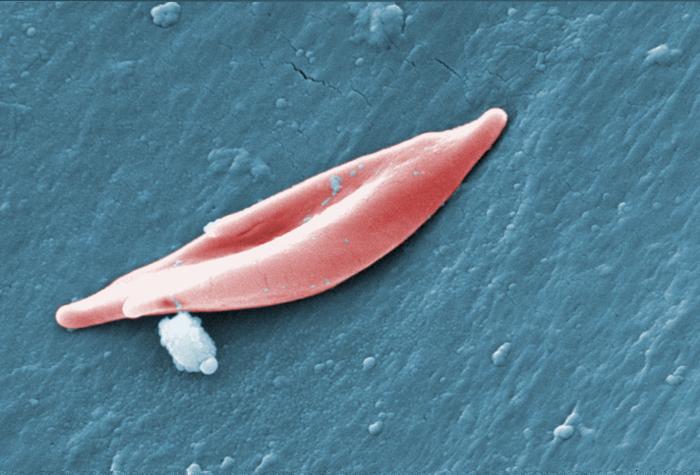
A scanning electron microscope image of a sickle cell, digitally colorized (via US CDC)
Researchers have lost a 2018 conference abstract on screening for sickle cell disease in Africa over a dispute over authorship and the lack of appropriate disclosures.
The article, “Implementation of a sickle cell disease screening initiative in Uganda with HemoTypeSC(TM),” which was presented at a 2018 conference and then appeared in Blood, described a much-touted new blood test for sickle cell trait from a company in California called Silver Lake Research.
 If you think you’ve noticed more and more retractions at PLoS ONE recently, you’re not wrong.