
Exclusive: News outlet killed story on plagiarism allegations after Cambridge prof hired law firm

Jason Arday

In September 2025, Times Higher Education had a bombshell story in the works: A star sociology professor at the University of Cambridge had allegedly plagiarized parts of his Ph.D. thesis and several journal articles. In one of the articles, the borrowed text appeared in quotes from subjects the professor, Jason Arday, claimed to have interviewed himself. 

But after Arday enlisted Carter-Ruck, one of the United Kingdom’s leading defamation law firms, to send Times Higher Education a letter, the publication spiked the story, according to three sources who spoke to Retraction Watch.

One of the sources was David Sanders, a biochemist at Purdue University in Indiana, and a sleuth who contributes to the Times Higher Education on topics related to academic misconduct. He reviewed a 63-page dossier of text comparisons prepared by the publication last year and came back with his own findings. “There is no question that there is extensive plagiarism,” Sanders told us.

Continue reading Exclusive: News outlet killed story on plagiarism allegations after Cambridge prof hired law firm

Director of Cambridge toxicology institute retracts paper for potential image manipulation

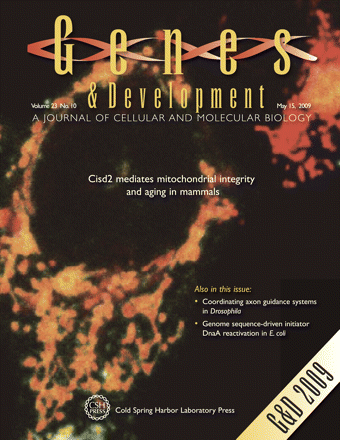
Twelve years after sleuths flagged problematic images in a 2009 paper, the authors — including the head of a UK research institute — have retracted the article.  

The paper, published in Genes & Development, has been cited 126 times, according to Clarivate’s Web of Science.

According to the June 1 retraction notice, the authors retracted the paper because of “anomalies in the data presented” in multiple figures. “The issues relate to potential instances of image manipulation, including undisclosed splicing, lane flipping, and lane and panel duplications in the preparation of these figures.”

Continue reading Director of Cambridge toxicology institute retracts paper for potential image manipulation

Drug company lawyer letter results in “utterly tedious” retraction

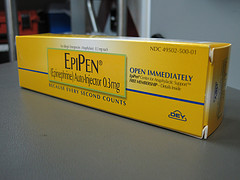
Image via Intropen
Image via Intropen

What’s in a name?

Well, if it’s the same name as a treatment with nearly $1 billion in sales per year in the U.S., a retraction.

A “mind numbingly boring one,” that is.

Here’s the Twin Research and Human Genetics notice for “EpiPen: An R Package to Investigate Two-Locus Epistatic Models”: Continue reading Drug company lawyer letter results in “utterly tedious” retraction

Lactobacillus intolerance: Bacterium mixup forces retraction

bjncoverThe British Journal of Nutrition has retracted a 2013 paper by a group of researchers from Taiwan after learning that the authors had studied the wrong strain of microbe.

The article was titled “Oral Lactobacillus reuteri GMN-32 treatment reduces blood glucose concentrations and promotes cardiac function in rats with streptozotocin-induced diabetes mellitus.”

According to the abstract: Continue reading Lactobacillus intolerance: Bacterium mixup forces retraction

Cell line mixup causes retraction of paper on blood vessel damage

britjournnutWe’ve written before about retractions for cell lines that turn out not to be what researchers thought they were. In a few cases, that has involved contamination by HeLa cells, named for Henrietta Lacks. Today, we note the retraction of a paper whose authors, from Taiwan, thought they were using human muscle cells that line blood vessels when they were actually studying such cells from rat embryos.

Here’s the notice in the British Journal of Nutrition for “Molecular mechanism of green microalgae, Dunaliella salina, involved in attenuating balloon injury-induced neointimal formation”: Continue reading Cell line mixup causes retraction of paper on blood vessel damage

Pig cloning paper retracted for being a clone

animalOnce again, the headline has written itself.

The journal Animal has retracted a 2010 paper on cloning pig embryos after it became clear that there were “close similarities” between it and a 2009 paper by some of the same authors. Here’s the notice:
Continue reading Pig cloning paper retracted for being a clone