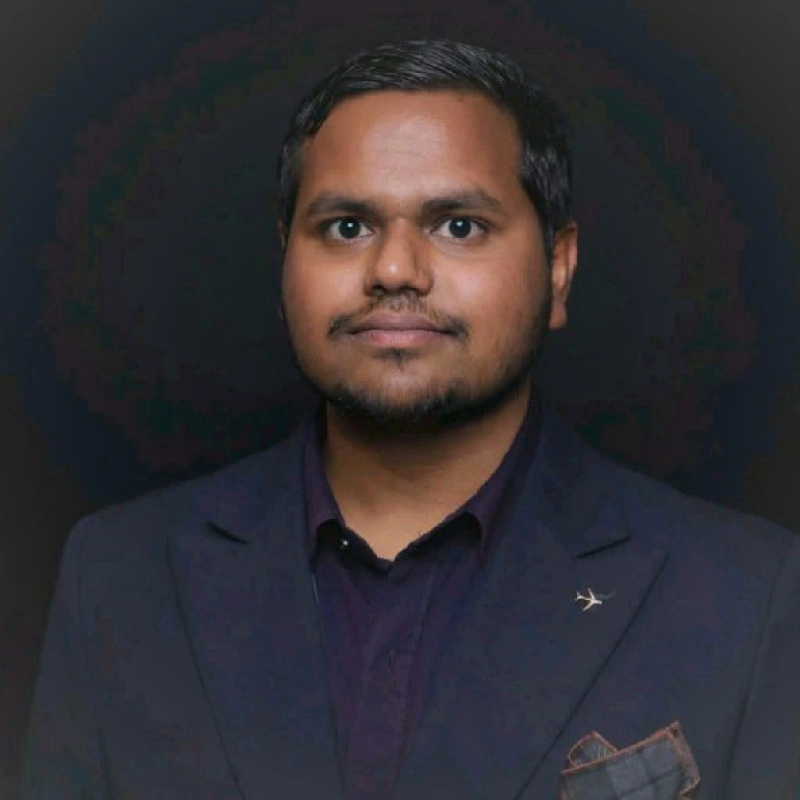
A preprint server has withdrawn three papers by an author at the center of a Retraction Watch story revealing a prolific research factory operated through the WhatsApp messaging system.
Last week, we reported on Raghabendra Kumar Mahato, a second-year medical student in Nepal, who runs an international research network that churns out conference abstracts and journal papers at a rapid-fire pace. Mahato’s network includes nearly 1,000 members connected through WhatsApp and produces suspected fast-churn science, while recruiting authorship for the works. Papers by the network have been accepted by major journals and presented at conferences by leading medical societies.
On July 24, Research Square, a preprint server owned by Springer Nature, withdrew three manuscripts by Mahato due to concerns “regarding integrity arising from the submitting author’s involvement in a paper mill network,” according to notices placed on the work. The notices include a link to Retraction Watch’s investigation.
Following our coverage, Mahato has also been kicked out of the Global Association of Indian Medical Students, where he served on the editorial board, according to correspondence we’ve seen.
Mahato did not return messages seeking comment.
A Research Square spokesperson told us removal of the preprints followed concerns raised by “an independent assessment.”
“Consistent with our public policies, preprints may be withdrawn where concerns have been identified that could undermine trust in the content reported,” the spokesperson told us. “Authors are contacted directly to keep them informed of any decision taken.”
Anit Sinha, a disillusioned member of Mahato’s network who previously shared details with us about the operation, said he was “shocked” but “deeply hopeful” to see Research Square’s prompt removal of the preprints. Sinha recently graduated from Gandaki Medical College in Nepal, the same school Mahato now attends. He joined Mahato’s network to boost his CV, but became suspicious of the network’s activities after he started working with the group, he previously told us.
“I had no idea whether any concrete action would be taken against these ethical violations, so seeing Research Square remove the preprints so promptly was incredibly validating,” Sinha said in an email. He credited our coverage with prompting the move.
Following our story, Sinha wrote to Research Square with concerns about the preprints and shared our coverage. In a July 25 email to Sinha, “Mark B.” with Springer Nature publishing support, thanked Sinha for “bringing” the matter to “our attention,” and wrote the preprints were withdrawn “after looking into the information you provided,” according to correspondence we’ve seen.
The three papers examined various mortality trends based on the CDC WONDER database, a publicly accessible repository that collects public health data. There has been a steep rise in published studies using publicly available datasets, many of which show hallmarks of being produced by paper mills. One recent preprint found exponential growth in publications based CDC WONDER, with an increasing number of authors from Pakistan.
Of 10 institutions listed across the three withdrawn preprints, eight were in Pakistan.
Palwasha Asghar, a coauthor on two of the papers, disagreed with the removal and told us her studies were “conceived, conducted, and submitted honestly, independently, and in good faith in accordance with established academic practice.” Asghar, a student at Khyber Medical College in Peshawar, Pakistan, cowrote another paper based on data from CDC WONDER with Mahato in BMC Neurology. Her ORCID profile shows 16 preprints and journal articles that were published between 2025 and 2026.
“The withdrawal of our Research Square preprints was both shocking and deeply distressing,” Asghar told us. “As a final-year medical student, I was particularly concerned because the preprints were withdrawn without prior notice, without being allowed to respond, and without any evidence supporting the allegations being disclosed to me.”
Asghar said neither she nor her coauthors were aware of any “allegations or publicly reported concerns” regarding Mahato before their works were completed. The collaboration with Mahato did not arise through “any WhatsApp group,” but rather the authors were introduced to Mahato “through another researcher,” who recommended him as a potential collaborator, she told us.
Mahato’s contributions were limited to reviewing and revising manuscripts and managing the submission process, Asghar told us. The other authors meanwhile, carried out the data analyses and manuscript preparation, she said.
Asghar provided us with documentation which she said shows the development of one of the withdrawn preprints, along with a folder containing screenshots and supporting records that “demonstrate the chronological progression of the research,” she told us. The screenshots appear to show author exchanges on WhatsApp.
Asghar said the withdrawal of the preprints, without prior notice, an opportunity to respond, or disclosure of the underlying evidence has caused “significant academic and professional harm” and she has since sought legal advice.
Sinha also wrote to the Global Association of Indian Medical Students (GAIMS), to express his concerns about Mahato and share our recent coverage. Mahato joined the GAIMS Axis editorial board in June 2026, according to correspondence we’ve seen. Following an “internal review of the concerns raised,” GAIMS has terminated Mahato’s editorship and association with the GAIMS Axis Editorial Board with “immediate effect,” according to a July 28 email from GAIMS national president Abhishek Kashyap to Sinha.
Kashyap did not immediately respond to a request for comment.
Sinha noted Mahato’s network, formally called the Global Clinical Research Consortium, “conveniently” rebranded itself as “Research Helpers’” immediately following the publication of our story. He said he hopes other journals, preprint servers and associations remove more papers tied to the group.
“Beyond polluting the research sphere, operators like Mahato are directly stealing opportunities from honest, hardworking students,” he told us. “They are taking hospital placements and scholarships from people who actually do the grueling work.”
Like Retraction Watch? You can make a tax-deductible contribution to support our work, follow us on X or Bluesky, like us on Facebook, follow us on LinkedIn, add us to your RSS reader, or subscribe to our daily digest. If you find a retraction that’s not in our database, you can let us know here. For comments or feedback, email us at [email protected].
“Beyond polluting the research sphere, operators like Mahato are directly stealing opportunities from honest, hardworking students,” he told us. “They are taking hospital placements and scholarships from people who actually do the grueling work.” translates into “I would do the same stuff, but he did it better”. Ironic.