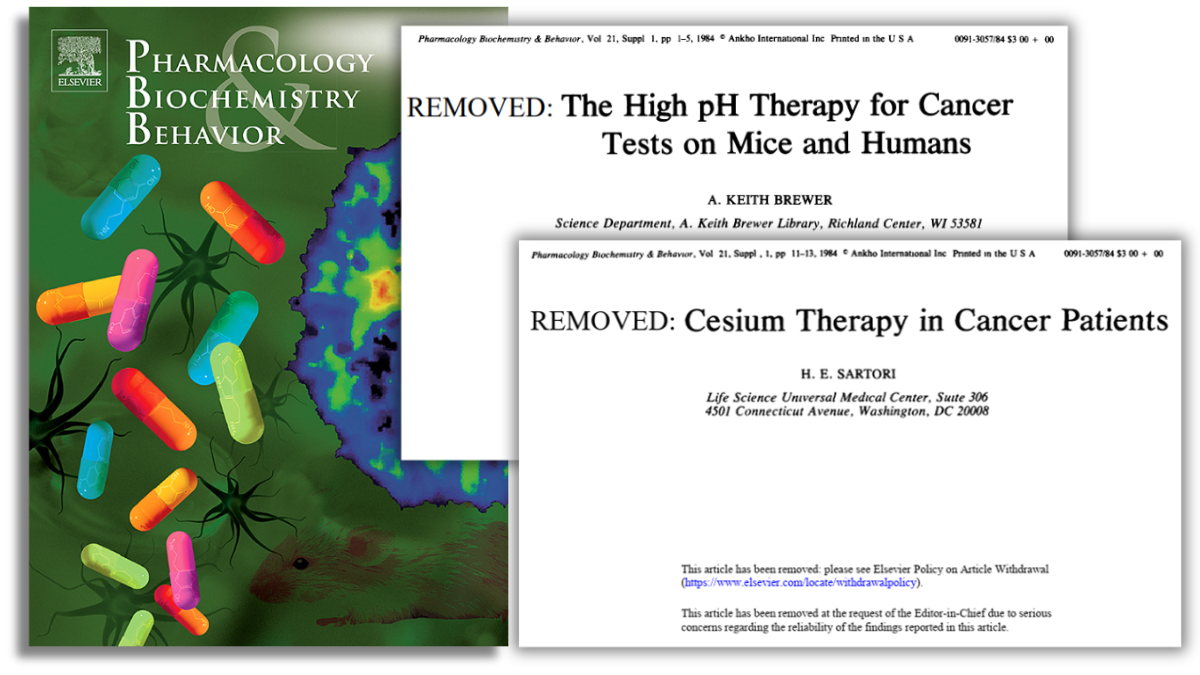
Elsevier journal removes two 42-year-old papers on cesium as a cancer treatment

An Elsevier journal has removed two papers on a discredited alternative treatment for cancer nearly half a century after they were published, after researchers found a quarter of patients in case reports of the therapy, cesium chloride, died from taking the substance. 

Some alternative medicine advocates marketed cesium chloride as a cancer treatment in the 1980s and 1990s, although the risks and ineffectiveness of the therapy have been known for decades. In 2018, the U.S. Food and Drug Administration issued a warning about “significant safety risks” associated with the salt. 

Marcel van der Heyden, a professor at the University Medical Center Utrecht in The Netherlands, told Retraction Watch he and his students came across the articles while writing a review of case reports on the use of cesium. Although the therapy was supported online and in health books, he said, all pointed to two 1984 papers in Pharmacology Biochemistry and Behavior: “Cesium therapy in cancer patients” by Hellfried Sartori and “The high pH therapy for cancer tests on mice and humans” by Aubrey Keith Brewer.

Continue reading Elsevier journal removes two 42-year-old papers on cesium as a cancer treatment

Elsevier retracts the least and reinstates the most, new analysis finds

Frequencies of reasons 10 publishers have given for retracting articles (source).

While Elsevier outcompetes other publishers in terms of sheer volume, it also has the lowest retraction rate and highest rate of reinstating articles among nine top publishers of scholarly articles, a recent study has found. The study also found a tenth publisher to be an outlier in terms of reasons for retraction. 

“Every publisher has their own retraction profile and retraction rates vary by two orders of magnitude,” Jonas Oppenlaender, author of the February preprint and a researcher at the University of Oulu in Finland, told Retraction Watch. “This reflects different editorial cultures and detection strategies, not just different levels of misconduct.”

Oppenlaender examined data from the Retraction Watch Database spanning 1997 to early 2026 to identify the top nine publishers with the most retractions. He also included the Association for Computing Machinery (ACM), “because it is a major professional-society publisher that has not previously been examined in cross-publisher retraction studies,” he wrote in the preprint.

Continue reading Elsevier retracts the least and reinstates the most, new analysis finds

Another retraction and two investigations for chemist

Maximilian Lackner

A chemist in Austria who earned a retraction earlier this year is under investigation by his former university, a national research integrity agency and the publisher Elsevier, Retraction Watch has learned, while scrutiny of his publication record has broadened to include more papers flagged on PubPeer. 

Maximilian Lackner, a technical chemist and process engineer at FH Technikum Wien in Austria until October last year, according to his ORCID profile, was the senior and corresponding author on a paper in npj Science of Food retracted in January after publishers discovered the five of the cited references weren’t relevant to the claims they were meant to be supporting. The 2024 article has been cited 90 times, according to Clarivate’s Web of Science.

Editors also pointed out the information in a flow diagram for selecting studies didn’t appear anywhere else in the article. One of the authors, Fatemeh Ahmadi of the University of Western Australia, told the journal she and Lackner disagreed with the retraction. When we asked why, Ahmadi said the authors were “not interested” in our request for further information. 

Continue reading Another retraction and two investigations for chemist

45 editors resign from math journal, former EIC calls Elsevier publisher a ‘mini-dictator’

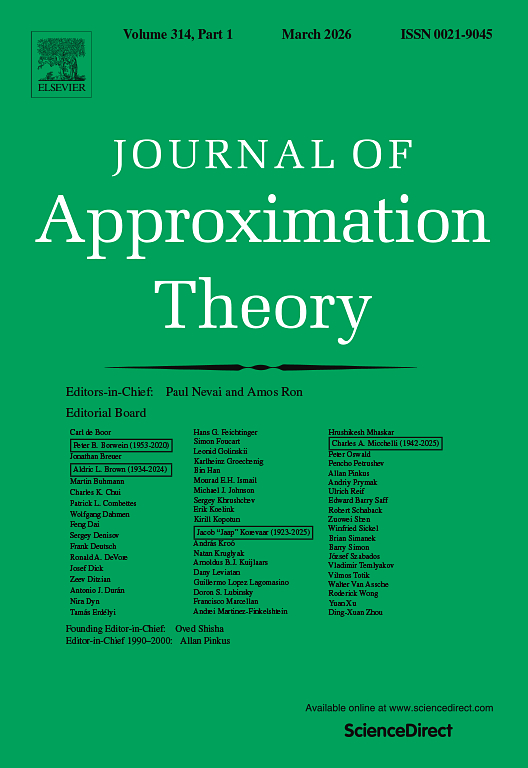
Forty-five of 48 members of the editorial board of the Journal of Approximation Theory resigned earlier this month for what they called Elsevier’s “concerning and potentially detrimental” decisions regarding the publication. 

Paul Nevai, formerly a professor at The Ohio State University, was appointed editor-in-chief of JAT in 1990 and held the position for 35 years until December. That’s when he reached the end of his term and Elsevier informed him they’d be filling the position with someone else. 

The mass resignation came after what Nevai said were several years of bad blood between the editors of the journal (including him) and the publisher, Giampiero Accardo. A representative for Elsevier told us designated publishers like Accardo are Elsevier employees who “oversee a portfolio of academic journals within a subject area, working closely with editors, authors, and research communities to support their development and long-term success.”

Continue reading 45 editors resign from math journal, former EIC calls Elsevier publisher a ‘mini-dictator’

Judge tosses lawsuit over controversial Paxil ‘Study 329’

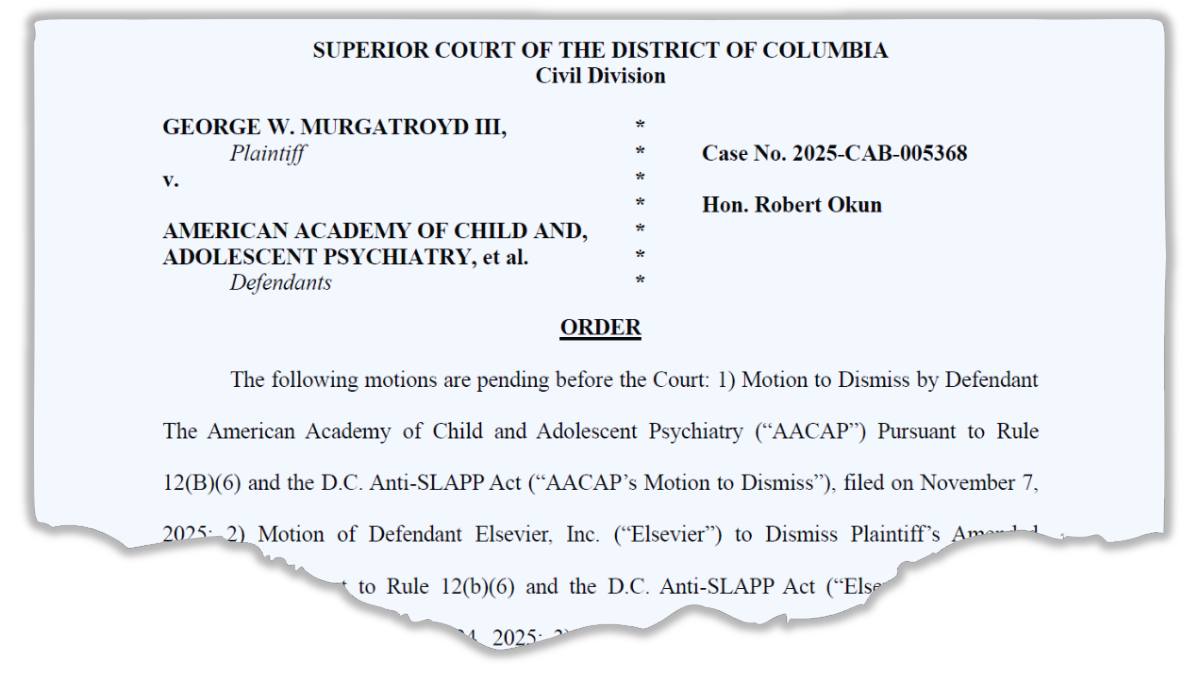
A judge has dismissed a legal challenge aimed at forcing Elsevier to retract a long-criticized study that concluded the antidepressant Paxil was safe and effective for teens.

The 2001 paper, published in the Journal of the American Academy of Child & Adolescent Psychiatry (JAACAP), has faced scrutiny for more than 20 years by critics who say the study has led to unwarranted and potentially harmful prescribing of the drug to youth. As we reported last October, the journal placed an expression of concern on the paper shortly after a lawsuit was filed by attorney George W. Murgatroyd III against the journal’s owner, the American Academy of Child and Adolescent Psychiatry (AACAP), and Elsevier, which publishes the title.

In his complaint, filed in the Superior Court of the District of Columbia, Murgatroyd claimed the journal is violating the D.C. Consumer Protection Procedures Act (CPPA) by continuing to “publish, distribute, and sell a fraudulent scientific article that contains material facts” that mislead the public and endanger adolescent mental health and safety. AACAP and Elsevier are profiting from the article by charging readers to buy access to the paper, according to the complaint. 

Continue reading Judge tosses lawsuit over controversial Paxil ‘Study 329’

Technology journal pulls papers for unauthorized author changes, fictitious emails

An Elsevier energy-technology journal has retracted six papers from 2022 whose authors changed without editorial approval during revision of the manuscripts.

The authors also provided fictitious email addresses during the submission process, but changed them after the papers were accepted, according to retraction notices in the February issue of Sustainable Energy Technologies and Assessments.

While the issues don’t necessarily indicate foul play, authorship changes and the use of non-institutional email addresses can be signs of paper-mill involvement. In 2021, we reported on a website in Iran that listed “articles ready for acceptance,” including one to appear in Sustainable Energy Technologies and Assessments. The year after our story, the journal pulled the paper, whose author list had also changed at the revision stage.

Continue reading Technology journal pulls papers for unauthorized author changes, fictitious emails

Chemist nears three dozen retractions for image duplication, self-citation and more

A screenshot of Louis’ LinkedIn profile before we reached out to him.

Racking up 35 retractions in just 24 months, chemist Hitler Louis has scored a place on our leaderboard

The papers at issue, most of them published in Elsevier and Royal Society of Chemistry journals, exhibit a variety of problems, according to the retraction notices: identical plots supposedly representing different chemical systems, self-citations multiplying between manuscript submission and publication, compromised peer review and fundamental errors in chemical analyses. 

Louis – who also goes by Louis Hitler Muzong – did not respond to Retraction Watch’s requests for comment. Until recently, his LinkedIn page named him as a Ph.D. student in computational chemistry at the University of Leeds in the United Kingdom, with an expected completion date of October 2027. But retraction notices for two papers say Louis requested his Leeds affiliation be removed. One states “the research described in the article is not associated with that institution,” and the other that the affiliation “was given incorrectly.” The University of Leeds did not respond to a request to verify whether he was a student there.

Continue reading Chemist nears three dozen retractions for image duplication, self-citation and more

Mega-journal Heliyon retracts hundreds of papers after internal audit 

Heliyon has published fewer papers and ramped up its retractions since a major indexing service put the journal on hold and the publisher launched an audit of all papers published in the journal since its launch in 2016.

Clarivate put Heliyon on hold in September 2024, citing concerns about the quality of the content. The “on-hold” status indicates a journal is being re-evaluated, and new content isn’t indexed, according to documentation on the Clarivate website. A spokesperson for Clarivate told us they couldn’t comment on specific journals, but said a journal must be both taken off hold and have its missing content backfilled by August 1 in order to receive an impact factor for that year. If a journal is still on hold and content hasn’t been backfilled, the journal will not receive an impact factor, the spokesperson said.

Heliyon published over 11,000 papers in 2023 and more than 17,000 in 2024, issuing around two dozen retractions in each year. Last year, the journal published 3,168 articles and retracted 392 others. 

Continue reading Mega-journal Heliyon retracts hundreds of papers after internal audit 

Finance professor in Ireland loses 12 papers in journals he edited

Brian Lucey

Elsevier has pulled a dozen papers by a finance professor in Ireland who oversaw the review of the articles and made “the final decision” to publish them in three journals he edited, according to the retraction notices.  

The professor, Brian M. Lucey of Trinity College Dublin, and his coauthors disagreed with the retractions, which came a few days before Christmas.

“I’m not disputing the fact that I made the final decision” to publish the articles, some of which have garnered hundreds of citations, Lucey told us in an interview. ”What I’m disputing is that that is not prima facie grounds” for retracting them.

Continue reading Finance professor in Ireland loses 12 papers in journals he edited

Journal removes funding statement from hormone therapy paper without issuing correction

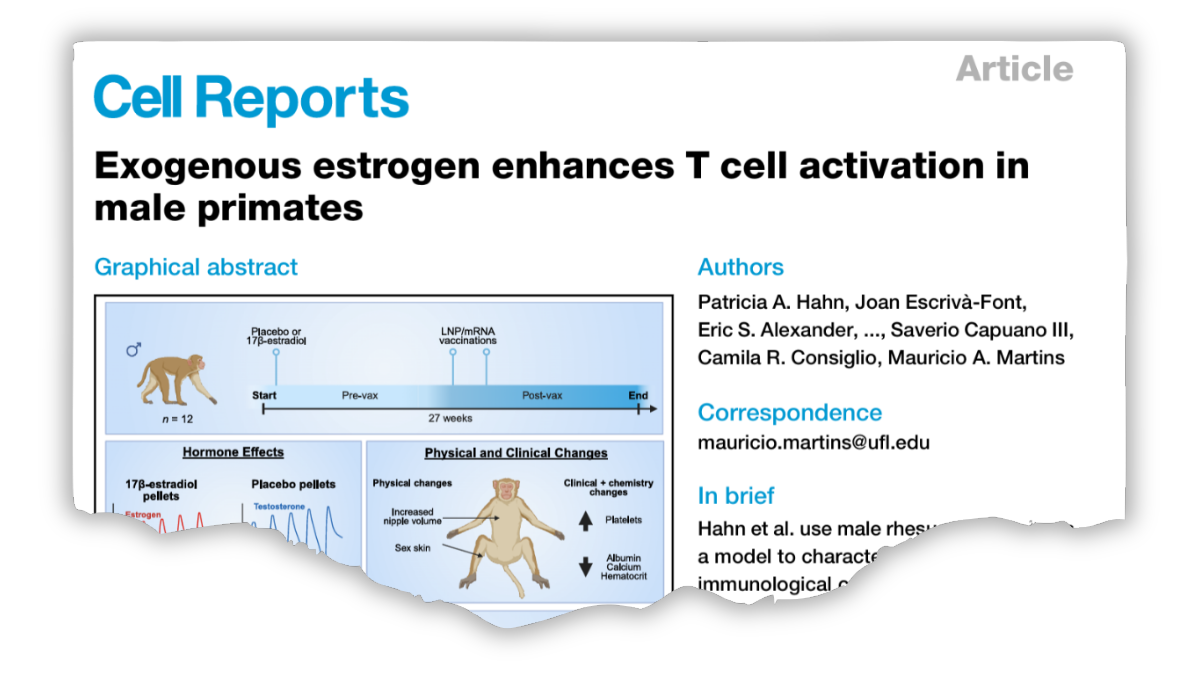
A Cell Press journal quietly removed part of a funding statement from a paper related to gender-affirming hormone therapy that the authors say was included in error. Experts called the move “worrying.” 

The authors of the paper, which appeared in Cell Reports on September 23, gave estrogen therapy to male monkeys to better understand how hormone therapies used in gender clinics might affect the immune system. 

The research drew attention from several conservative news organizations, some of which called the project “disturbing” and alleged the work cost millions of dollars in National Institutes of Health funding. 

Continue reading Journal removes funding statement from hormone therapy paper without issuing correction