Career derailed, ex-prof to sue Montana State for wrongful termination

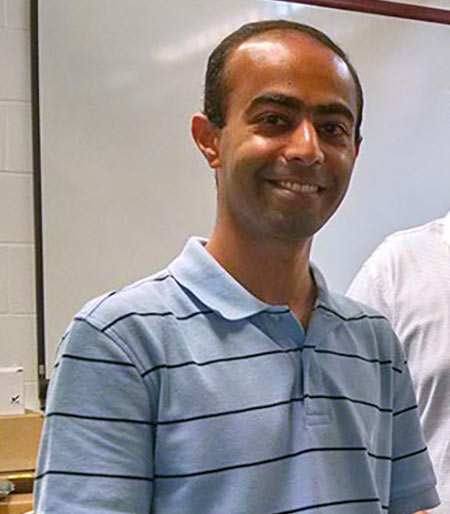
Ryan Jones. Credit: Kelly Gorham/MSU

A former assistant professor at Montana State University who was fired last year is planning to sue the school for defamation, wrongful termination, and violation of due process.

Ryan Jones, a microbiologist, was forced to leave his tenure-track position — which was technically a one-year contract, so could be terminated before he had the opportunity to apply for tenure. The case highlights the insecurity of non-tenured academic jobs, an issue the planned suit is tackling head on. In addition to monetary damages, the lawsuit seeks to void all one-year contracts at Montana State, which can be terminated for any reason — a system that exists elsewhere in academia.

Jones told Retraction Watch that he believes he was forced out based on what he alleges are cooked-up charges of research misconduct — specifically, he brought back insect samples from the Amazon but didn’t fill out a permit:

Continue reading Career derailed, ex-prof to sue Montana State for wrongful termination

Researchers protest publisher’s orders to remove papers from their websites

Researchers are protesting orders from the American Psychological Association to remove links to papers from their websites.

Multiple researchers took to Twitter recently to lament the takedown notices they’ve received from the APA; one posted the letter in place of the link to his paper. According to the APA, the letters are part of a pilot program to “monitor and seek removal of unauthorized online postings of APA journal articles.”

The notices cite misuse of the Digital Millennium Copyright Act (DMCA), which enables internet users to protect their own content. But it can be heavily abused by people who file false copyright infringement claims to remove content they don’t like from the internet. (We have even been the target of such attempts.)

According to the letter posted by Nathaniel Daw at Princeton University, the APA says:

Continue reading Researchers protest publisher’s orders to remove papers from their websites

Ex-researcher who shot dean found guilty of attempted murder

Hengjun Chao Credit: Westchester County DA


A New York jury has found Hengjun Chao, a former research assistant professor at Mount Sinai, guilty of attempted second degree murder and two other charges.

Last year, Chao shot Dennis Charney, a Mount Sinai dean who had fired him in 2010 for misconduct, outside of a deli in a wealthy New York suburb. After the incident, Chao admitted to police he shot Charney. During the trial, Chao’s lawyer argued that Chao had done so to draw attention to what he believed to be misconduct at Mount Sinai.

As reported by the Chappaqua Patch, in addition to one count of attempted second degree murder, Chao was convicted of one count of criminal use of a firearm and one count of assault. He faces a maximum of 25 years in state prison.

Chao’s attorney, Stewart Orden, told Retraction Watch:

Continue reading Ex-researcher who shot dean found guilty of attempted murder

Springer purge of fake reviews takes down 10+ more neuroscience papers

Back in April, Springer retracted a record number 107 papers from Tumor Biology after uncovering evidence they were subject to fake peer reviews. But it appears that the Tumor Biology sweep was only part of the story.

During the Tumor Biology investigation, Springer found evidence that the “peer review process was compromised” in a dozen papers on brain cancer published in another journal. The 12 Molecular Neurobiology retractions have trickled in over the past year or so, published before and after the Tumor Biology sweep.

A spokesperson at Springer confirmed that the 12 retracted papers in Molecular Neurobiology were related to the Tumor Biology retractions for fake peer review: Continue reading Springer purge of fake reviews takes down 10+ more neuroscience papers

When a tractor stabs a man in the eye, who gets to write up the case report?

A journal has retracted a paper after the university notified the editors that the authors presented the gruesome details of a patient who they didn’t directly treat.

But the paper’s corresponding author disputes that claim, arguing that the first author — a radiologist, who has since passed away, provided a crucial diagnosis in this case. We’ve tried to track down the doctors who lodged a complaint about the paper, alleging they were “actually involved in the original patient treatment,” but have so far been unsuccessful.

The paper describes an unfortunate accident during which a man fell from his tractor and stabbed himself in the eye on part of the machine. Initially, doctors could not locate the eye and “believed it to have been completely destroyed,” and discharged the patient after seven days. One week later he was back, complaining of headaches — and doctors found the eye embedded deep inside the skull, intact.

According to the retraction notice, issued by the Journal of Neuro-Ophthalmology, an investigation by a university in Iran determined the doctors who initially described the case didn’t have the right to do so: Continue reading When a tractor stabs a man in the eye, who gets to write up the case report?

Author of retracted gene editing paper alleges “bullying” by former PI

In the fall of 2015, out-of-work stem cell biologist Mavi Camarasa decided she had waited long enough. It had been three years since she and a colleague were, best they could tell, the first to successfully correct the most common cystic fibrosis mutation in stem cells derived from a patient.

But her former lab director, Daniel Bachiller, had blocked her from writing even a short report, she told Retraction Watch:

He said we are not submitting at this time, wait until [the project is] complete. “Wait, wait,” is the only answer I’d had from him ever.

Though she’d left the Spanish regenerative medicine lab in 2013 to take care of an ailing parent and had mostly been scooped by another group in April of that year, Camarasa thought she still might be able to get something out of the project. She hatched a plan to make him an offer he couldn’t refuse — an already accepted manuscript where all he would have to do is attach his name at the last minute.

But this story didn’t turn out exactly how she’d hoped — and illustrates how the pressure to publish can affect researchers at different levels in the lab.

Continue reading Author of retracted gene editing paper alleges “bullying” by former PI

OSU researcher under investigation corrects paper cited 500 times

An EMBO journal has issued a correction for a well-cited 2012 review co-authored by a cancer researcher under investigation.

Carlo Croce, the last author on the review, has been beleaguered by misconduct accusations that have followed him for years (recently described in a lengthy article in the New York Times), and his university has recently re-opened an investigation into his work.

By our count, Croce — based at The Ohio State University — has logged six retractions, along with multiple expressions of concerns and corrections. The latest correction, in EMBO Molecular Medicine, notes the review lifted passages from multiple publications — and was in turn reused in later papers, as well.

Here’s the notice:

Continue reading OSU researcher under investigation corrects paper cited 500 times

Journal won’t look at allegations about papers more than six years old, nor comment on those from “public websites”

After a paper is published, how long should a journal consider allegations of misconduct? For one journal, that answer is: Six years.

We see plenty of journals that retract papers at least 10 years old over concerns regarding misconduct, but in a recent editorial, Molecular and Cellular Biology announced it would pursue allegations made within six years after a paper is published. This rule mirrors federal regulations (which apply to the U.S. Office of Research Integrity), which also decline to investigate allegations if at least six years have passed since the incident supposedly occurred — but with some exceptions, such as if the misconduct could have an impact on public health.

Incidentally, the same issue of the journal includes a retraction notice for a paper published seven years ago, citing image duplications. A spokesperson for the American Society for Microbiology (which publishes the journal) told us the journal investigated the paper in 2016, within the cutoff period.

Here’s the key text from the editorial:

Continue reading Journal won’t look at allegations about papers more than six years old, nor comment on those from “public websites”

“Data had been manipulated:” Science Translational Medicine retracts paper

Science Translational Medicine has retracted a paper by researchers based in Switzerland, after an investigation concluded two figures had been manipulated.

The investigation occurred at the University of Basel. It’s not clear what prompted it, but the paper has been discussed at length on PubPeer. After the investigation concluded two figure panels included manipulated data, the last author asked to retract the paper.

Here’s the notice:

Continue reading “Data had been manipulated:” Science Translational Medicine retracts paper

“Authors’ negligence” causes “a plethora of data errors”

Sometimes, even a short notice catches our attention.

Such was the case with a recent retraction issued by Oncotarget for a 2016 paper related to the genetics that drive cancer.

Here’s the notice:

Continue reading “Authors’ negligence” causes “a plethora of data errors”