Hundreds petition to retract paper they call “unscholarly, overtly racist” and full of “racially violent narratives”
Lawrence Mead

Hundreds of academics, anti-poverty advocates and others have signed petitions demanding the journal Society retract a new commentary which argues, in essence, that poor Black and Hispanic people in the United States are poor because they haven’t figured out how to be more white. 

One petition, to the editor of the journal, Jonathan Imber, had garnered more than 550 signatories by the time of this writing. Another, to the author of the paper, the editorial board of the journal, and the CEO of Springer Nature, which publishes the journal, was at 400 and counting.

The essay, by Lawrence Mead, a public policy researcher at New York University, argues that racism and a lack of good jobs do not explain why America, the world’s richest country, continues to have a problem with poverty. “More plausible,” Mead states, are differences in “culture”: 

Continue reading Hundreds petition to retract paper they call “unscholarly, overtly racist” and full of “racially violent narratives”
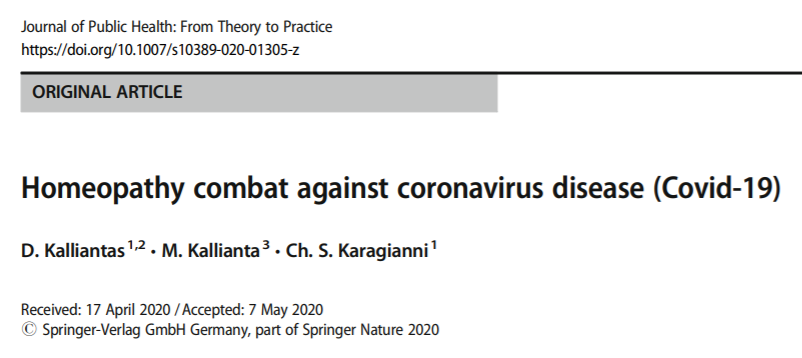
Blaming “overflow of manuscripts” and “obviously biased” reviewers, journal will retract homeopathy-COVID-19 paper

A public health journal will be retracting a paper that argued for the adoption of homeopathy in the fight against the coronavirus pandemic, according to the editor in chief.

We reported on Saturday that the Journal of Public Health: From Theory to Practice, a Springer Nature title also known by its German name, Zeitschrift für Gesundheitswissenschaften, had published “Homeopathy combat against coronavirus disease (Covid-19)” on June 5.

At the time, we had not yet heard from Joachim Kugler, the journal’s editor, about how this might have happened. Today, Kugler told Retraction Watch:

Continue reading Blaming “overflow of manuscripts” and “obviously biased” reviewers, journal will retract homeopathy-COVID-19 paper

“[A] painful step”: Authors retract paper on fatal poultry virus

via Wikimedia

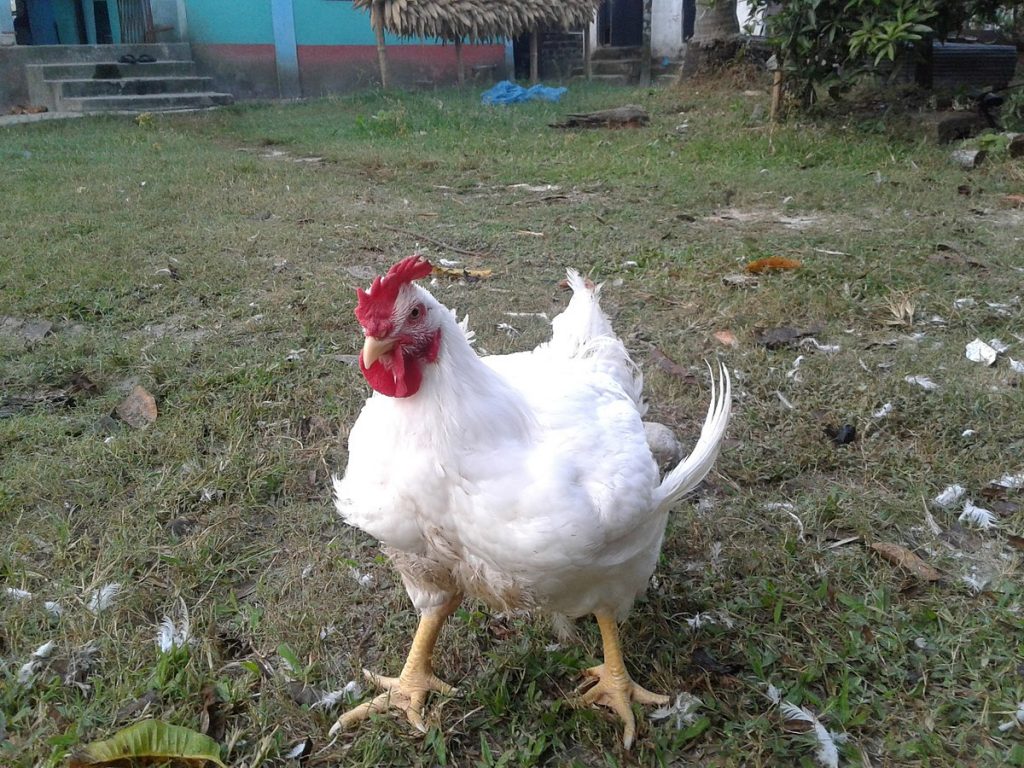
The authors of a 2019 paper on a lethal type of poultry virus in Asia have retracted the article because of problems with the data collection. But the researchers stand by their findings, which, they say, suggest the pathogen could be harmful to humans.  

The paper, titled “Novel orthobunyavirus causing severe kidney disease in broiler chickens, Malaysia, 2014-2017,” appeared in Emerging Infectious Diseases, a publication of the U.S. Centers for Disease Control and Prevention. 

The authors were affiliated with Ceva-Phylaxia Veterinary Biologicals Co. Ltd., and the Hungarian Academy of Sciences, both in Budapest. The lead author was Vilmos Palya, a prominent veterinary scientist

According to the abstract of the article:

Continue reading “[A] painful step”: Authors retract paper on fatal poultry virus

Paper blaming COVID-19 on 5G technology withdrawn

via Pixabay

A paper which argued that 5G cellphone technology could lead to infection with the novel coronavirus has been retracted, but not before scientific sleuth Elisabeth Bik wondered whether it was the “worst paper of 2020.”

The article, “5G Technology and induction of coronavirus in skin cells,” came from a group from Italy, the United States and Russia, and appeared in the Journal of Biological Regulators and Homeostatic Agents. The journal is published by Biolife, which asserts that it’s peer reviewed but has not responded to a request for comment. [Please see an update on this post.]

The abstract is now marked “WITHDRAWN” on PubMed and the paper has disappeared from the journal’s website. The abstract has been preserved here. According to the authors: 

Continue reading Paper blaming COVID-19 on 5G technology withdrawn

Paper urging use of homeopathy for COVID-19 appears in peer-reviewed public health journal

A peer-reviewed journal has published a paper that urges the adoption of homeopathy in the fight against the coronavirus pandemic.

[Please see an update on this post.]

The Journal of Public Health: From Theory to Practice — published by Springer Nature and also known by its German name, Zeitschrift für Gesundheitswissenschaften — published “Homeopathy combat against coronavirus disease (Covid-19)” on June 5. It is indexed in PubMed Central, although not on Medline.

Here’s the abstract:

Continue reading Paper urging use of homeopathy for COVID-19 appears in peer-reviewed public health journal

Journal to retract paper that spawned #medbikini

From the Journal of Vascular Surgery paper

The Journal of Vascular Surgery says it will retract a paper about surgeons’ social media posts that said health care professionals who posted pictures of themselves in bikinis were engaging in “potentially unprofessional” behavior — and led to a firestorm on Twitter yesterday.

As Medscape reported yesterday before the retraction:

Medical professionals are tweeting pictures of themselves in swimsuits with the hashtag #MedBikini, accompanied by sharp rebukes of a study that labeled such images on social media as “potentially unprofessional.” 

Continue reading Journal to retract paper that spawned #medbikini

Co-author of controversial hydroxychloroquine study has 2018 paper corrected for “unintentional mistake”

Sleuth Elisabeth Bik

Didier Raoult, whose claims that hydroxychloroquine can treat COVID-19 have been widely disputed, has had a 2018 paper corrected for what his team says was unintentional duplication of a figure.

Here’s the correction for “Identification of rickettsial immunoreactive proteins using a proximity ligation assay Western blotting and the traditional immunoproteomic approach,” which came four months after scientific sleuth Elisabeth Bik pointed out potential issues in Figure 2 on PubPeer:

Continue reading Co-author of controversial hydroxychloroquine study has 2018 paper corrected for “unintentional mistake”

Retraction of paper on romantic crushes marks second for psychology researcher

via Wikimedia

A psychology researcher who left her tenure track position at Northwestern University in 2018 amid concerns about the integrity of her data has lost a second paper.

Here’s the abstract of the 2018 paper, titled “Romantic crushes increase consumers’ preferences for strong sensory stimuli:” 

Continue reading Retraction of paper on romantic crushes marks second for psychology researcher

Calling exercise data “atypical, improbable, and to put it bluntly, pretty weird,” sleuths call for seven retractions

Sleuth James Steele

A group of data sleuths is calling for the retraction of seven articles by an exercise physiologist in Brazil whose data they believe to be “highly unlikely” to have occurred experimentally.

In a preprint posted to the server SportRxiv, the group — led by Andrew Vigotsky, a biomedical engineer at Northwestern University — details their concerns about the work of Matheus Barbalho, a PhD student at the Centro de Ciências Biológicas e da Saúde, part of the  Universidade da Amazônia, in Belém. Barbalho’s mentor is Paulo Gentil.  

In addition to the preprint, titled “Improbable data patterns in the work of Barbalho et al,” Greg Nuckols, one of the coauthors, has posted a lengthy “explainer” about the analysis. 

The Brazilian group already has one retraction, for a study in the International Journal of Sports Physiology and Performance titled “Evidence of a ceiling effect for training volume in muscle hypertrophy and strength in trained men—less is more?” According to the notice

Continue reading Calling exercise data “atypical, improbable, and to put it bluntly, pretty weird,” sleuths call for seven retractions

“[H]ow gullible reviewers and editors…can be”: An excerpt from Science Fictions

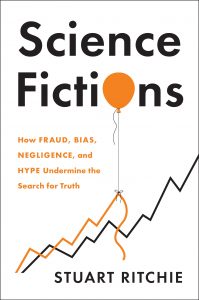
We’re pleased to present an excerpt from Stuart Ritchie’s new book, Science Fictions: How Fraud, Bias, Negligence, and Hype Undermine the Search for Truth.

One of the best-known, and most absurd, scientific fraud cases of the twentieth century also concerned transplants – in this case, skin grafts. While working at the prestigious Sloan-Kettering Cancer Institute in New York City in 1974, the dermatologist William Summerlin presaged Paolo Macchiarini—an Italian surgeon who in 2008 published a (fraudulent) blockbuster paper in the top medical journal the Lancet on his successful transplant of a trachea—by claiming to have solved the transplant-rejection problem that Macchiarini encountered. Using a disarmingly straightforward new technique in which the donor skin was incubated and marinated in special nutrients prior to the operation, Summerlin had apparently
grafted a section of the skin of a black mouse onto a white one, with no immune rejection. Except he hadn’t. On the way to show the head of his lab his exciting new findings, he’d coloured in a patch of the white mouse’s fur with a black felt-tip pen, a deception later revealed by a lab technician who, smelling a rat (or perhaps, in this case, a mouse), proceeded to use alcohol to rub off the ink. There never were any successful grafts on the mice, and Summerlin was quickly fired.

Continue reading “[H]ow gullible reviewers and editors…can be”: An excerpt from Science Fictions