Columbia grad student faked data in study of socioeconomics and life experiences, says retraction notice

Personality and Social Psychology Bulletin has retracted a 2018 paper because, according to a retraction notice, the first author changed data in a way that “resulted in incorrect and misleading results.”

The article, “Cardiovascular and self-regulatory consequences of SES-based social identity threat,” claims to show that socioeconomic status-based “social identity threat can go from ‘in the air’ to ‘under the skin’ to influence physiological and self-regulatory processes.” It has been cited twice in addition to the retraction notice, according to Clarivate Analytics’ Web of Science.

Here’s the retraction notice:

Continue reading Columbia grad student faked data in study of socioeconomics and life experiences, says retraction notice

JAMA journal retracts its first paper, on exercise and heart disease

The authors of a 2019 meta-analysis in a JAMA journal on exercise and heart disease have retracted the paper after discovering that a quarter of the studies they’d used in the analysis did not belong. 

The retraction is the first for the journal, which had published some 2,800 articles before having to pull one, Frederick P. Rivara, the editor in chief, told Retraction Watch. One in 2,800, we should note, is quite close to the 4 in 10,000 rate of retraction in the overall literature.

The study, from a group at the Universities of Manchester and Brighton, in the United Kingdom, was titled “Accelerometer- and pedometer-based physical activity interventions among adults with cardiometabolic conditions: a systematic review and meta-analysis,” and appeared in JAMA Network Open

The authors, led by Alexander Hodkinson, looked at 36 randomized clinical trials and found that: 

Continue reading JAMA journal retracts its first paper, on exercise and heart disease

Researcher linked to author with 52 retractions loses a paper for duplication

An engineering researcher alleged to be part of a four-group ring of authors who have “repetitively published their own work in ways that call into serious question” the validity of hundreds of papers has had a paper retracted.

As we reported in August, Mostafa Jalal, a postdoc at Texas A&M, is alleged to have “engaged in some manner of collaboration or communication” with three other researchers, including Ali Nazari, who has now had 52 papers retracted. Those retractions came after the whistleblower, the pseudonymous Artemisia Stricta, called attention to problems in Nazari’s work.

The newly retracted paper, originally published in 2013 in Science and Engineering of Composite Materials, is one of five publications in which Artemisia Stricta said Jalal’s group had misrepresented electron microscopy images.

Here’s the retraction notice for “Assessment of nano-TiO2 and class F fly ash effects on flexural fracture and microstructure of binary blended concrete”:

Continue reading Researcher linked to author with 52 retractions loses a paper for duplication

Psychology journal retracts two articles for being “unethical, scientifically flawed, and based on racist ideas and agenda”

A psychology journal has retracted a pair of decades-old articles by a now-deceased psychologist with noxious views about race and intelligence after the editors concluded that his work was “unethical, scientifically flawed, and based on racist ideas and agenda.”

The author, J. Philippe Rushton, was affiliated with the University of Western Ontario, where he was notorious for publishing highly questionable studies that promoted tropes of white supremacy, including that Blacks are less intelligent than whites and that

Continue reading Psychology journal retracts two articles for being “unethical, scientifically flawed, and based on racist ideas and agenda”

Psychology paper retracted after creators of tool allege “serious breach of copyright”

A researcher in Ecuador has lost a 2019 paper on the application of a widely-used psychological research instrument after the owner of the tool flexed their copyright muscle. 

The episode — like another one, recently — echoes the case of Donald Morisky, a UCLA researcher who developed an instrument for assessing medication adherence — and then began charging other scientists small fortunes (and, in some cases, large ones) for use of the tool, or forcing retractions when they failed to comply. (For more on the Morisky case, see our 2017 piece in Science and this recent warning by journal editors.)

Written by Paúl Arias-Medina, of the University of Cuenca, the article, “Psychometric properties of the self-report version of the strengths and difficulties questionnaire in the Ecuadorian context: an evaluation of four models,” appeared in BMC Psychology

Per the paper’s abstract:

Continue reading Psychology paper retracted after creators of tool allege “serious breach of copyright”

Medical writer loses COVID-19-cancer paper for plagiarism

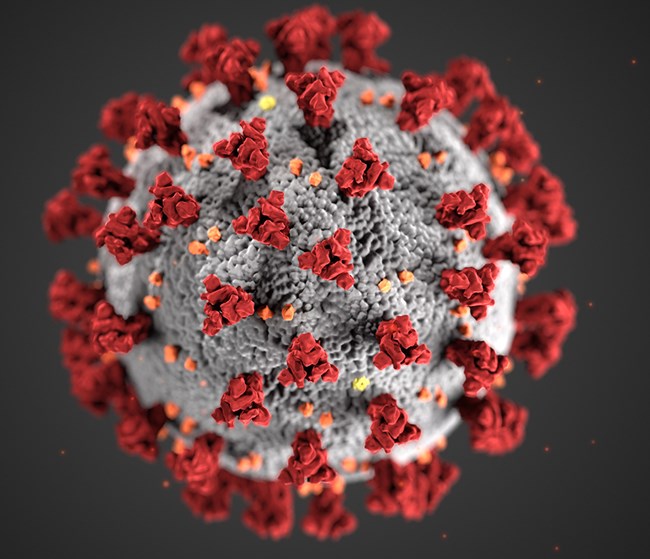
via CDC

An oncology journal has retracted a review article on the hypothetical link between Covid-19 and cancer after determining that the medical writer who authored the work hadn’t done all the writing herself. 

The paper, “Clinical sequelae of the novel coronavirus: does COVID-19 infection predispose patients to cancer?” appeared in Future Oncology in May and was written by Priya Hays, who at the time was a technical writer with Talis Biomedical Corp., in Menlo Park, Calif. Hays is currently with Abbott, according to her LinkedIn profile. She also has a company called Hays Documentation Specialists, which offers a variety of manuscript services, including academic writing and something called “unstructured authoring assistance.” 

As the retraction notice indicates, Hays appears to have had some authoring assistance of her own: 

Continue reading Medical writer loses COVID-19-cancer paper for plagiarism

‘Misconduct on a grand and terrible scale’: Dental scientist up to 26 retractions

Jose Luis Calvo-Guirado

A dentistry researcher in Spain with a history of reusing and manipulating images has notched two more retractions, giving him 26. 

The new retractions move Jose´ Luis Calvo-Guirado, of Universidad Católica San Antonio de Murcia, into a tie for 24th place on the Retraction Watch leaderboard

Calvo-Guirado has in the past disputed the retractions of his research. And at least one of his co-authors, Georgios Romanos, of the State University of New York Stony Brook School of Dental Medicine, speculated that Calvo-Guirado was reusing images to limit the number of lab animals that would need to be sacrificed in his studies.

The latest retractions involve two papers in Annals of Anatomy, an Elsevier publication, including the 2018 article “A new procedure for processing extracted teeth for immediate grafting in post-extraction sockets. An experimental study in American Fox Hound dogs.” According to the notice, the paper contained manipulated images that were reused in subsequently retracted articles:  

Continue reading ‘Misconduct on a grand and terrible scale’: Dental scientist up to 26 retractions

‘Caught in the act’: Veterinary researcher caught fabricating gene data, resigns from university job

via Pixabay

A research technician at Washington State University resigned after his colleagues caught him fabricating data earlier this year, Retraction Watch has learned. 

Ryan Evanoff was working in veterinary microbiology at the Pullman campus when members of the department discovered that he had been falsifying sequencing data in gene studies. According to Robert Mealey, the chair of the  Department of Veterinary Clinical Sciences in the College of Veterinary Medicine at Washington State: 

Continue reading ‘Caught in the act’: Veterinary researcher caught fabricating gene data, resigns from university job

Legal researcher up to 23 retractions for false affiliations, plagiarism

A legal scholar with a peripatetic and checkered career — and questionable CV — now has 23 retractions by our count

Dimitris Liakopoulos, about whom we first wrote in July, has claimed to have held professorships in Europe and the United States, including at Columbia Law School, Stetson University and Tufts University, as well as authorship on some 600 papers. But journals have been retracting his articles over concerns about plagiarism and concerns about his stated academic affiliations. For example, Tufts told us in July that he had never been affiliated with the school.

Liakopoulos appears to have locked his ORCID ID, making public scrutiny of his scholarly output more difficult. But commenters on PubPeer have taken aim at several of his papers over the past few months. 

Continue reading Legal researcher up to 23 retractions for false affiliations, plagiarism

The grad student who found a fatal error that may affect lots of papers

A team of researchers in England has retracted a 2014 paper after a graduate student affiliated with the group found a fatal error while trying to replicate parts of the work — and which might affect similar studies by other scientists, as well.

The article, “Perceptual load affects spatial tuning of neuronal populations in human early visual cortex,” was written by Benjamin de Haas, then of the Institute of Cognitive Neuroscience at the University College London, and his colleagues at UCL. 

According to the retraction notice

Continue reading The grad student who found a fatal error that may affect lots of papers