Authors retract highly cited 2014 Science paper

The authors of a 2014 paper in Science have retracted it, after becoming aware that impurities in the chemicals they used for their experiments may have generated the apparent findings.

The paper, “Ammonia synthesis by N2 and steam electrolysis in molten hydroxide suspensions of nanoscale Fe2O3,” has been cited 323 times, according to Clarivate Analytics’ Web of Science, earning it a “hot paper” designation. According to a summary of the work, “the protocol points to a way to produce ammonia from purely renewable resources.”

Here’s the retraction notice:

Continue reading Authors retract highly cited 2014 Science paper

Study of China’s ethnic minorities retracted as dozens of papers come under scrutiny for ethical violations

A legal journal has retracted a 2019 article on the facial genetics of ethnic minorities in China for ethics violations, and the publisher, Springer Nature, is investigating more than two dozen other articles for similar concerns. 

The article, “Y Chromosomal STR haplotypes in Chinese Uyghur, Kazakh and Hui ethnic groups and genetic features of DYS448 null allele and DYS19 duplicated allele,” appeared in the International Journal of Legal Medicine.

Three of the authors were affiliated with the notorious Karamay Municipal Public Security Bureau, which the U.S. government hit with sanctions in October 2019 for being

Continue reading Study of China’s ethnic minorities retracted as dozens of papers come under scrutiny for ethical violations

Springer Nature retracts paper that hundreds called “overtly racist”

Lawrence Mead

Less than two weeks after publication, an essay on poverty and race which critics decried as “unscholarly” and “overtly racist” has been retracted.

The essay, by Lawrence Mead, of New York University, appeared in the journal Society on July 21. It immediately drew the ire of hundreds of academics and advocates who, in a pair of petitions, demanded among other things that the journal retract the paper. 

Earlier this week, Springer Nature, which publishes Society, flagged Mead’s essay with an editor’s note stating that it was investigating the matter. Now the publisher has decided to remove the article. The retraction notice reads:

Continue reading Springer Nature retracts paper that hundreds called “overtly racist”

Why did a journal suddenly retract a 45-year-old paper over lack of informed consent?

A journal has retracted a 45-year-old case study over concerns that the authors had failed to obtain proper informed consent from the family they’d described. 

The article, “Stickler syndrome report of a second Australian family,” appeared in Pediatric Radiology, a Springer Nature title, in 1975. The first author was Kazimierz Kozlowski, a prominent radiologist who was born in Poland and worked in the United States and Australia, where he studied skeletal diseases in children. 

Continue reading Why did a journal suddenly retract a 45-year-old paper over lack of informed consent?

French hydroxychloroquine study has “major methodological shortcomings” and is “fully irresponsible,” says review, but is not being retracted

Frits Rosendaal

A March 2020 paper that set off months of angry debates about whether hydroxychloroquine is effective in treating COVID-19 has “gross methodological shortcomings” that “do not justify the far-reaching conclusions about the efficacy of hydroxychloroquine in Covid-19,” according to a review commissioned by the journal that published the original work.

The comments, by Frits Rosendaal, of Leiden University Medical Center in the Netherlands, came as part of a review commissioned by International Society of Antimicrobial Chemotherapy (ISAC), which publishes the journal along with Elsiever. ISAC had issued a statement about the paper in April, saying it “does not meet the [International Society of Antimicrobial Chemotherapy’s] expected standard.”

The study, Rosendaal writes,

Continue reading French hydroxychloroquine study has “major methodological shortcomings” and is “fully irresponsible,” says review, but is not being retracted

A mystery: How did this team plagiarize an unpublished paper?

A study on a wireless communication algorithm was retracted for being an exact duplicate of a paper submitted to a separate journal last year — but the authors were different and it’s unclear how they got hold of it.

The retracted study, “Energy-aware resource management for uplink non-orthogonal multiple access: Multi-agent deep reinforcement learning” was published in the Elsevier journal Future Generation Computer Systems. Neither the author of the original work who we were able to reach, nor either journal involved, say they know how the unpublished manuscript got into another group’s hands.

Here’s the (complicated) timeline:

Continue reading A mystery: How did this team plagiarize an unpublished paper?

“Where there are girls, there are cats” returns, with a new title

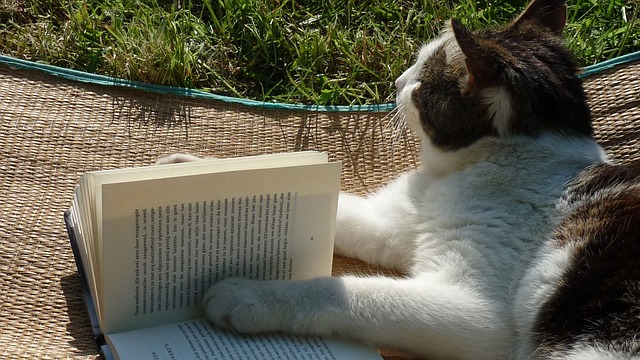
A cat philosopher, via Pixabay

The cats are back. 

As promised, Biological Conservation has replaced a controversial paper on feral cats in China whose cringeworthy title — “Where there are girls, there are cats” — prompted an outcry on social media that resulted in a temporary retraction

The new article boasts a different, non-gendered title: “Understanding how free-ranging cats interact with humans: A case study in China with management implications.” But it makes more or less the same point: Where there are women, there are more cats: 

Continue reading “Where there are girls, there are cats” returns, with a new title

A study on fruit flies is retracted “owing to legal issues of confidentiality”

Ceratitis capitata, via Wikimedia

A preliminary study which found that using cold treatment worked to combat a Mediterranean species of fruit flies in blueberries has been retracted.

The study, “Cold Responses of the Mediterranean Fruit Fly Ceratitis capitata Wiedemann (Diptera: Tephritidae) in Blueberry” was published in Insects, an MDPI journal on May 1, 2020.

The retraction appears to be due to some kind of ethics breach, not the findings of the paper itself. It is unclear, however, what kind of ethics breach took place, and none of the authors has responded to requests for comment. The article’s URL in the journal doesn’t even show the abstract but at the time of this writing the full text is available (labeled as retracted) on PubMed. 

The retraction notice, dated June 9, 2020 reads:

Continue reading A study on fruit flies is retracted “owing to legal issues of confidentiality”

An influential osteoporosis study is “likely fraudulent” — but not retracted

Alison Avenell, sleuth

Alison Avenell first came across The Yamaguchi Osteoporosis Study (YOPS) when she was working on a 2014 Cochrane Review on bone fractures.

She cited the study but felt something was off about it. “I suppose, together with my collaborators over the years, we developed sort of antennae for rather suspicious looking studies,” Avenell, of the University of Aberdeen in Scotland, told Retraction Watch. “And when you see a relatively large trial with just two authors, you think to yourself, that’s not possible.”

Avenell and her colleagues, whose work we’ve written about before, were critical to the retraction of fraudulent research by the late Yoshihiro Sato and his collaborator Jun Iwamoto, who rank third and fourth, respectively, on our retraction leaderboard.

Continue reading An influential osteoporosis study is “likely fraudulent” — but not retracted

Journal calls 2012 paper “deeply offensive to particular minorities”

An Elsevier journal plans to issue a retraction notice this week about a widely criticized 2012 paper claiming to find links between skin color, aggression, and sexuality.

Earlier this month, we reported that the journal, Personality and Individual Differences (PAID), would retract the study “Do pigmentation and the melanocortin system modulate aggression and sexuality in humans as they do in other animals?” by the late authors Philippe Rushton and Donald Templer, published in 2012.

The paper was the subject of a highly critical Medium post in November 2019, and of a petition with more than 1,000 signatures sent to Elsevier earlier this month.

The four-page retraction notice, provided to Retraction Watch by Elsevier, begins with a description of the history, policies and procedures at the journal, then launches into a litany of issues with the paper:

Continue reading Journal calls 2012 paper “deeply offensive to particular minorities”