A medical school put a scientist found guilty of misconduct in charge of an NIH grant

Santosh Katiyar

After a scientist was found guilty of misconduct at one university, a new institution asked to take over his grant and put him in charge of it.

But the new institution — the Morehouse School of Medicine, in Atlanta, Georgia — denies they ever employed him. Continue reading A medical school put a scientist found guilty of misconduct in charge of an NIH grant

Nobel Prize winners correct the literature, too

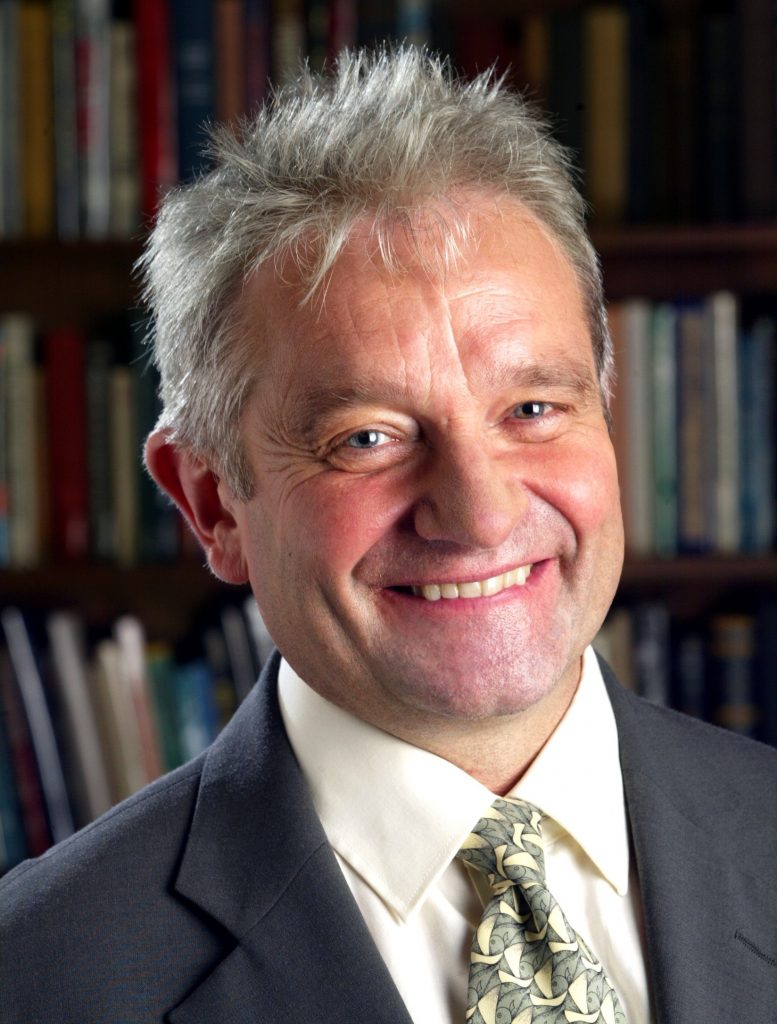
Paul Nurse

If you’re ever cringing at the thought of having to correct a paper, here’s a story that may help you work through that pain.

Paul Nurse shared the Nobel Prize in Medicine or Physiology in 2001. While holding posts at Oxford University, the Rockefeller Institute and elsewhere, and now as director of the Francis Crick Institute, he has continued doing research. And earlier this month, he corrected a 2017 paper in the Journal of Cell Science, “Screening and purification of natural products from actinomycetes that affect the cell shape of fission yeast.”

Here’s the correction notice: Continue reading Nobel Prize winners correct the literature, too

Former VA postdoc committed misconduct, banned from agency research for four years

A former postdoc at the U.S. VA Health Care System in Albuquerque, N.M., committed misconduct in three papers, the agency announced today.

Alba Chavez-Dozal, who studied the basic science underpinnings of infectious diseases, had three papers retracted between 2015 and 2016. In findings dated July 18, 2018, but released today, the VA said that Chavez-Dozal, “a post-doctoral research fellow who formerly held a VA without compensation appointment, engaged in research misconduct by intentionally and/or knowingly:” Continue reading Former VA postdoc committed misconduct, banned from agency research for four years

Are non-breadwinners more likely to cheat? 2015 study said yes; newly corrected version says “maybe”

A few years ago, you may remember some news headlines discussing a study that suggested people — especially men — are more likely to cheat if their spouses earn more money. Well, it turns out those findings are less convincing than they initially appeared. But they’re not getting retracted.

In a six-page correction notice, author Christin Munsch at the University of Connecticut explains that she made “several errors related to the coding of missing data,” which weakened most of her conclusions in the original paper.

The paper earned some attention from mainstream news outlets. For example, in 2015, The Washington Post wrote:

Continue reading Are non-breadwinners more likely to cheat? 2015 study said yes; newly corrected version says “maybe”

Study claiming “abortion reversal” is safe and effective temporarily withdrawn for ethical issues

A journal has temporarily removed a study by a researcher who has long championed a highly controversial “abortion reversal” method over concerns about its ethical approval.

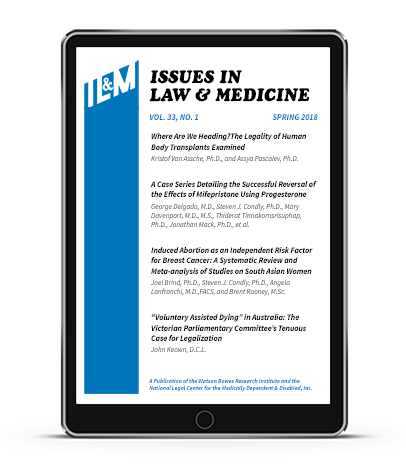
The study, “A Case Series Detailing the Successful Reversal of the Effects of Mifepristone Using Progesterone,” appeared in Issues In Law And Medicine in April. Its first author, George Delgado, is the medical director of Culture of Life Family Services, which operates a ‘‘crisis pregnancy center,’ according to a 2017 New York Times Magazine article about “abortion-pill reversal.”

Medical abortion consists of two pills, mifepristone and misoprostol, taken some time apart. In order to see if its effects could be undone, here’s what the authors of the withdrawn study say they did: Continue reading Study claiming “abortion reversal” is safe and effective temporarily withdrawn for ethical issues

Researchers pull Nature paper over first author’s objections

Researchers have retracted a 2015 Nature paper about the molecular underpinnings of immune function after discovering they could not replicate key parts of the results.

The first author, Wendy Huang — who started working as an assistant professor at the University of California, San Diego, only months after the paper appeared — did not sign the retraction letter, published last week. The research was conducted while Huang was working as a postdoctoral fellow at New York University, home of last author Dan Littman (also an investigator at the Howard Hughes Medical Institute).

What happened appears to be a case of “he said, she said:” Littman asked to retract the paper after his lab couldn’t reproduce it, and Huang insists the data remain correct, saying the process had been “unfair and done without due process:”

Continue reading Researchers pull Nature paper over first author’s objections

A misconduct probe — which led to 20 retraction requests — took four years. Why?

Santosh Katiyar

A probe into the work of a researcher who studied natural products for cancer had many stops and starts along the way — including five extensions granted by the U.S. Office of Research Integrity — according to documents obtained by Retraction Watch.

Following a public records request, we recently obtained a copy of the report on the investigation of allegations of misconduct by Santosh Katiyar, issued jointly by the University of Alabama Birmingham and the Birmingham VA Medical Center. As a result of the report, the institutions have requested 20 retractions of work by Santosh Katiyar, who received millions in funding from the U.S. National Institutes of Health

How does the report stack up?

Continue reading A misconduct probe — which led to 20 retraction requests — took four years. Why?

Fecal transplant paper pulled for “personal issue”

Last month, the Journal of Pediatric Gastroenterology and Nutrition pulled an article on fecal transplantation for a reason that, well, doesn’t pass the sniff test.

The paper, by Sonia Michail of Children’s Hospital Los Angeles, appeared online in October 2017 and described a randomized controlled trial of fecal transplants to treat kids with ulcerative colitis. (If you’re interested, here’s an overview of how fecal transplantation works.) The trial, or one awfully like it, is listed on ClinicalTrials.gov, and shows Michail as the lone investigator on the study, which is aiming to gather more than 100 participants.

But the journal retracted the article — which was the subject of a laudatory editorial in the journal pointing readers to the findings — with an entirely opaque statement, saying that the work   

Continue reading Fecal transplant paper pulled for “personal issue”

An awkward correction later, these researchers have a warning for would-be authors

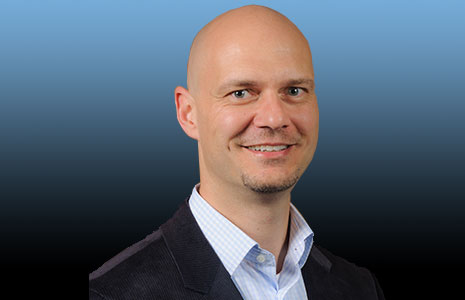
Mitchell Knutson

Mitchell Knutson learned to take a journal’s policies seriously the hard way.

Early in 2017, Knutson, a professor at the University of Florida in Gainesville who studies iron metabolism, had findings he and his team were excited about publishing in the Proceedings of the National Academy of Sciences (PNAS). So they submitted a manuscript on January 30. Continue reading An awkward correction later, these researchers have a warning for would-be authors

Philosophers, meet the plagiarism police. His name is Michael Dougherty.

Michael Dougherty

Some researchers spot an issue with a paper, groan inwardly, and move on. Not Michael Dougherty. Over the years, the philosophy professor at Ohio Dominican University has sent us several tips about plagiarized papers, which have led to numerous editorial notices — including a correction to a more than 30-year-old paper written by a cat, and the outing of a prominent researcher who was mysteriously using a pseudonym. Last week, we reported that one of the world’s foremost economists had reused material in multiple papers — again, information that was revealed based on a tip from Dougherty. Of course, he’s not the only sleuth out there — journals regularly get queries from self-titled “data thugs” such as Nick Brown, James Heathers, and Brendan O’ConnorWe spoke with Dougherty about how he finds the time for such a never-ending, thankless side project — and why he’s okay with the idea he might end up getting more papers retracted than he publishes himself. 

Retraction Watch: You do a lot of plagiarism sleuthing — often a thankless job. What motivates you? And how time-consuming is it?

Continue reading Philosophers, meet the plagiarism police. His name is Michael Dougherty.