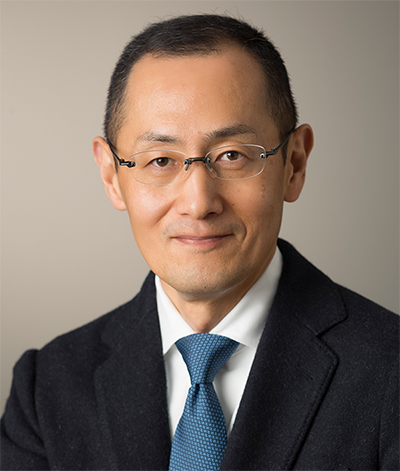
The Center for iPS Cell Research and Application (CiRA) at Kyoto University in Japan is defending Nobel Prize winner Shinya Yamanaka against claims of image manipulation in multiple studies on which he was an author. The institute says questioning Yamanaka’s integrity without sufficient evidence is “completely unacceptable.”
Yamanaka shared the Nobel Prize in Physiology or Medicine in 2012 and works at CiRA.
On August 7, Gotham City Research LLC, a short-selling firm based in the United States, released a report alleging image manipulation in several papers by Yamanaka appearing between 2000 and 2020.
The targets of the report and another issued a few days earlier were two Japanese firms, Sumitomo Chemical And Sumitomo Pharmaceutical. These companies have provided funding to CiRA, where Yamanaka and his colleague Kazutoshi Takahashi conducted early proof-of-concept research on reprogramming mature cells into induced pluripotent stem cells.
Earlier this year, Japan’s health ministry gave conditional approval to Amchepry, a treatment for Parkinson’s disease based on reprogrammed stem cells. But some researchers worry that the first-of-its-kind treatment has only been tested in seven patients.
Gotham has shorted all stocks of the two companies, the firm’s founder Daniel Yu, who is based in New York, told Retraction Watch. Gotham’s previous short-selling campaigns have yielded some success but it has rarely previously targeted pharmaceutical companies. “I generally root for them to succeed,” Yu told us.
In 2024, Gotham shorted the stocks for Spanish healthcare company Grifols SA, arguing that the firm was masking its true debt. Gotham’s report wiped a third of the company’s value and the company had to undergo governance restructuring to win back investors.
Short sellers have targeted scientific findings before. In 2021, a group expressed doubts about biotech Cassava Science’s experimental Alzheimer’s drug, which eventually failed clinical trials. Cassava sued them after a researcher associated with the treatment was charged with fraud, but those charges were later dropped. Cassava dropped its defamation lawsuit in 2024.
Gotham’s report on Yamanaka raises allegations of image duplication in 10 papers, most of which are already flagged on PubPeer. Yamanaka — who served as CiRA’s director between 2008 and 2022 — was either first or corresponding author on three of the papers.
For two of them, the issues have already been investigated, CiRA’s statement reads, “and the necessary actions have already been completed.” One of those papers, published in Science in 2008, has been corrected. The other, published by The EMBO Journal in 2000, the editors saw “no concrete evidence” to suggest images in the paper were duplicated, the journal said in a 2014 statement.
For the third study, published in 2003 in Cell, Yamanaka “reviewed the matter in response to the current report and concluded that the two images alleged to be similar are not identical, and that this does not constitute duplicate use or misidentification of an image,” the CiRA statement reads.
Another study mentioned in Gotham’s report, published in 2011 in Human Molecular Genetics, was corrected last year for an apparent image duplication. According to the correction notice, the raw data were not fully available “but the authors determined that during the final figure assembly, inadvertent errors occurred.”
For four other studies in the Gotham report, Yamanaka was listed as a coauthor because he provided research materials such as cells or mice, the CiRA statement explained.
“Treating these different cases collectively as though they demonstrate an ongoing pattern of research misconduct by Professor Yamanaka or by CiRA disregards the facts specific to each case and is completely unacceptable,” CiRA stated. “We strongly object to statements that, without sufficient basis, damage a researcher’s integrity or reputation.”
Gotham also included two studies in its report on which Yamanaka was not a coauthor.
One of them was retracted in 2018 by Stem Cell Reports. As Retracted Watch reported at the time, Kyoto University “punitively dismissed” Yamanaka’s colleague Kohei Yamamizu after an investigation found that he had fabricated and falsified data in that study. In 2019, another paper listing Yamamizu — but not Yamanaka — was retracted.
While the Kyoto probe had found that Yamamizu was solely responsible for the manipulation, Yamanaka issued a statement at the time saying he felt “a strong responsibility for not having prevented research misconduct at our institute.” Yamanaka was also penalized by CiRA, according to his statement, but the nature of that punishment is unclear.
For the final paper, published in 2020 in the Journal of Neuroscience Research, the study’s corresponding author Jun Takahashi, who served as CiRA’s director between April 2022 and March 2026, is reviewing the concerns and will take “appropriate action,” according to the CiRA statement.
We reached out to Yamanaka for a comment but heard back from Hiroyuki Wadahama from CiRA’s international public communications office.
Wadahama told us CiRA officials are not aware of any ongoing institutional probes into these papers. “We have not been in touch with Gotham City Research regarding their report, nor did we receive inquiries from them prior to its publication,” he said. “We believe their report disregards the specific facts of each paper and draws unfounded conclusions.”
Like Retraction Watch? You can make a tax-deductible contribution to support our work, follow us on X or Bluesky, like us on Facebook, follow us on LinkedIn, add us to your RSS reader, or subscribe to our daily digest. If you find a retraction that’s not in our database, you can let us know here. For comments or feedback, email us at [email protected].
Talking about clearing one’s name. Stop going round in a circle. Yamanaka should stop outsourcing to “international public communications office” to do his job. Yamanaka must clear up the mess that is attached to him. He should come clean himself first, and then let the said office use his “confessions” to do their job. Why is this so difficult? (i) Just write your contributions (scientific and otherwise), (ii) your responsibility in each problematic paper, (iii) under what circumstances you were also responsible for your co-authors contributions, (iv) and in what way, why and how you cannot or can be held responsible in each case or problematic paper. Period. The scientific community can and would understand because they know how the system works, in and out.
Nonsense!!!
This is not how any of this works. Institutions have a protocol to follow when situations like this arise. For all we know, he might be under a gag order not to talk to any media. You can’t read into it, it is not an indicator of guilt or lack thereof.
Gag orders from coming clean? Then do not blame people if they start to question your integrity and your actual contributions based on your retractions.
True scientific breakthroughs are not measured by market fluctuations or the assertions of financial short-sellers, but by their universal, undeniable reproducibility across the globe. Dr. Shinya Yamanaka’s discovery of induced pluripotent stem cells (iPSCs)—achieved through the revolutionary four-factor reprogramming method—permanently rewritten the laws of developmental biology, unlocked unprecedented frontiers in regenerative medicine, and earned the 2012 Nobel Prize in Physiology or Medicine.
Conflating routine institutional material-sharing, external co-authorships, or resolved technical corrections with personal misconduct is scientifically dishonest and intellectually baseless. As the Center for iPS Cell Research and Application (CiRA) decisively stated, questioning Dr. Yamanaka’s integrity without sufficient evidence is completely unacceptable. While financial speculators may seek short-term gain by stirring artificial controversy, they cannot alter biological reality: thousands of independent laboratories worldwide utilize Yamanaka’s paradigm every day to develop life-saving therapies. Dr. Yamanaka’s scientific legacy remains an unassailable pillar of modern biomedical progress.