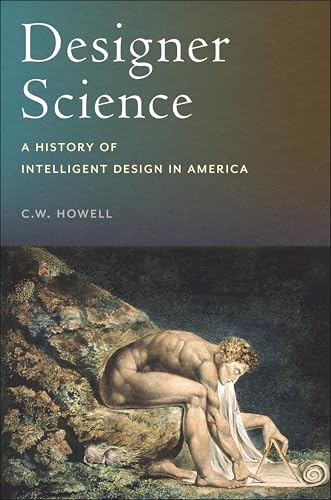
New York University Press is pulling all copies of a book about intelligent design after the author falsely quoted another scholar in the work.
Designer Science: A History of Intelligent Design in America, by C.W. Howell, was published by NYU Press in 2025. Earlier this month, the publisher said it was “pulling the current edition from the market” and “destroying all existing inventory” after learning Howell attributed an inaccurate quote to Michael Behe, a professor at Lehigh University in Pennsylvania, according to an Aug. 3 email Retraction Watch has seen.
The misquote stemmed from a passage in a court ruling Howell “mistakenly” read as a direct quote from Behe and attributed as such, he told us. Howell writes about the intersection of faith and science, and serves as an academic director for the C.S. Lewis Foundation.
The publisher has removed the work from its website and plans to reissue the book after the misattributed quote is corrected, James Devitt, managing director of public affairs for New York University, told us Friday. While no longer available on the NYU Press site or on Amazon, the book is still visible on the Publishers Weekly site.
“After reviewing his notes earlier this month, C.W. Howell, the author, realized the passage was written by Judge John E. Jones about Behe (an expert witness in the case)—and not said by Behe himself—as part of the judge’s opinion in Kitzmiller v Dover,” Devitt told us in an email.
Kitzmiller v. Dover was a landmark federal case that tested whether intelligent design (ID) should be taught in public schools as an alternative to Darwinian evolution. In 2004, the parents of 11 students filed a lawsuit against the Dover, Pennsylvania, school district over its decision to include ID in its schools’ science curriculum. The court ultimately ruled teaching ID in public schools was unconstitutional. Behe, who has written several books on ID and has faced extensive criticism from the mainstream scientific community, was a witness for the defense.
Casey Luskin, a research director at Discovery Institute, alerted the publisher to the error. Discovery Institute is a public policy think tank that promotes ID. Luskin discovered the quote as he prepared to write a review of Designer Science, which he told us “did not pass the smell test” because “the quote did not sound like Dr. Behe.”
The passage by Howell, on page 132 of his book, states Behe made a “damning admission” during court testimony when he “confessed” on the stand that “plausibility of the argument for ID depends upon the extent to which one believes in the existence of God.”
After further research, Luskin determined the false quote resulted from “a game of bad-scholarship-telephone,” he told us.
The American Civil Liberties Union (ACLU), which represented the plaintiffs in Kitzmiller, wrote a court brief that purported to summarize an article by Behe published in 2001 in Biology and Philosophy. The brief makes the “plausibility” assertion about Behe’s beliefs with a citation to his article. In his Dec. 20, 2005 ruling, Jones repeated the words from ACLU’s brief, italicized them, and added the phrase “emphasis added.” Howell then quoted the court passage in his book, attributing the words to Behe.
“I believe correcting the mistake is the best course of action, and I welcome the opportunity to do so,” Howell told us. “I have worked closely with NYU Press to remove and replace the quote for the paperback reissue and the digital editions.”
Behe told us that the quote is not only inaccurate but “the polar opposite of my views.”
“Apparently, Dr. Howell thought the italics meant it was a direct quotation of my testimony on the stand, rather than a tendentious summary of my journal article,” said Behe, a senior fellow at Discovery Institute. “That translated into an entirely fictional courtroom drama in his book.”
Behe said NYU Press did “the admirable thing” in retracting the book, and that he appreciated Howell’s “apparent willingness to accede.”
Like Retraction Watch? You can make a tax-deductible contribution to support our work, follow us on X or Bluesky, like us on Facebook, follow us on LinkedIn, add us to your RSS reader, or subscribe to our daily digest. If you find a retraction that’s not in our database, you can let us know here. For comments or feedback, email us at [email protected].
I appreciate the good reporting in this article but the headline is emphatically NOT accurate. The issue is not one of “misquoting” but of fabrication by Howell. That’s why NYU Press has taken such steps, which they wouldn’t with a mere “misquote.” I’ve asked Retraction Watch to fix the headline. Please see here: https://scienceandculture.com/2026/08/retraction-watch-reports-on-designer-science-fiasco-but-mischaracterizes-it/
Your article seems unnecessarily rude and tenditious towards Howell, as his explanation is completely believable. Click on the “Dec. 20, 2005 ruling” link and you will see what appears to be a damning discovery by the judge; it is a complex story as to why the judge is basically giving a false quotation. And yes, it is honorable of Howell to retract the entire book. Retraction Watch is replete with articles about authors who refuse to retract.
Please see here. https://scienceandculture.com/2026/09/is-it-rude-to-point-out-the-seriousness-of-c-w-howells-defamatory-fabricated-quote/
It’s absolutely embarrassing for a “Senior Fellow and Editor” to take time out of their day to promote a reply to their comment on another blog into the subject of an entire blog post. I can only assume there’s not much actual work to do at “Discovery Institute’s Center for Science and Culture”.
But Orthoconductive, aren’t you worried about having a blog post written about you writing a comment about a Senior Fellow and Editor writing a blog post about a comment on another blog?
I’m pretty sure this is not the first time that statement has been presented as a quote from Behe himself. It might be the first time it has appeared in a form where the publisher could face a lawsuit. That would explain the full retraction rather than simply issuing a correction.
The Discovery Institute has been (and remains) highly critical of the Kitzmiller v. Dover decision because it ruled that Intelligent Design is Creationism. The DI stated they would appeal the decision, but that never happened. Nor has the DI done much to support the testing of Design hypotheses that might demonstrate the value of Design claims.