NSF investigation of high-profile plant retractions ends in two debarments

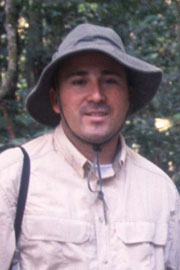
Jorge Vivanco
Jorge Vivanco

A nearly ten-year-long series of investigations into a pair of plant physiologists who received millions in funding from the U.S. National Science Foundation has resulted in debarments of less than two years for each of the researchers.

The NSF Office of Inspector General recently posted its close-out report on its decision and a review of the University’s investigation, which had recommended a total of eight retractions or corrections. Although the investigator’s names have been redacted, the text of retractions and corrections quoted in the report corresponds to papers by Continue reading NSF investigation of high-profile plant retractions ends in two debarments

Retraction of grizzly bear-diabetes study follows departure of Amgen scientist for data manipulation

cov150h
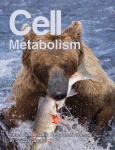
The retracted paper made the cover of the August 2014 issue of the journal.

A study that looked to hibernating bears to understand the mechanisms behind diabetes has been retracted because an author based at the biotech company Amgen “manipulated specific experimental data” in two figures.

According to the The Wall Street JournalAmgen discovered the manipulation while reviewing the data following publication of the paper,”Grizzly bears exhibit augmented insulin sensitivity while obese prior to a reversible insulin resistance during hibernation.” Published in Cell Metabolism last year, the paper has been cited 8 times, according to Thomson Scientific’s Web of Knowledge.

A press release from the journal last year — coverage in Science and Nature followed — explained the purpose of the study:

Continue reading Retraction of grizzly bear-diabetes study follows departure of Amgen scientist for data manipulation

Authors’ pharma ties cause Cochrane to withdraw two diabetes reviews

Cochrane_LogoThe Cochrane Library has withdrawn two reviews evaluating the effectiveness of diabetes treatments because some of the papers’ authors work with pharmaceutical companies.

Bianca Hemmingsen, first author on both reviews, told us the Cochrane Library asked the authors to remove the researchers with ties to pharma, but after one “refused to withdraw,” both papers were pulled entirely.

However, Hemmingsen insists that their employment had no impact on either paper.

This breaks the typical mold for Cochrane withdrawals, which are usually only pulled to indicate updates and show that older reviews no longer represent the best evidence.

Continue reading Authors’ pharma ties cause Cochrane to withdraw two diabetes reviews

Two groups mistakenly publish case reports on the same patient

Journal of Clinical Pharmacy and Therapeutics

Talk about a popular patient: A woman who developed a case of internal bleeding while taking the anticoagulant Xarelto (rivaroxaban) was written up in not one — but two — case reports. The trouble was, both groups didn’t realize what the other was doing, so the more recent article is now being retracted from the Journal of Clinical Pharmacy and Therapeutics.

The authors, a trio of doctors at Sakarya University in Turkey, described the case of a 75 year-old woman who came to the emergency room for fatigue and stomach pain after taking rivaroxaban for three days. A scan revealed a rectus sheath hematoma.

However, the case had already been published a few months earlier in the Indian Journal of Pharmacology by a separate group of doctors from Sakarya, along with authors from Yenikent State Hospital and Vakfikebir State Hospital.

Continue reading Two groups mistakenly publish case reports on the same patient