Slow but steady: Anesthesiology researcher with more than 100 retractions will earn two more

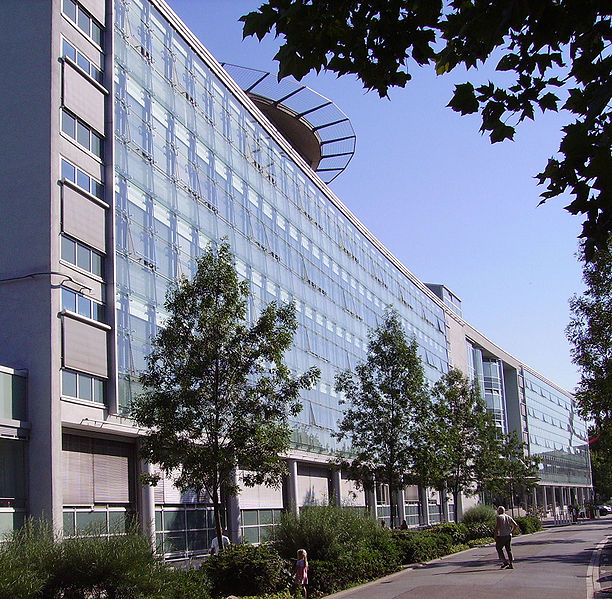
Ludwigshafen Hospital, via Wikimedia

Score one for responsiveness. 

In mid-May, we reported on the retraction of three review articles by Joachim Boldt, whose papers continue to fall despite his having been exposed as a fraudster a decade ago. At the time, we wondered why another journal, Anesthesia & Analgesia, hadn’t also pulled reviews by Boldt that it had published over the years.  

Now, it has. 

Continue reading Slow but steady: Anesthesiology researcher with more than 100 retractions will earn two more

Race to be first to report first case of COVID-19 death during pregnancy leads to a retraction

A group of researchers in Iran has retracted their case report on what they claimed was the first known case of a pregnant woman who died of Covid-19. 

The reason: According to the corresponding author, another group of researchers in Iran, who had first seen the patient at their hospital, had beaten them to the submission punch without their knowledge. (This isn’t the first time we’ve seen a case like this.)

The paper appeared in Travel Medicine and Infectious Disease, an Elsevier title, on April 11. Sometime in early May, it seems (the dates are unclear on the journal website) the group, led by a team at Zanjan University of Medical Sciences, retracted the article. 

Elsevier allows authors to withdraw papers without explanation if they have appeared online but not yet in print, which is the case here. So the retraction notice says, well, nothing: 

Continue reading Race to be first to report first case of COVID-19 death during pregnancy leads to a retraction

Anesthesiology group loses ten papers at once in one journal

A group of anesthesiology researchers in India has had 10 papers retracted from a single journal because of a “high rate of similarity from various other articles along with overwhelming evidence of data fabrication.”

The retractions came after one of the authors of the papers submitted a manuscript to a different journal whose editor sniffed out issues and raised a red flag.

The Saudi Journal of Anesthesia has retracted ten articles by Anjan Das, of Kolkata, and colleagues:

Continue reading Anesthesiology group loses ten papers at once in one journal

A convicted felon wants people to enroll in a COVID-19 clinical trial. What could go wrong?

Richard Fleming

Richard Fleming, a felon convicted of health care fraud who has been debarred by the US Food and Drug Administration, would like to invite you to participate in a clinical trial.

Fleming has registered a study on ClinicalTrials.gov to evaluate what he calls the “Fleming Method for Tissue and Vascular Differentiation and Metabolism” — a method he claims can help physicians assess pneumonia resulting from Covid-19. 

According to the notes for the study

Continue reading A convicted felon wants people to enroll in a COVID-19 clinical trial. What could go wrong?

‘Patterns in the data have led to questions’: Ob-gyns lose another paper

A group of OB/GYNs in the Middle East with a history of testing the patience of editors has lost a paper — and received in expression of concern for another — over concerns about the validity of their data. 

The articles appeared in the BJOG, a Wiley publication. Both were led by Mohammad Maher, who is affiliated with Menoufia University in Egypt and the Armed Forces Hospital Southern Region, in Saudia Arabia.  

Maher was first author of a 2017 paper in Obstetrics & Gynecology that the journal retracted earlier this year, after the editors were unable to resolve serious questions about the reliability of the data. As the retraction notice states, the journal made little headway with Menoufia University when it tried to follow up on concerns that the researchers’ results were almost certainly fabricated. 

Continue reading ‘Patterns in the data have led to questions’: Ob-gyns lose another paper

What it takes to correct the record: Autopsy of a COVID-19 corrigendum

Richard Jones

We’ve been keeping track of retracted coronavirus papers, but what about corrections? Here’s a guest post from Richard Jones of Cardiff University about a paper that earned widespread media coverage but turned out to be wrong.

According to our best knowledge, this is the first report on COVID-19 infection and death among medical personnel in a Forensic Medicine unit.

So ended a letter from Thailand to the Journal of Forensic and Legal Medicine, accepted on 9th April 2020 within 3 days of receipt, and published as an ubiquitous “Pre-Proof.” 

The authors of that letter stated that there had been only two COVID-19 patients amongst medical personnel in Thailand at that time, one of whom was a “forensic medicine professional” working in Bangkok. 

Continue reading What it takes to correct the record: Autopsy of a COVID-19 corrigendum

French hydroxychloroquine-COVID-19 study withdrawn

The authors of a preprint on use of hydroxychloroquine — the controversial drug heavily promoted by, and now apparently taken by, President Trump, at least for a few more days — along with azithromycin for COVID-19 have withdrawn the paper.

The preprint, “Hydroxychloroquine plus azithromycin: a potential interest in reducing in-hospital morbidity due to COVID-19 pneumonia (HI-ZY-COVID)?” was posted to medRxiv on May 11 by authors at Hopital Raymond Poincare, and sometime yesterday replaced with this statement:

Continue reading French hydroxychloroquine-COVID-19 study withdrawn

Another whodunit: The author no one can find

Readers, meet Beatriz Ychussie. Or don’t meet Beatriz Ychussie.

Ychussie is a co-author of three recently retracted math papers. Or maybe not. 

The three articles — in the Journal of Inequalities and Applications, Advances in Difference Equations, and Fixed Point Theory and Applications, all Springer Nature titles — had an overlapping set of problems, including plagiarism and faked peer review. But they all had one particular problem when it came to Ychussie:

Continue reading Another whodunit: The author no one can find

Cancer researcher loses defamation suit against critic

Carlo Croce

Carlo Croce can’t catch a break in court.

Yesterday, a Federal U.S. judge ruled against Croce, a cancer researcher at The Ohio State University, in a case Croce had filed against Purdue University professor David Sanders in 2017. As Judge James Graham, of the Southern District of Ohio Eastern Division, writes in the 36-page ruling — which we’d recommend reading in its entirety:

Continue reading Cancer researcher loses defamation suit against critic

Covid-19 and sex? Rapid-fire acceptance leads to hasty withdrawal of paper

The Journal of the American Academy of Dermatology has taken down a letter on whether people should abstain from sex during the coronavirus pandemic, but the editor says the article is not being retracted. 

Meanwhile, researchers in France have retracted a paper in which they’d claimed to have found  replication of the virus that causes Covid-19 in the dialysis fluid of a patient with kidney disease. Again, hasty publication appears to be involved. We’ve been tracking retractions of Covid-19 articles on our website, and, let’s just say, the list is almost certainly a trailing indicator of the robustness of the science here — as it is with retractions during any period.

Back to the letter. “COVID-19: Should sexual practices be discouraged during the pandemic?” was written by ZhiQiang Yin, of the Department of Dermatology at the First Affiliated Hospital of Nanjing Medical University, in China. Yin submitted the article on April 14. The journal accepted it on the 16th and published it on April 30th. 

According to the notice

Continue reading Covid-19 and sex? Rapid-fire acceptance leads to hasty withdrawal of paper