After we tried to correct claims about ‘deadly’ water filters in Flint, we were accused of scientific misconduct—and that was just the beginning

credit: Marc Edwards

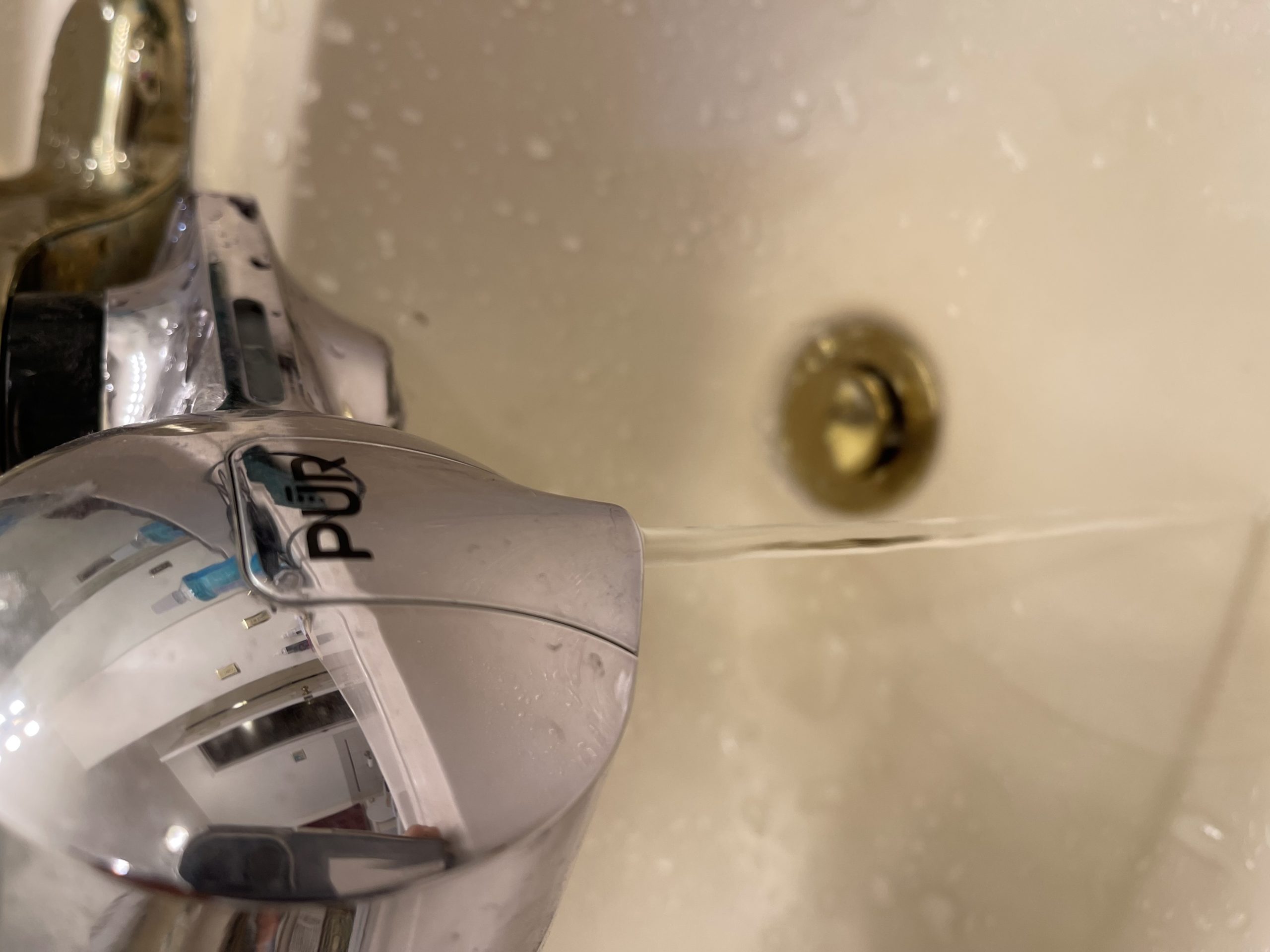
The Sept. 10, 2019 PBS article accompanying the FRONTLINE documentary “Deadly Water” was topped by a provocative headline: “The EPA Says Flint’s Water is Safe — Scientists Aren’t So Sure.” The PBS story relied on a study of adverse health outcomes for people given point-of-use (POU) water filters during the Flint Federal Emergency.

We were astonished. Several of us worked closely with residents to first expose the problems with lead and Legionella that defined the Flint Water Crisis. We were supportive of later humanitarian efforts to provide Flint residents with the free point of use (POU) lead filters, since they effectively remove lead from water used for drinking and cooking.  These off-the-shelf water filters are routinely used in about a third of U.S. homes, so we were mystified as to how they could have wrought such devastation when deployed in Flint.

Continue reading After we tried to correct claims about ‘deadly’ water filters in Flint, we were accused of scientific misconduct—and that was just the beginning

Kale ‘miracle food’ paper retracted for being ‘word salad’

Evan-Amos via Wikimedia

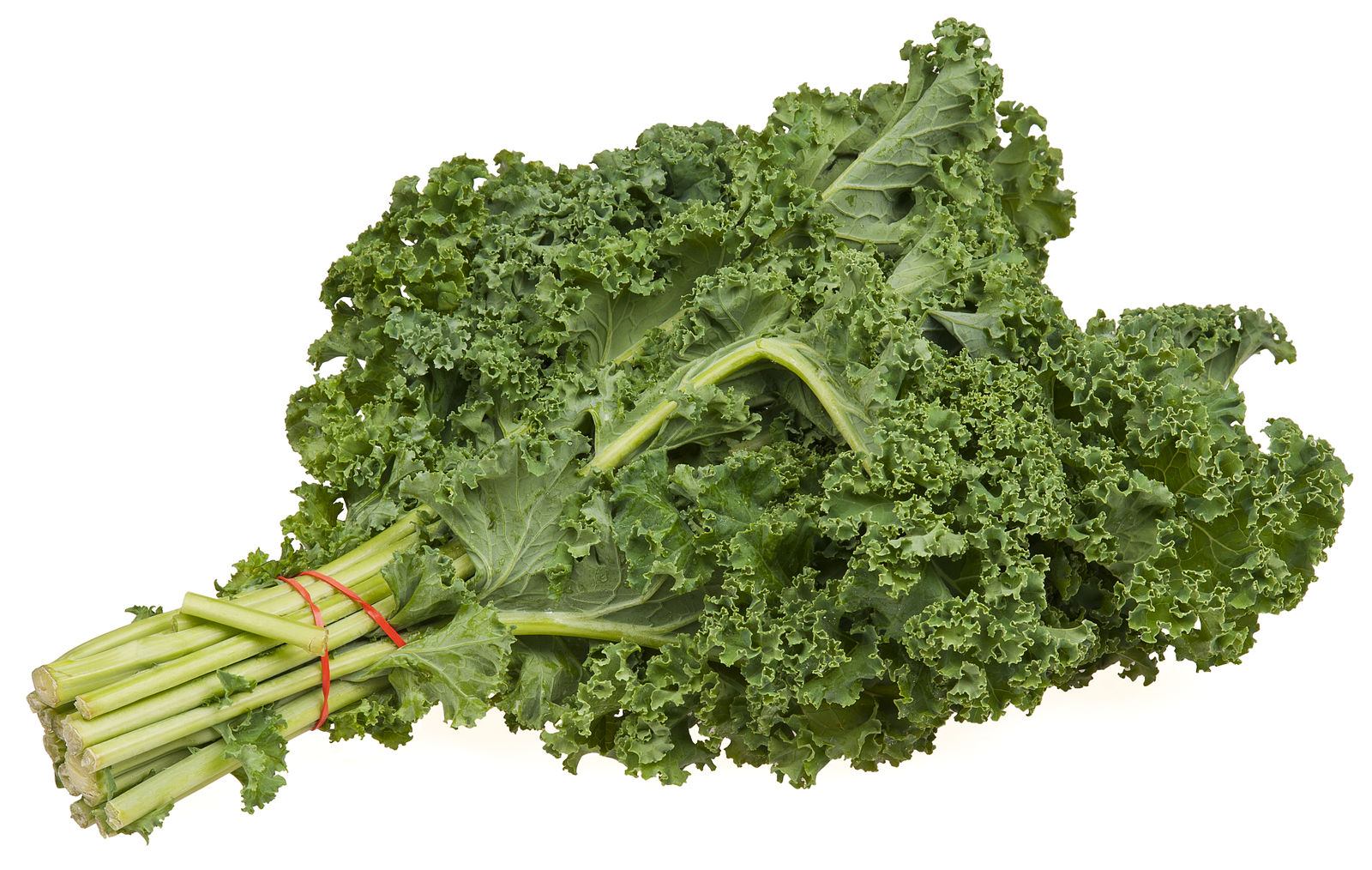
Kale may be a superfood, but for one paper on the vegetable, Twitter proved to be its Kryptonite. We’ll explain.

Last November, Food Science & Nutrition published an article titled “Kale (Brassica oleracea var. sabellica) as miracle food with special reference to therapeutic and nutraceuticals perspective.”

How miraculous? As the authors, from Government College University in Faisalabad, Pakistan, wrote

Continue reading Kale ‘miracle food’ paper retracted for being ‘word salad’

Another ivermectin-COVID-19 paper is retracted

A paper on the potential use of ivermectin to treat Covid-19 has been retracted for a litany of flaws, joining at least 10 other articles on the therapy some liked to promote without evidence to fall. 

The article was part of a special issue of Toxicology Reports on Covid-19 that has received an expression of concern; six of the eight articles still have EoCs. Two, including one “Why are we vaccinating children against COVID-19?,” have now been retracted.

The newly retracted article, “Use of ivermectin in the treatment of Covid-19: A pilot trial,” was written by a group from  Brazil and the United States and appeared in March 2021.

According to the retraction notice

Continue reading Another ivermectin-COVID-19 paper is retracted

‘A terrifying experience’: A team of researchers does the right thing when they find an error

Mitch Brown

Mitch Brown was preparing last August to launch a follow-up study to a 2021 paper on coalitions when he found something in his computer coding that sent his stomach to his shoes. 

As Brown, an experimental psychologist at the University of Arkansas, recalled for us: 

Continue reading ‘A terrifying experience’: A team of researchers does the right thing when they find an error

Journal retracts C-section paper with ‘impossible’ data

Image by Boris Gonzalez from Pixabay

An ob-gyn journal has retracted a clinically influential 2016 paper on the use of steroids in women undergoing cesarean delivery, citing questions about the data. 

The article, “Antenatal corticosteroid administration before elective caesarean section at term to prevent neonatal respiratory morbidity: a randomized controlled trial,” appeared in the European Journal of Obstetrics & Gynecology and Reproductive Biology (EJOG), and was written by a group at Cairo University in Egypt led by Adel Nada

The study purported to involve nearly 1,300 women – making it the largest analysis of women receiving steroids for the indication in the trial. But Ben Mol, an ob-gyn researcher and data sleuth at Monash Medical Centre in Australia, noted that the paper – which has been cited 32 times, per Clarivate Analytics’ Web of Science – was based on a thesis by the second author, M.M. Shafeek. Something in the two articles caught Mol’s eye, he told Retraction Watch:  

Continue reading Journal retracts C-section paper with ‘impossible’ data

COVID-19-vitamin D paper retracted by Springer Nature journal

A journal has retracted a 2021 paper claiming that vitamin D “significantly reduced the inflammatory markers associated with COVID-19 without any side effects” following criticism that led them to “no longer have confidence in the conclusions.”

The paper “Impact of daily high dose oral vitamin D therapy on the inflammatory markers in patients with COVID 19 disease,” appeared in Scientific Reports, a Springer Nature journal, on May 20, 2021. The paper earned a correction on August 30, and has been cited 29 times, according to Clarivate Analytics’ Web of Science.

Gideon Meyerowitz-Katz, an epidemiologist at the University of Wollongong who has been involved in efforts to clean up the literature around COVID-19 and other subjects, tells us that he told the journal about the errors in early November 2021. Meyerowitz-Katz outlined his criticisms of the paper – which he called “one of the most influential” in the push to use vitamin D for COVID-19 – in a Medium post on April 3

Continue reading COVID-19-vitamin D paper retracted by Springer Nature journal

Study on reducing parents’ anxiety about children’s circumcision retracted

A pair of researchers in Turkey have lost a 2021 paper on a randomized controlled trial in pediatric surgery after a reader raised concerns about the methodology reported in the article.

However, the retraction notice – detailed though it might be – reveals that the problems could, and likely should, have been caught during peer review. 

The paper, “Effect of care programme based on Comfort Theory on reducing parental anxiety in the paediatric day surgery: Randomised controlled trial,” appeared last July in the Journal of Clinical Nursing, a Wiley title. The authors, Fahriye Pazarcikci and Emine Efe, were affiliated with Isparta University of Applied Sciences and Akdeniz University, respectively. 

“Paediatric day surgery” turns out to be male circumcision in boys ages 4 to 7 years, as the trial registration information on ClinicalTrials.gov indicates. Circumcision is mentioned in the full text of the paper, but not the abstract.

Continue reading Study on reducing parents’ anxiety about children’s circumcision retracted

More than 300 at once: Publisher retracts entire conference proceedings

The tip came from the leadership of another scientific conference.

Did the Association for Computing Machinery know that they had published the proceedings of a conference with essentially the same name as that organization, IEEE, on the same dates, in the same venue, and with lots of overlapping authors?

The two versions of the meeting – the International Conference on Information Management and Technology (ICIMTech) – both allegedly happened in Jakarta, Indonesia from Aug. 19-20, 2021, the tipster told ACM.

When ACM dug deeper, Scott Delman, the organization’s director of publications, told us, they saw something that looked familiar because of an investigation that led to a mass retraction of conference proceedings months earlier: A company in China billing itself as a conference organizer had handled all of the peer review.

Continue reading More than 300 at once: Publisher retracts entire conference proceedings

Authors blame ‘unintentional oversight’ for including image of deceased patient in paper

The authors of a case report involving a patient who died of a rare disorder of the bone marrow have removed an image from the article after the person’s mother objected to the use of the photograph. 

The paper, “Dyskeratosis congenita,” appeared in Autopsy Case Reports in 2020 and was written by a group from Upstate Medical University, part of the State University of New York system, in Syracuse. 

We saw the notice in November and were curious if we could learn more. So we filed a public records request for documents related to the article – and received a response last week disclosing correspondence between Robert Stoppacher, a co-author of the report, and the editor-in-chief of the journal.  

In a letter to the journal on Sept. 12, 2021, Stoppacher stated that:

Continue reading Authors blame ‘unintentional oversight’ for including image of deceased patient in paper

Psych journal in revolt as it publishes paper saying masturbation and gay sex are harmful

Several psychiatry researchers have been unsuccessfully seeking distance from a dodgy journal with which they’re affiliated – and which has now published an article claiming homosexuality and masturbation deserve to be considered (or reconsidered, as the case may be) mental illnesses. 

The 2021 paper, “Review of Removing Homosexuality and Masturbation from the List of Sexual Dysfunctions in DSM,” was written by Sayed Ali Marashi, of the Department of Psychology at Shahid Chamran University of Ahvaz, in Iran It appeared in Clinical Schizophrenia & Related Psychoses.

Oddly, the header text on the paper reads “Metallurgical Investigation of Tie Rod used for lifting Ferro-Alloy during Steel Making: A Safety Issues.”

According to the article: 

Continue reading Psych journal in revolt as it publishes paper saying masturbation and gay sex are harmful