Journal to retract papers that cost its impact factor and spot in leading index

A journal that didn’t get an impact factor this year after Clarivate, the company behind the closely-watched but controversial metric, identified unusual citations in several articles will retract the offending papers, according to its editor. 

Genetika, a publication of the Serbian Genetics Society, did not receive an updated impact factor in Clarivate’s 2023 Journal Citation Reports due to citation stacking, a practice in which authors or journals seem to trade citations, also known as “citation cartels” or “citation rings.” 

Specifically, Clarivate identified five papers published in Genetika in 2021 that had been cited by 22 papers published in the journal Bioscience Research in 2022, Snezana Mladenovic Drinic, the editor of Genetika, told Retraction Watch. Clarivate also suppressed Bioscience Research this year, meaning that the journal did not receive a new impact factor either. 

Continue reading Journal to retract papers that cost its impact factor and spot in leading index

“Unapproved euthanasia” of rats in neuroscience study leads to retraction

Subimal Datta

A 2017 paper describing neuroscience research with rats has been retracted after “data mis-management,” including the mistreatment of the animals, came to light. 

The retracted paper was the second by Subimal Datta, a professor of psychology and anesthesiology at the University of Tennessee, Knoxville, to receive a flag for data problems. 

The article, “BNDF heterozygosity is associated with memory deficits and alterations in cortical and hippocampal EEG power,” was published in Behavioural Brain Research and has been cited 14 times, according to Clarivate’s Web of Science. 

The retraction notice, published March 31, stated: 

Continue reading “Unapproved euthanasia” of rats in neuroscience study leads to retraction

Paper co-authored by controversial Australian journalist earns expression of concern

Maryanne Demasi

One more paper co-authored by Australian health journalist Maryanne Demasi has earned an expression of concern for image duplication.

The move comes seven years after the journal Biochimica et Biophysica Acta (BBA) was first made aware of potential problems with a figure in Demasi’s paper that showed Western blots. It marks the third time one of the former researcher’s scientific publications has been officially flagged as concerning or retracted.

Demasi, who earned her PhD from the University of Adelaide in 2004, has been in the news recently after she did a controversial interview with the lead author of a Cochrane review that cast doubt on face masks. She has drawn frequent rebuke over the past decade, beginning with a 2013 program in which her reporting questioned statins. She and her co-authors told us in 2018 that they believe her work as a journalist made her research a target of criticism.

Continue reading Paper co-authored by controversial Australian journalist earns expression of concern

‘Kafkaesque nightmare’: Judge wants researcher reinstated as NIH grant PI after med school’s misconduct finding

Stacy Blain

A federal judge has denied a request for a preliminary injunction by a breast cancer researcher at SUNY Downstate in Brooklyn who sued the university last year after an institutional investigation determined that she committed research misconduct. 

However, the judge noted “troubling aspects of this case that bear on serious public health concerns” – namely the discontinuation of the scientist’s research – and also expressed concern about SUNY Downstate and the NIH’s treatment of her. 

As we’ve previously reported, Stacy Blain, an associate professor of pediatrics and cell biology at SUNY Downstate, has alleged the university discriminated against her for decades because of her sex, and that the investigation’s finding of misconduct was the result of retaliation after she complained of the discrimination. 

Continue reading ‘Kafkaesque nightmare’: Judge wants researcher reinstated as NIH grant PI after med school’s misconduct finding

Catch and kill: What it’s like to try to get a NEJM paper corrected

Marc Halushka

Last month,  the New England Journal of Medicine (NEJM) published a letter to the editor and a response reflecting a quite modest correction.  Essentially, the three letters “miR” will be removed from throughout a manuscript as the data, to date, do not support there being a human novel microRNA blood-based biomarker for myocarditis, as the original manuscript claimed.  

At the time of this posting, however, that change – which itself is well over a year in the making – has not yet occurred. And we really don’t understand why. This is our story of the arduous journey to improve the medical and scientific literature.

In May of 2021 the NEJM published “A novel circulating microRNA for the detection of acute myocarditis.” One of us (Marc Halushka), a practicing cardiovascular pathologist and microRNA researcher, recognized this paper was squarely in his wheelhouse.  The concept of a novel microRNA blood-based biomarker was exciting, but also curious. 

Continue reading Catch and kill: What it’s like to try to get a NEJM paper corrected

Dental school dean up to five retractions for cancer research papers

Russell Taichman

A dental school dean with a history of publishing cancer research papers is up to five retractions

Russell Taichman, the dean of the University of Alabama at Birmingham’s school of dentistry, lost two papers in Cancer Research earlier this month, after losing three others since 2020. Most of the retractions came after PubPeer comments about duplicated images in some of the papers. 

In April of 2020, Elisabeth Bik commented on two of Taichman’s papers that would later be retracted, pointing out potentially recycled images between the articles. 

None of the authors responded on PubPeer, but Taichman apparently took her comments to heart, and credited her in a retraction notice. 

Continue reading Dental school dean up to five retractions for cancer research papers

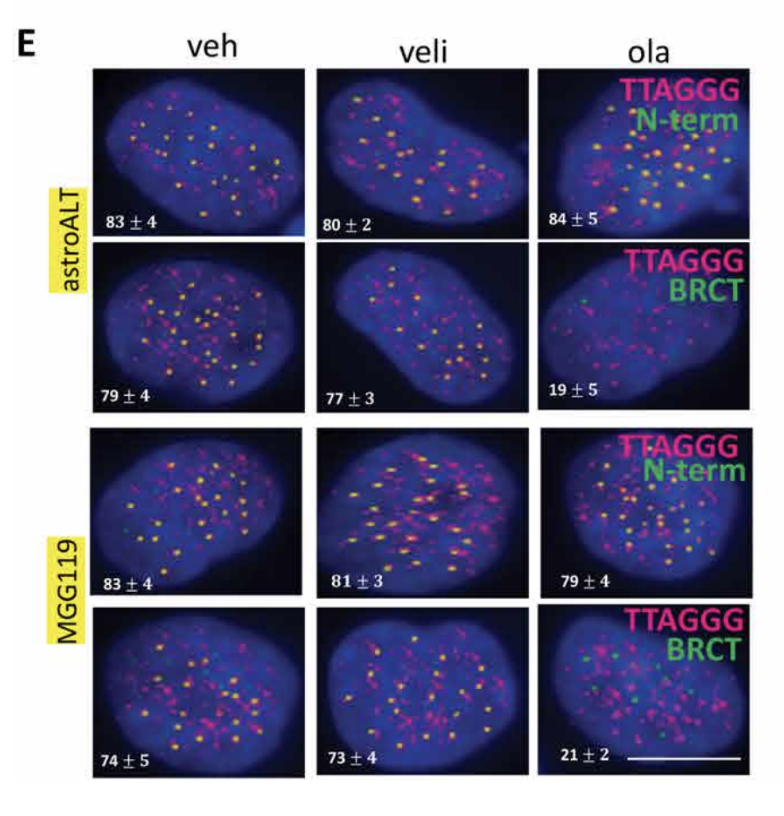
Brain tumor researchers retract paper from Science journal

A detail from Fig. 6 of the now-retracted paper

A brain tumor researcher at the University of California, San Francisco, has retracted a paper from Science Translational Medicine, and is a co-author on an article that another journal is examining. 

The problems in both papers, and several others with shared authors, came to light via comments on PubPeer by Elisabeth Bik and a pseudonymous commenter. 

The Science Translational Medicine paper, “A subset of PARP inhibitors induces lethal telomere fusion in ALT-dependent tumor cells,” was published last May by a group led by Russell O. Pieper, director of basic science in the UCSF Brain Tumor Center and vice-chairman of the UCSF department of neurological surgery. The paper has been cited six times, according to Clarivate’s Web of Science. 

Continue reading Brain tumor researchers retract paper from Science journal

Exclusive: Cancer researcher sues med school for retaliation after research misconduct finding

Stacy Blain

A breast cancer researcher at SUNY Downstate in Brooklyn has sued the university for sex discrimination and retaliation after an institutional investigation found she committed research misconduct. 

Stacy Blain, an associate professor in the departments of pediatrics and cell biology at Downstate, has alleged that the university violated the Equal Pay Act by paying her less than her male colleagues; discriminated against her based on her sex since she joined the faculty in 2002, including by conducting multiple investigations into her lab’s work; and used the latest investigation and its finding that she committed research misconduct to retaliate against her for accusing the university of sex discrimination. 

From the lawsuit

Continue reading Exclusive: Cancer researcher sues med school for retaliation after research misconduct finding

Papers on Alzheimer’s slapped with expressions of concern

A Science journal has issued expressions of concern for two papers on Alzheimer’s disease over concerns about the integrity of the data. 

One involves a 2016 article by a star-studded group of neuroscience researchers over allegations of manipulated data in one of the figures. That paper, “Gain-of-function mutations in protein kinase Cα (PKCα) may promote synaptic defects in Alzheimer’s disease,” appeared in Science Signaling and  came from a team led by Rudolph Tanzi  and Roberto Malinow, of Harvard and UC San Diego, respectively.

Here’s the notice for the paper, which has been cited 64 times, according to Clarivate’s Web of Science: 

Continue reading Papers on Alzheimer’s slapped with expressions of concern

Exclusive: University of Glasgow seeking retraction of multiple papers after findings of image manipulation

Miles Houslay

The University of Glasgow is requesting the retraction of multiple papers by a pharmacology researcher who held various positions there for more than a quarter century.

The story begins in December 2016, when biostatistician Steven McKinney posted on PubPeer about a paper by the researcher, Miles Houslay, in the Journal of Biological Chemistry. That paper was eventually retracted in August 2020, but not before McKinney posted a comment on Retraction Watch that caught the eye of the pseudonymous Clare Francis.

Francis pointed us to comments about a total of eight of Houslay’s papers at that time. And in August 2020, when the JBC retraction appeared, Francis forwarded those to the King’s College, London, where Houslay is listed as having a faculty position, and the University of Glasgow, which he left in 2011.

Continue reading Exclusive: University of Glasgow seeking retraction of multiple papers after findings of image manipulation