“I am the first one to regret not being more careful in the first place”: Paper on rat semen retracted
via Wikimedia

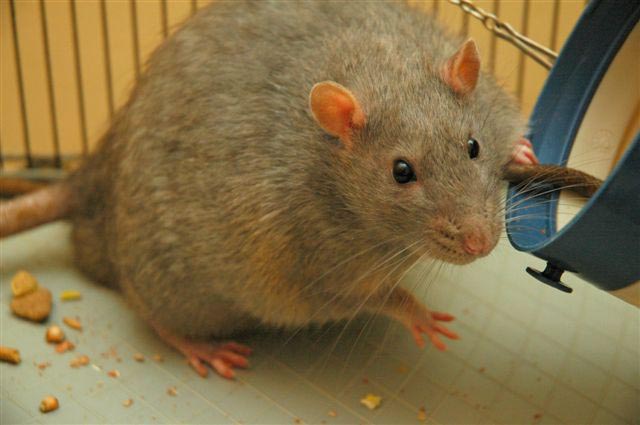
A journal has retracted a paper on the semen of diabetic rats after learning about problems with authorship, and possibly more. 

Physiology International, which also is called Acta Physiologica Hungarica, published the article, “The effects of sericin in recovering spermatogenesis and sexual hormone levels in diabetic rats,” in 2019. The first author was Ali Olfati, of Tabriz University in Iran. The second author — on paper, at least — was Felipe Martínez-Pastor, of the University of León, in Spain. 

Not so. Per the retraction notice (which now directs to a “page not found” error):

Continue reading “I am the first one to regret not being more careful in the first place”: Paper on rat semen retracted
Former grad student forges his supervisor’s authorship — and gets smacked down

via Flickr

On December 29, Jan Behrends, of the Institute of Physiology at the University of Freiburg, in Germany, was checking his Google Scholar profile when he saw his name on a paper — one he’d played no part in writing. 

The article, “Microelectrochemical cell arrays for whole-cell currents recording through ion channel proteins based on trans-electroporation approach,” had appeared earlier that month in Analyst, a publication of the Royal Society of Chemistry. According to Behrends:  

Continue reading Former grad student forges his supervisor’s authorship — and gets smacked down

“A new form of plagiarism:” When researchers fake co-authors’ names

Mario Biagioli

There’s a new publishing trend in town, says Mario Biagioli: Faking co-authors’ names. Biagioli, distinguished professor of law and science and technology studies and director of the Center for Innovation Studies at the University of California, Davis, writes in an article in Trends in Chemistry that it’s “the emergence of a new form of plagiarism that reflects the new metrics-based economy of scholarly publishing.” We asked him a few questions about what he’s found, and why authors might do this.

Retraction Watch (RW): You write that “A new trend in scientific misconduct involves listing fake coauthors on one’s publication.” Why would authors do that? Continue reading “A new form of plagiarism:” When researchers fake co-authors’ names

Found in translation: Authors blame language barriers after forging co-authors

When the merde hits the fan, blame the translator. That’s Rule 1 of botched international diplomacy — and, evidently, botched international science.

Otolaryngology researchers in China have lost their 2018 paper in the American Journal of Translational Research for what they’re calling (with some degree of chutzpah) language barriers.

The article, “Therapeutic ultrasound potentiates the anti-nociceptive and anti-inflammatory effects of curcumin to postoperative pain via Sirt1/NF-κB signaling pathway,” came from group whose primary affiliation was the Second Military Medical University in Shanghai. (It hasn’t been cited, according to Clarivate’s Web of Science.) However, the list of authors also included several scientists in Germany.

Evidently, the Germans were most unzufrieden.

According to the retraction notice: Continue reading Found in translation: Authors blame language barriers after forging co-authors

Kim Kardashian pairs up with an MIT post-doc to publish a scientific paper

Tomáš Pluskal

Kim Kardashian is known for many accomplishments. But now she can add another to her resume: First author of a paper in the Drug Designing & Intellectual Properties International Journal. What can we say? It’s international, and it’s a journal. We talked to Tomáš Pluskal, a post-doc at MIT and the last author of the paper — the middle author is Satoshi Nakamoto, the elusive “inventor of Bitcoin” — for the inside scoop.

Retraction Watch (RW): Our guess is that few scientists will have the opportunity to work with Kim Kardashian. How did you end up collaborating? Continue reading Kim Kardashian pairs up with an MIT post-doc to publish a scientific paper

Caught Our Notice: Forged email for corresponding author dooms diabetes paper

Title: Naringin Alleviates Diabetic Kidney Disease through Inhibiting Oxidative Stress and Inflammatory Reaction

What Caught Our Attention: PLOS ONE had a few reasons for retracting a 2015 paper about a treatment for kidney disease due to diabetes: For one, despite what the paper claims, the authors did not obtain ethical approval to conduct the reported animal experiments. In addition, the corresponding author had no idea the paper had been submitted and published. How could a corresponding author be kept in the dark? It turns out, the journal was given an incorrect email address for him, so he didn’t receive any communications around the paper. (One author apparently used a third party editing company.) Continue reading Caught Our Notice: Forged email for corresponding author dooms diabetes paper

Caught Our Notice: How can a publication be a surprise to a corresponding author?

Via Wikimedia

Title: Umbelliferone reverses depression-like behavior in chronic unpredictable mild stress-induced mice via RIP140/NF-κB pathway

What Caught Our Attention: One would think that the corresponding author would have to be aware that they are submitting an article for publication — but apparently not, as this retraction demonstrates. The 2016 paper listed two corresponding authors — along with both of their emails and mailing addresses — but according to the retraction notice, one of them did not give consent “in any form” to the publication. Often, we see authors unaware of the use of their name when their email has been faked, but here, it’s possible the journal simply relied on the other corresponding author for all correspondence. Continue reading Caught Our Notice: How can a publication be a surprise to a corresponding author?

Caught Our Notice: Wait…we wrote WHAT paper?

Via Wikimedia

TitleAssessment of coronary heart diseases in diabetics in al-Madinah al-Munawarah

What Caught Our Notice: We’ve seen researchers dinged for adding authors to papers who didn’t participate in the research, but it’s rare to have a notice say co-author signatures were forged. In a recent retraction, the first two authors said the signatures on the the approval document received by the journal do not belong to them. The notice does not indicate which of the remaining two co-authors might be responsible for the forgery. Continue reading Caught Our Notice: Wait…we wrote WHAT paper?

Fake peer review, forged authors, fake funding: Everything’s wrong with brain cancer paper

The paper had everything: Fake peer review, forged authors, even a fake funder.

In other words, it had nothing.

A 2015 paper is the latest retraction stemming from an investigation into fake peer review by Springer, which has now netted more than a hundred papers.

According to a spokesperson at Springer: Continue reading Fake peer review, forged authors, fake funding: Everything’s wrong with brain cancer paper

Lesson not learned: Researchers copied a master’s thesis — twice

A material science journal has retracted a paper after learning the authors took most of the content from a master’s thesis – and added the author as a co-author without his knowledge.

The authors must have really liked this thesis – they lost another paper in 2015 for copying from the same document.

Both retracted articles were co-authored by three researchers in the Department of Civil Engineering at Shahid Rajaee Teacher Training University in Tehran, Iran. The first author, Saeed Ghaffarpour Jahromi, serves as the University’s Dean of Faculty in the School of Civil Engineering.

Simon Hesp, a professor in the Department of Chemistry at Queens University in Kingston, Ontario, told Retraction Watch that he had notified both journals about the plagiarism when he recognized the thesis of Benjamin James Smith, who was a master’s student in his lab from 1998 to 2000. Hesp told us: Continue reading Lesson not learned: Researchers copied a master’s thesis — twice