Figure “anomalies” prompt Harvard group to retract Nature paper

A group of researchers based at Harvard Medical School have retracted their 2019 paper in Nature after a data sleuth detected evidence of suspect images in the article. 

The move comes ten months after the journal first heard from the sleuth, Elisabeth Bik.

The paper, “Fatty acids and cancer-amplified ZDHHC19 promote STAT3 activation through S-palmitoylation,” came from the lab of Xu Wu, of the Cutaneous Biology Research Center at Massachusetts General Hospital, and his colleagues. It appeared last August — and immediately caught the attention of Rune Linding, who flagged it for Bik, who in turn noticed several regions of concerning duplications in a few of the Western blots that appeared in the paper. 

On August 29 of last year, Bik tweeted:

Continue reading Figure “anomalies” prompt Harvard group to retract Nature paper

‘How I got fooled’: The story behind the retraction of a study of gamers

In April of this year, Corneel Vandelanotte realized something had gone wrong with a paper he had recently published.

First, there was a post about his paper by Nick Brown, a scientific sleuth, questioning the results, ethics, and authors behind the work. That was followed by a comment on PubPeer by Elisabeth Bik, another scientific sleuth.

“People started alerting me,” Vandelanotte, a public health researcher at Central Queensland University in Rockhampton, told Retraction Watch. “Hey, have you seen this blog by Nick Brown? And, and then yeah, okay, that was a bad day. Let me put it that way.”

Continue reading ‘How I got fooled’: The story behind the retraction of a study of gamers

Nature retracts study touted as step toward treatments for bone diseases

A Nature study that could have provided a “potential therapeutic target for osteoporosis and bone metastases of cancer” has been retracted.

Since being published in 2014 by researchers at UT Southwestern, MD Anderson and elsewhere, “miR-34a blocks osteoporosis and bone metastasis by inhibiting osteoclastogenesis and Tgif2” has been cited more than 200 times, according to Clarivate Analytics’ Web of Science.

A year ago — on May 24, 2019 — Nature published a correction to the paper:

Continue reading Nature retracts study touted as step toward treatments for bone diseases

Heavily criticized paper blaming the sun for global warming is retracted

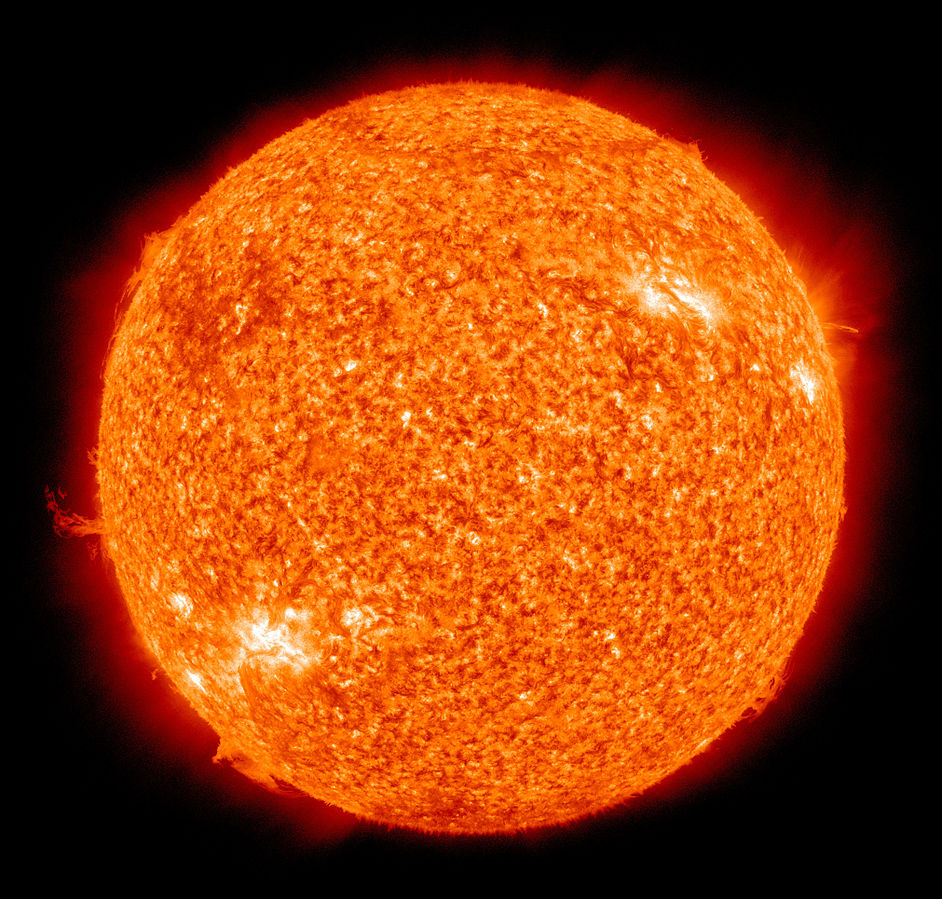
via NASA

A controversial paper claiming that fluctuations in the sun’s magnetic field could be driving global warming has been retracted — prompting protests from most of the authors, who called the move 

a shameful step to cover up the truthful facts about the solar and Earth orbital motion reported by the retracted paper, in our replies to the reviewer comments and in the further papers.

The 2019 article, “Oscillations of the baseline of solar magnetic field and solar irradiance on a millennial timescale,” appeared in Scientific Reports and was written by a group of authors from the UK, Russia and Azerbaijan. The first author was Valentina Zharkova, a mathematician/astrophysicist at Northumbria University, whose group reported having received funding for the work from the U.S. Air Force and the Russian Science Foundation.  

The paper purported to find that fluctuations in the sun’s magnetic field are making the earth hotter: 

Continue reading Heavily criticized paper blaming the sun for global warming is retracted

‘Text neck’ — aka ‘horns’ — paper earns corrections

via Scientific Reports

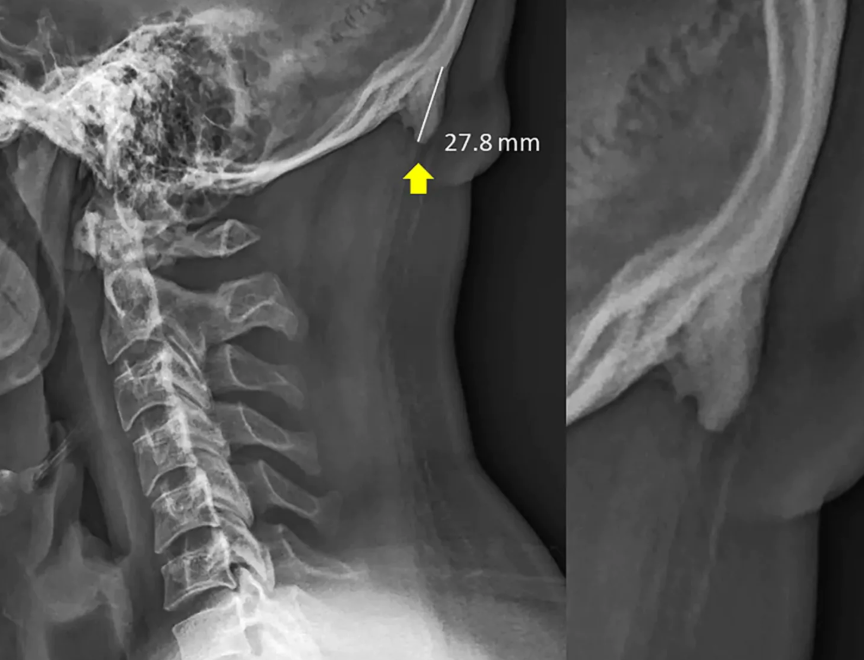
A highly controversial 2018 paper suggesting that too much bent-neck staring at your cell phone could sprout, in the words of one of the authors, a “horn” on the back of your head is — perhaps unsurprisingly — getting corrected. 

The article, “Prominent exostosis projecting from the occipital squama more substantial and prevalent in young adult than older age groups,” which appeared in Nature Publishing Group’s Scientific Reports in February 2018, received scads of media coverage earlier this year. The stories initially were alarmist but grew increasingly skeptical as journalists and experts began poking holes in the authors’ claims.

The corrected paper doesn’t completely walk back the association, but it definitely mutes the assertions significantly. For example, the original discussion section included this passage:

Continue reading ‘Text neck’ — aka ‘horns’ — paper earns corrections

“Highly unusual and unfortunate error” delays retraction two years in high-profile Duke case

As we’ve noted before, “the wheels of scientific publishing turn slowly … but they do (sometimes) turn.” 

More than six years after the first retraction for Erin Potts-Kant, who was part of a group at Duke whose work would unravel amid misconduct allegations and lead to a $112.5 million settlement earlier this year with the U.S. government — and two years after a journal says it first became aware of the issues — a retraction by the group has appeared in Pediatric Research, a Springer Nature title.

Here’s the retraction notice for “Intra-amniotic LPS amplifies hyperoxia-induced airway hyperreactivity in neonatal rats”:

Continue reading “Highly unusual and unfortunate error” delays retraction two years in high-profile Duke case

“This is a case of good science:” Nature republishes retracted glacier paper

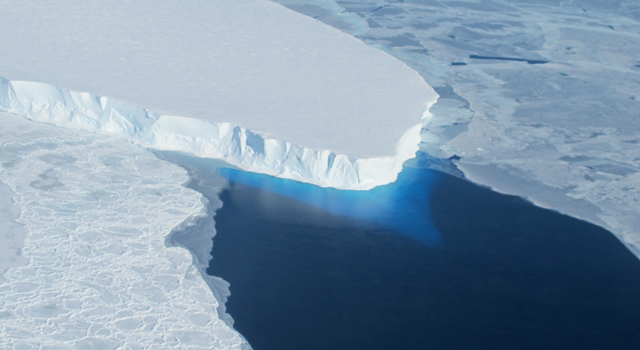
via NASA

Nature has republished a paper on glacier melt that was retracted more than a year ago after the author became aware that he had made an error that underestimated such melt.

The paper, originally titled “Asia’s glaciers are a regionally important buffer against drought,” was subjected to an expression of concern in 2017 after two researchers noticed that the author, Hamish Pritchard, of the British Antarctic Survey, had mistaken annual figures for water loss for decade-long water loss figures. It was retracted in February 2018, and is now republished as “Asia’s shrinking glaciers protect large populations from drought stress.”

Hester Jiskoot, who had reviewed the paper for us for previous posts, and is now chief editor of the International Glaciological Society’s journals, told Retraction Watch this week that the episode

Continue reading “This is a case of good science:” Nature republishes retracted glacier paper

Oft-quoted paper on spread of fake news turns out to be…fake news

*See update at end of post

The authors of an much-ballyhooed 2017 paper about the spread of fake news on social media have retracted their article after finding that they’d botched their analysis.

The paper, “Limited individual attention and online virality of low-quality information,” presented an argument for why bogus facts seem to gain so much traction on sites such as Facebook. According to the researchers — — from Shanghai Institute of Technology, Indiana University and Yahoo — the key was in the sheer volume of bad information, which swamps the brain’s ability to discern the real from the merely plausible or even the downright ridiculous, competing with limited attention spans and time.

As they reported: Continue reading Oft-quoted paper on spread of fake news turns out to be…fake news

When it comes to authorship, how prolific is too prolific?

John Ioannidis

One of the suggestions we get regularly here at Retraction Watch is something along the lines of “This researcher publishes too much. You should look into that.” But how much is too much?

The phenomenon was the subject of a 2015 paper. It’s also the subject of a new article in Nature by John Ioannidis, of Stanford, and researchers at SciTech Strategies. The new article is unlikely to answer the question of how much is too much. But it provides some fascinating figures on just how often some authors publish, and even more so how they respond when asked just how they manage to publish so much, in the process raising questions about whether measuring productivity and quality in science should involve a ruler for stacked papers. Continue reading When it comes to authorship, how prolific is too prolific?

UPDATED: Elsevier retracts a paper on solar cells that appears to plagiarize a Nature journal. But the reason is…odd.

The similarities between recent papers in two different journals about energy were striking — so striking that a number of people have taken to Twitter and Facebook to let the world know about them.

[1415 UTC, August 29, 2018: See update at the end of this post.]

One paper, “Systematic investigation of the impact of operation conditions on the degradation behaviour of perovskite solar cells,” was authored by a group of researchers in Lausanne, Switzerland and appeared on January 1, 2018 in Nature Energy. Its abstract reads: Continue reading UPDATED: Elsevier retracts a paper on solar cells that appears to plagiarize a Nature journal. But the reason is…odd.