A pathologist in Chicago has lost five papers for image manipulation and other problems.
The first retraction for Yashpal Kanwar, of the Feinberg School of Medicine at Northwestern University, appeared in 2013, for a review article published earlier that year in the American Journal of Physiology Renal Physiology. According to the notice:
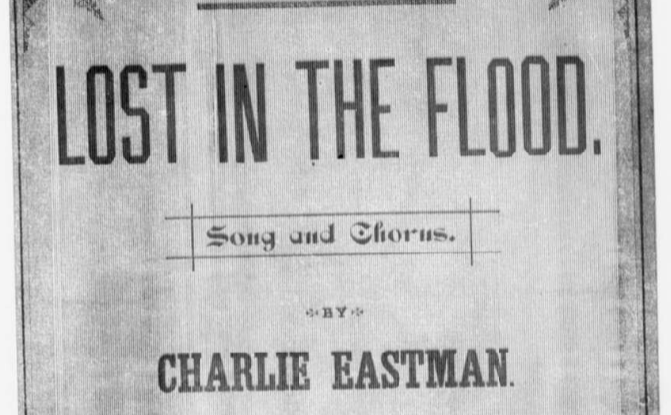
A chemical engineer in China who claims his supporting data were wiped out in a flood has notched his ninth retraction, seven from a single journal, for suspicious images and related issues.
The work of Dong Ge Tong, of Chengdu University of Technology, had come under scrutiny in PubPeer, and several of his articles received expressions of concern before ultimately falling to retraction.
Last week, the Journal of Materials Chemistry A pulled seven papers on which Tong was an author. Here’s the notice for one of those articles, “Hollow amorphous NaFePO4 nanospheres as a high-capacity and high-rate cathode for sodium-ion batteries,” first published in 2015:
The Journal of Biological Chemistry has retracted three papers by a group from the University of California, Los Angeles, citing problems with the figures.
Two of the papers, published in 2002, 2004 and 2009, have the same last author, Mark H. Doolittle, who is the first author of the most recent article. Doolittle, who appears to be a highly talented woodworker, has left UCLA and did not respond to a request for comment.
The retraction notice for the 2002 paper, “Maturation of lipoprotein lipase in the endoplasmic reticulum: Concurrent formation of functional dimers and inactive aggregates,” states:
A cancer researcher in England says he will be retracting a 2011 paper after acknowledging “unacceptable” manipulation of some of the figures in the article.
Richard Hill, of the University of Portsmouth, this week agreed to retract the article, “DNA-PKcs binding to p53 on the p21WAF1/CIP1 promoter blocks transcription resulting in cell death,” which appeared in the journal Oncotarget.
The paper, which Hill wrote while he was at Dalhousie University in Halifax, Nova Scotia, had drawn scrutiny on PubPeer four years ago, with one poster noting “many indications of blot image manipulation” in the figures. Additional comments appeared earlier this month.
A researcher in India is up to five retractions, by our count, for problematic data and image issues.
The latest retractions involve articles published in 2008 and 2013 in the journal Life Sciences. The last author on the papers is Yogeshwer Shukla, of the Council of Scientific and Industrial Research, about whom we have previously written.
The first paper, “Resveratrol induces apoptosis involving mitochondrial pathways in mouse skin tumorigenesis,” is rife with image problems:
The University of Kentucky has started termination proceedings against a pair of scientists found guilty of “significant departures from accepted practices of research,” according to the institution.
The scientists, Xianglin Shi, who up until now had held the William A. Marquard Chair in Cancer Research and served as associate dean for research integration in the UK College of Medicine, and Zhuo Zhang in the Department of Toxicology and Cancer Biology in the College of Medicine, have lost access to their laboratories, which are shuttered, and other university equipment, UK said in a statement. A third researcher, Donghern Kim, who worked under Zhang, already has been fired in the scandal.
In October, the university told us that it was aware of the retractions but “not able to provide more information at this time.” The ongoing investigation was first reported in April by the Lexington Herald-Leader.
According to the UK’s announcement today, the inquiry, which began in June 2018, into Shi, Zhang and Kim found that:
A microbiology journal has issued an expression of concern over image reuse in a 2010 paper whose senior author has already racked up five retractions for duplicating figures.
By our count, Waris — whose work has made several appearances in PubPeer — has lost at least five papers to retraction for image duplication and questionable data.
The authors of a controversial paper on what constitutes “normal” hormone levels in men and women — and, by implication, “male” and “female” athletes — are set to issue a massive correction of the work, Retraction Watch has learned. But an outside, albeit not disinterested, researcher who prompted the correction says the correction itself is amiss.
That finding was cited recently by an architect of the International Association of Athletics Federations’ decision to bar the South African trackstar, Caster Semenya, and other “hyperandrogenic” women (Semenya’s hormonal status has not been made public) whose hormonal constitution is arguably more male than female.
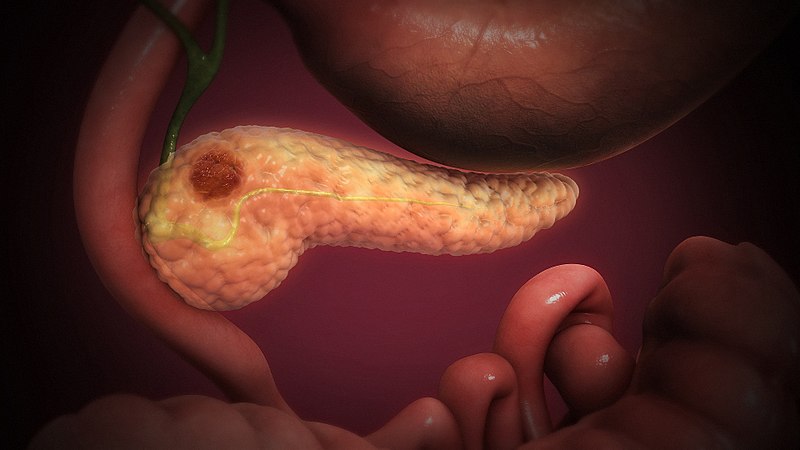
Researchers in China have lost a 2015 meta-analysis on pancreatic cancer, one of several retractions for members of the group stemming from a variety of abuses including bogus authorship and fake peer review.
The meta-analysis, “Correlation between serum levels of high mobility group box-1 protein and pancreatitis: a meta-analysis,” appeared in BioMed Research International, a Hindawi journal. The authors are affiliated with China Medical University in Shenyang and Shanghai Jiao Tong University.
We always hesitate to call retraction statements “models” of anything, but this one comes pretty close to being a paragon.
Psychology researchers in Germany and Scotland have retracted their 2018 paper in Acta Psychologica after learning of a coding error in their work that proved fatal to the results. That much is routine. Remarkable in this case is how the authors lay out what happened next.
The study, “Auditory (dis-)fluency triggers sequential processing adjustments:”