One of Kazakhstan’s top nuclear physicists also leads his nation in retractions

Maxim Zdorovets
Source

The head of a nuclear physics institute in Kazakhstan now has 21 retractions to his name — most of them logged in the past year — following dozens of his papers being flagged on PubPeer for data reuse and images showing suspiciously similar patterns of background noise, suggesting manipulation.

Maxim Zdorovets, director of the Institute of Nuclear Physics in Astana, has written or coauthored 480 papers indexed on Scopus, and one analysis puts him as the third most cited researcher in Kazakhstan. His prolific publication record has been linked to Russian paper mills, though those claims are unverified. Zdorovets has defended his work in a series of online posts, arguing the imaging similarities come from technical issues and that his own analyses prove image manipulation did not occur. He did not respond to Retraction Watch’s request for comment. 

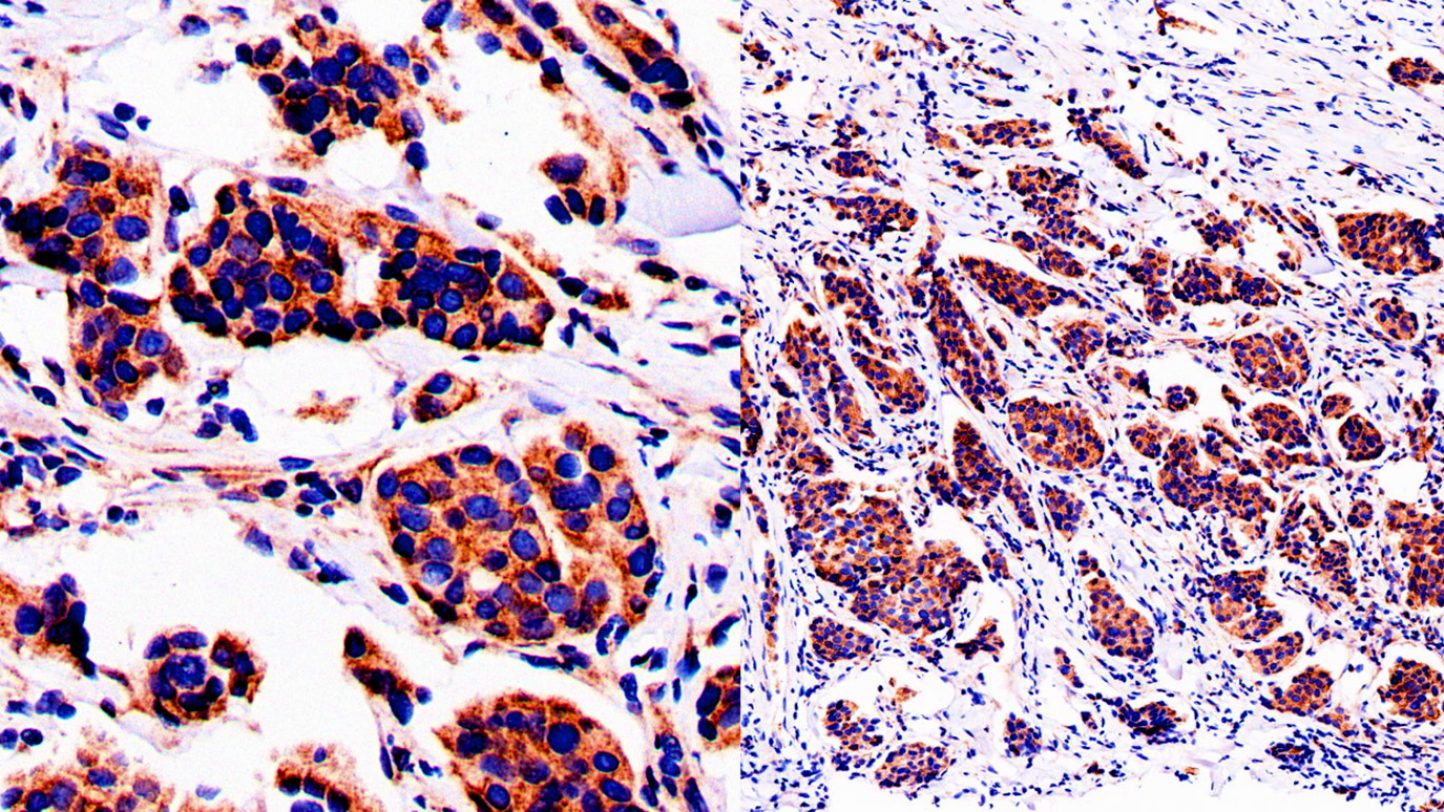
The latest retraction for Zdorovets came last month when Crystallography Reports retracted a study containing electron microscope images “highly similar” to those published a year earlier in a now-retracted paper in the Russian Journal of Electrochemistry by a similar group of authors. Both papers also included images that closely resemble ones Zdorovets and his colleagues presented at a nanomaterials conference in Ukraine in 2017. In each instance, the images were meant to be showing different materials. 

Continue reading One of Kazakhstan’s top nuclear physicists also leads his nation in retractions

How to juice your Google Scholar h-index, preprint by preprint

A screenshot of Yousaf’s Google Scholar profile before it was removed.

Muhammad Zain Yousaf, a postdoc at Zhejiang University in Hangzhou, China, became a scholar of note overnight. Or so it would seem, based on his now-defunct Google Scholar profile: From a modest 47 in 2022 and around 100 in 2023, Yousaf’s citations jumped to 629 in 2024. His h-index, a measure combining publication and citation numbers, took off accordingly, reaching levels typical of a senior academic.

But another researcher smelled a rat and took a closer look at Yousaf’s publications. In just two days, Yousaf had uploaded 10 short documents to TechRxiv, a preprint server hosted by the U.S.-based Institute of Electrical and Electronic Engineers, or IEEE. Each of the documents was chock-full of self-citations. In five cases, Yousaf was an author on all 37 papers in the reference list; the rest of the time, his publications made up nearly two-thirds of the reference list.

”Many of these documents appear to be low quality, as evidenced by their lack of coherence and technical quality,” the concerned researcher, who asked to remain anonymous, said of the preprints in an email to TechRxiv last December.

Continue reading How to juice your Google Scholar h-index, preprint by preprint

Weekend reads: ‘The fall of a prolific science journal’; Clinical trials by ‘super-retractors’; ‘How to Study Things That May Not Exist’

Giving Tuesday was this week, and, like many organizations, we asked for your support. The work we do is funded in part by your donations. If you value our work in rooting out scientific fraud and misconduct, exposing serial offenders, spotlighting how to fix broken systems — and bringing you this newsletter — please consider showing your support with a tax-deductible donation. 

The week at Retraction Watch featured:

Did you know that Retraction Watch and the Retraction Watch Database are  projects of The Center of Scientific Integrity?  Others include the Medical Evidence Project, the Hijacked Journal Checker, and the Sleuths in Residence Program. Help support this work.   

Here’s what was happening elsewhere (some of these items may be paywalled, metered access, or require free registration to read):

Continue reading Weekend reads: ‘The fall of a prolific science journal’; Clinical trials by ‘super-retractors’; ‘How to Study Things That May Not Exist’

Nature paper retracted after one investigation finds data errors, another finds no misconduct

Nature has retracted a paper on  melanoma after an investigation by the journal found issues with data that rendered certain results statistically insignificant. A separate institutional investigation concluded misconduct wasn’t involved, the lead author says.

The research behind the article, published in April 2016, was conducted in the lab of Ashani Weeraratna, then at the Wistar Institute in Philadelphia. The paper has been cited 332 times, according to Clarivate’s Web of Science. The study investigated how the tumor microenvironment affected the spread of young versus aged cells.

An editorial investigation found some results in a figure were “no longer statistically significant, which affects the conclusions about therapy resistance,” according to the October 29 retraction notice. The inquiry also found  “several errors in image and source data consistency,” as well as errors with the sample numbers given in the original study.

Continue reading Nature paper retracted after one investigation finds data errors, another finds no misconduct

Glyphosate safety article retracted eight years after Monsanto ghostwriting revealed in court

Credit: Mike Mozart/Flickr (CC BY 2.0)

A review article concluding the weed killer Roundup “does not pose a health risk to humans” has been retracted eight years after documents released in a court case revealed employees of Monsanto, the company that developed the herbicide, wrote the article but were not named as coauthors. 

The safety of glyphosate, the active ingredient in Roundup, is hotly debated and currently under review at the U.S. Environmental Protection Agency. The International Agency for Research on Cancer, part of the World Health Organization, in 2015 declared glyphosate “possibly carcinogenic.” 

The now-retracted article appeared in Regulatory Toxicology and Pharmacology, an Elsevier title, in 2000. Gary Williams, then a pathologist at New York Medical College in Valhalla, Robert Kroes, a toxicologist at the University of Utrecht in the Netherlands, and Ian C. Munro, a toxicologist at Cantox Health Sciences International in Ontario, Canada, were listed as the authors. The paper has been cited 614 times, according to Clarivate’s Web of Science. 

Continue reading Glyphosate safety article retracted eight years after Monsanto ghostwriting revealed in court

Number of ‘unsafe’ publications by psychologist Hans Eysenck could be ‘high and far reaching’

Hans Eysenck

A “high and far reaching” number of papers and books by Hans Eysenck could be “unsafe,” according to an updated statement from King’s College London, where the psychologist was a professor emeritus when he died in 1997.

A 2019 investigation launched by the U.K. institution found 26 papers coauthored by Eysenck and Ronald Grossarth-Maticek, a social scientist in Germany, were based on questionable data and contained findings that were “incompatible with modern clinical science and the understanding of disease processes.”

For example, the two researchers’ data showed people with a “cancer-prone” personality were more than 120 times as likely to die from the disease as were those with a “healthy” personality, Anthony Pelosi, a longtime Eysenck critic, pointed out in an article preceding the university probe.

Continue reading Number of ‘unsafe’ publications by psychologist Hans Eysenck could be ‘high and far reaching’

Authors retract Nature paper projecting high costs of climate change

The authors of a highly publicized study predicting climate change would cost $38 trillion a year by 2049 have retracted their paper following criticism of the data and methodology, including that the estimate is inflated. 

The economic commitment of climate change,” which appeared April 17, 2024, in Nature, looked at how changes in temperature and precipitation could affect economic growth. Forbes, the San Diego Union-Tribune and other outlets covered the paper, which has been accessed over 300,000 times. It has been cited 168 times, according to Clarivate’s Web of Science.

But after two commentaries published this August raised questions about the study’s data and methodology, the researchers revisited their findings. “The authors acknowledge that these changes are too substantial for a correction,” the retraction notice, published today, states. 

Continue reading Authors retract Nature paper projecting high costs of climate change

The case of the fake references in an ethics journal

Many would-be whistleblowers write to us about papers with nonexistent references, possibly hallucinated by artificial intelligence. One reader recently alerted us to fake references in … an ethics journal. In an article about whistleblowing.

The paper, published in April in the Journal of Academic Ethics, explored “the whistleblowing experiences of individuals with disabilities in Ethiopian public educational institutions.” 

Erja Moore, an independent researcher based in Finland, came across the article while looking into a whistleblowing case in that country. “I started reading this article and found some interesting references that I decided to read as well,” Moore told Retraction Watch. “To my surprise, those articles didn’t exist.”

Continue reading The case of the fake references in an ethics journal

Iraqi journal suspected of coercion, two others dropped from major citation databases

The influential citation database Scopus has delisted three journals from Iraq in a blow to recent government efforts to boost the standing of the country’s scholarly publications. One of the titles, which was included in Clarivate’s Web of Science, was dropped from that index as well.

Last month we reported on allegations that one of the delisted journals, the Medical Journal of Babylon, a publication of the University of Babylon in Hilla, was coercing authors to cite its articles. Citation manipulation is widespread in Iraq and elsewhere, but is considered a form of scientific misconduct.

“The Medical Journal of Babylon was flagged for re-evaluation at the end of September when we received concerns, and because we observed outlier publication performance,” said a spokesperson from Elsevier, which owns Scopus. The publisher marked the journal as delisted in its October update of indexed and delisted titles.

Continue reading Iraqi journal suspected of coercion, two others dropped from major citation databases

Weekend reads: How an MIT student’s AI study ‘Fell Apart’; Egyptian scientists, Russian affiliations; the ‘dangers’ of bibliometrics with ‘polluted data’ 

Dear RW readers, can you spare $25?

The week at Retraction Watch featured:

Did you know that Retraction Watch and the Retraction Watch Database are  projects of The Center of Scientific Integrity?  Others include the Medical Evidence Project, the Hijacked Journal Checker, and the Sleuths in Residence Program. Help support this work.   

Here’s what was happening elsewhere (some of these items may be paywalled, metered access, or require free registration to read):

Continue reading Weekend reads: How an MIT student’s AI study ‘Fell Apart’; Egyptian scientists, Russian affiliations; the ‘dangers’ of bibliometrics with ‘polluted data’