U.K. surgeon and inventor’s endeavors include unreproducible data and guaranteed publications for a price

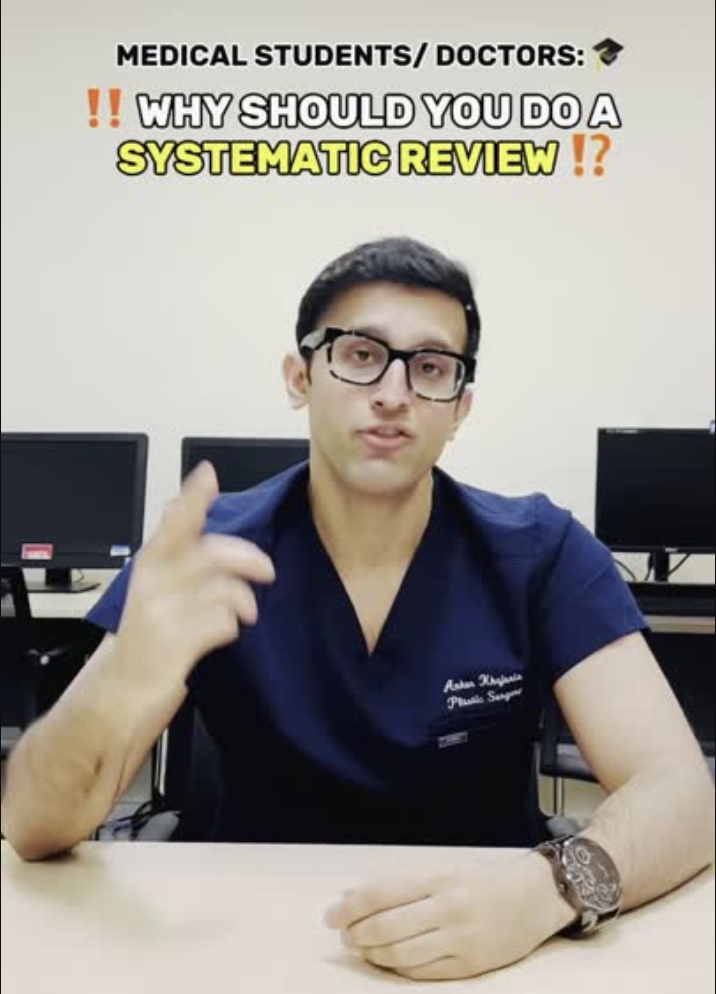
Ankur Khajuria offers a “career-changing course” on conducting reviews, which he markets on LinkedIn to medical students and doctors. (source)

“Research will help you get ahead,” British surgeon Ankur Khajuria told his 16,000 followers in a 2024 Instagram post while seated in scrubs embroidered with his name. “If you want to learn about publishing, check out the research academy at HighYieldUK.com.” 

The company, which offers medical students mentoring in publication, isn’t the only commercial venture for Khajuria, a plastic and reconstructive surgeon in his mid-thirties active in the media, including as a contestant on Squid Game: The Challenge. His entrepreneurship has extended into medical device manufacturing under the banner of Avance Innovations, which he founded and where he is CEO. For his professional efforts, Khajuria has been given a prestigious award and high praise from his colleagues, with one calling him “brilliant.”

But an investigation by Retraction Watch reveals a different view. Khajuria’s academy raises concerns about promises of publication for a price, and his prolific publication record has set off flags on PubPeer, where commenters have raised allegations of plagiarism. And Avance Innovation’s signature surgical device, while marketed for humans, has apparently been tested on only six rats and no people. Close examination by the Medical Evidence Project, an endeavor of The Center for Scientific Integrity (publisher of Retraction Watch), indicates the data in that rat study lack internal consistency, making them questionable.

Continue reading U.K. surgeon and inventor’s endeavors include unreproducible data and guaranteed publications for a price

Dogged by retractions, Iraqi researcher and publisher uses a different name

Abduladheem Turki Jalil

Researchers change the name they publish under for many reasons, most of which aren’t fodder for a Retraction Watch story. Trying to skirt a publishing ban is one that is. And another case that recently caught our attention may be in a similar category.  

Researcher Abduladheem Turki Jalil is currently affiliated with the University of Thi-Qar in Nasiriyah, Iraq. His first published paper appears to be a survey on breast cancer from 2019. Jalil’s publications then took off, rising exponentially to more than 100 in 2022. According to Elsevier’s Scopus database, Jalil has an h-index of 44, and on his Instagram profile, he claims to be among the world’s top 2% scientists (he no longer is).

Jalil’s massive output has not failed to attract attention. In 2022, then-sleuth Nick Wise began flagging the researcher’s papers on PubPeer, providing screenshots of Facebook ads selling authorship of articles that matched several of Jalil’s publications. Wise also wrote a blog post about authorship-for-sale networks that mentioned Jalil and his extraordinary productivity. 

Continue reading Dogged by retractions, Iraqi researcher and publisher uses a different name

Court: University disclosure of researcher’s misconduct did not violate due process

Flavia Pichiorri

An appellate court has dismissed a legal challenge by a cancer researcher against her former institution, ruling the university’s misconduct investigation and disclosure process did not violate her right to due process.  

In 2020, The Ohio State University determined that Flavia Pichiorri, a former postdoc in the lab of Carlo Croce, was responsible for manipulating and reusing images in four publications, spanning from her time in Croce’s lab through establishing her own lab at Ohio State. Pichiorri sued the Ohio State Board of Trustees in April 2023 alleging the release of its misconduct findings to “prestigious journals” and her new employer violated her due process rights, defamed her, and inflicted emotional distress, among other claims. 

But in a December 19 ruling, the U.S. Court of Appeals for the Sixth Circuit concluded Pichiorri’s complaint never identified an adequate “liberty interest” worthy of procedural protections under the Due Process Clause of the 14th Amendment. The appeals court affirmed a lower court’s decision tossing the complaint for failure to state a constitutional claim. 

Continue reading Court: University disclosure of researcher’s misconduct did not violate due process

Weekend reads: Evaluating the benefits of open science, a misconduct investigation in Korea, and what we lose in outsourcing reviews to AI

Happy 2026! We’re excited to bring you the first Weekend Reads of the new year.  

The week at Retraction Watch featured:

In case you missed the news, the Hijacked Journal Checker now has more than 400 entries. The Retraction Watch Database has over 63,000 retractions. Our list of COVID-19 retractions is up over 460, and our mass resignations list has 47 entries. We keep tabs on all this and more. If you value this work, please consider showing your support with a tax-deductible donation. Every dollar counts.

Here’s what was happening elsewhere (some of these items may be paywalled, metered access, or require free registration to read):

Continue reading Weekend reads: Evaluating the benefits of open science, a misconduct investigation in Korea, and what we lose in outsourcing reviews to AI

Data lost in a flood? The excuse checks out.

Josh Sorenson/Pexels

When two recent retraction notices mentioned data were “destroyed in a flood,” we were skeptical. We’ve seen water take the blame for missing data before. 

In 2019, we wrote about a chemical engineer who said his suspicious data were lost in a laboratory flooding accident. The researcher lost nine papers as a result, as we previously covered. Three years earlier in 2016, researchers in Sri Lanka lost a paper after claiming they, too, had lost their data in a flood. We couldn’t verify the researchers’ claims.

But this time, thanks to a public records request, we’ve confirmed there was in fact a deluge at the researcher’s lab.

Continue reading Data lost in a flood? The excuse checks out.