Number of ‘unsafe’ publications by psychologist Hans Eysenck could be ‘high and far reaching’

Hans Eysenck

A “high and far reaching” number of papers and books by Hans Eysenck could be “unsafe,” according to an updated statement from King’s College London, where the psychologist was a professor emeritus when he died in 1997.

A 2019 investigation launched by the U.K. institution found 26 papers coauthored by Eysenck and Ronald Grossarth-Maticek, a social scientist in Germany, were based on questionable data and contained findings that were “incompatible with modern clinical science and the understanding of disease processes.”

For example, the two researchers’ data showed people with a “cancer-prone” personality were more than 120 times as likely to die from the disease as were those with a “healthy” personality, Anthony Pelosi, a longtime Eysenck critic, pointed out in an article preceding the university probe.

Continue reading Number of ‘unsafe’ publications by psychologist Hans Eysenck could be ‘high and far reaching’
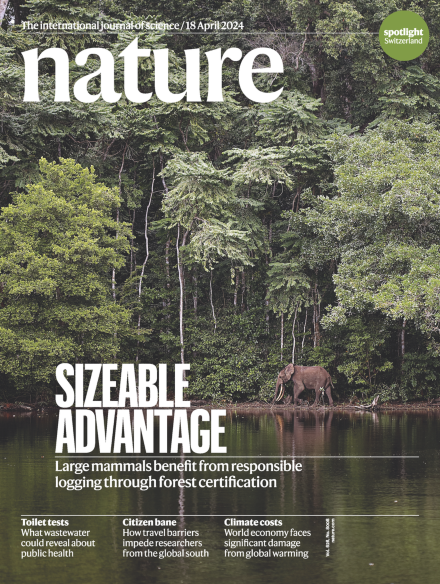
Authors retract Nature paper projecting high costs of climate change

The authors of a highly publicized study predicting climate change would cost $38 trillion a year by 2049 have retracted their paper following criticism of the data and methodology, including that the estimate is inflated. 

The economic commitment of climate change,” which appeared April 17, 2024, in Nature, looked at how changes in temperature and precipitation could affect economic growth. Forbes, the San Diego Union-Tribune and other outlets covered the paper, which has been accessed over 300,000 times. It has been cited 168 times, according to Clarivate’s Web of Science.

But after two commentaries published this August raised questions about the study’s data and methodology, the researchers revisited their findings. “The authors acknowledge that these changes are too substantial for a correction,” the retraction notice, published today, states. 

Continue reading Authors retract Nature paper projecting high costs of climate change

The case of the fake references in an ethics journal

Many would-be whistleblowers write to us about papers with nonexistent references, possibly hallucinated by artificial intelligence. One reader recently alerted us to fake references in … an ethics journal. In an article about whistleblowing.

The paper, published in April in the Journal of Academic Ethics, explored “the whistleblowing experiences of individuals with disabilities in Ethiopian public educational institutions.” 

Erja Moore, an independent researcher based in Finland, came across the article while looking into a whistleblowing case in that country. “I started reading this article and found some interesting references that I decided to read as well,” Moore told Retraction Watch. “To my surprise, those articles didn’t exist.”

Continue reading The case of the fake references in an ethics journal

Iraqi journal suspected of coercion, two others dropped from major citation databases

The influential citation database Scopus has delisted three journals from Iraq in a blow to recent government efforts to boost the standing of the country’s scholarly publications. One of the titles, which was included in Clarivate’s Web of Science, was dropped from that index as well.

Last month we reported on allegations that one of the delisted journals, the Medical Journal of Babylon, a publication of the University of Babylon in Hilla, was coercing authors to cite its articles. Citation manipulation is widespread in Iraq and elsewhere, but is considered a form of scientific misconduct.

“The Medical Journal of Babylon was flagged for re-evaluation at the end of September when we received concerns, and because we observed outlier publication performance,” said a spokesperson from Elsevier, which owns Scopus. The publisher marked the journal as delisted in its October update of indexed and delisted titles.

Continue reading Iraqi journal suspected of coercion, two others dropped from major citation databases