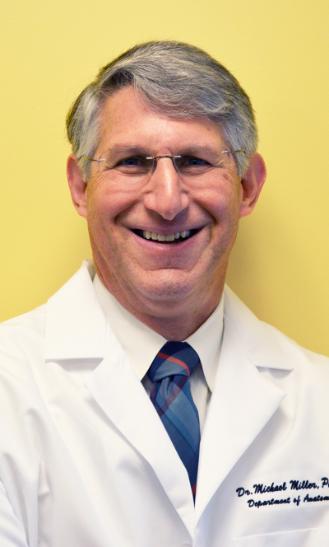
A researcher who was found guilty of committing misconduct while using three federal grants has published new findings that cite those grants.
In 2012, the U.S. Office of Research Integrity determined that Michael Miller, a former department chair at the State University of New York (SUNY) Upstate Medical University in Syracuse, had committed misconduct by falsifying and/or fabricating data. The affected research was funded by three grants issued by the National Institute of Alcohol Abuse and Alcoholism (NIAAA), part of the National Institutes of Health (NIH).
As a result, Miller agreed to not seek federal funding for one year, and then have his research supervised for two years following the debarment. (He ended up getting a gig as a grant services consultant, but lost it in 2013 after he failed to disclose his ORI sanctions to his new employer.)
Recently, Miller published two new papers — both of which cite the three grants, collectively worth millions.
 The similarities between recent papers in two different journals about energy were striking — so striking that a number of people have
  A journal has retracted a 2016 article for a litany of flaws, including plagiarism and a massive self-inflicted wound that should have obviated the first offense.
  Last year, an academic society recommended that journals retract nine papers by a researcher in Japan who collaborated with a notorious fraudster. Only two have been retracted.
 Before we present this week’s Weekend Reads, a question: Do you enjoy our weekly roundup? If so, we could really use your help. Would you consider a
 When you think a retraction notice doesn’t tell the whole story, what should you do?