‘We badly need to change processes’: How ‘slow, opaque and inconsistent’ journals’ responses to misconduct can be

Alison Avenell

Two researchers from Japan — Jun Iwamoto and the late Yoshihiro Sato — have slowly crept up our leaderboard of retractions to positions 3 and 4. They have that dubious distinction because a group of researchers from the University of Auckland the University of Aberdeen, who have spent years analyzing the work. As their efforts continue, those researchers have been analyzing how journals respond to allegations, and what effect Sato and Iwamoto’s misconduct has had on the clinical literature. We asked three of the common authors of two recently published papers to answer some questions.

Retraction Watch (RW): Tell us a bit about the case you analyzed in these two papers, and what you found.

Continue reading ‘We badly need to change processes’: How ‘slow, opaque and inconsistent’ journals’ responses to misconduct can be

Journal expresses a great deal of concern over deceased author’s work

A gastroenterology journal has issued an extensive expression of concern about a 2013 paper by Yoshihiro Sato, a Japanese endocrinologist who has posthumously been climbing the Retraction Watch leaderboard. (He’s now ranked number three, ahead of Diederik Stapel.)

To call the statement an “expression of concern” is like calling Charles M. Schulz a talented cartoonist, or Escoffier a pretty good cook. Indeed, the journal expresses so much concern, about, well, so much, that we’re not sure what in the paper would be left unscathed. 

Sato, formerly of Hirosaki University, currently has 77 retractions for a range of misconduct-related issues including likely data fabrication and duplication.

Continue reading Journal expresses a great deal of concern over deceased author’s work

Kyoto University suspends first author of retracted Kumamoto quake paper

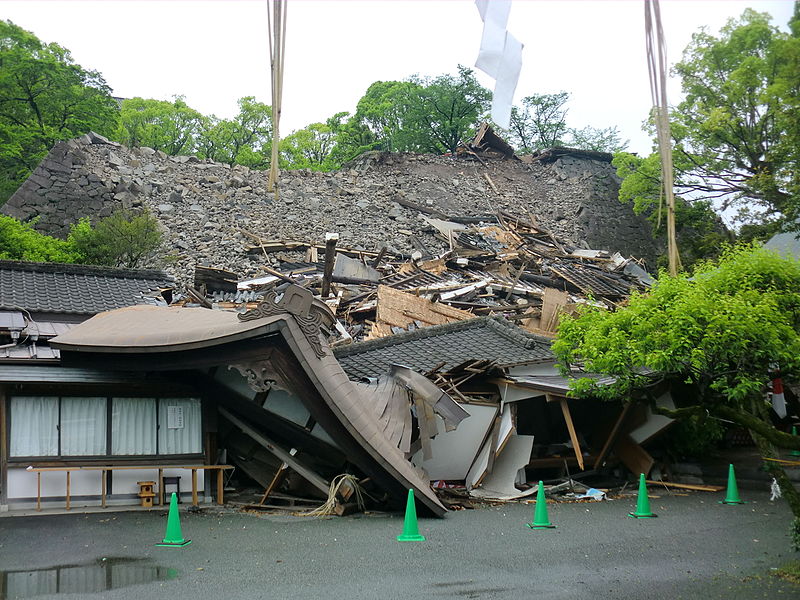
Damage from the 2016 Kumamoto earthquake

The first author of a now-retracted paper in Science about the effects of the deadly 2016 Kumamoto earthquake in Japan has been suspended from his university position for one year. 

Aiming Lin, of the Department of Geophysics at Kyoto University, was sanctioned by the institution for misconduct stemming from his misuse of data and plagiarism in the 2016 paper

Continue reading Kyoto University suspends first author of retracted Kumamoto quake paper

Former university president up to ten retractions

Akihisa Inoue

The former president of Tohoku University in Japan has just had a tenth paper retracted, because it duplicated one of his earlier works.

One of the most recent retractions by materials scientist Akihisa Inoue, late last month, was of a paper in Materials Transactions that had duplicated a now-retracted paper and was subject to an expression of concern in 2012: Continue reading Former university president up to ten retractions

Science standing by for updates as university finds fraud in earthquake paper

Damage from the 2016 Kumamoto earthquake

A researcher at Kyoto University in Japan faked some of the data in a 2017 paper in Science about the deadly Kumamoto earthquake, the university said.

According to media reports about a press conference held today, Kyoto found that the paper’s first author, Aiming Lin, had committed misconduct, including falsification of data and plagiarism. They recommended that Lin retract the paper, and said he would face sanctions, while his co-authors were cleared of wrongdoing.

Science editor in chief Jeremy Berg tells us: Continue reading Science standing by for updates as university finds fraud in earthquake paper

Late researcher faked Kumamoto earthquake data, university finds

Damage from the 2016 Kumamoto earthquake, via Wikimedia

A researcher in Japan who published at least five papers about a deadly 2016 earthquake faked some of the data, Osaka University announced late last week.

Yoshiya Hata resigned his Osaka post and later died, according to media outlet NHK. He claimed to have studied the April 2016 Kumamoto earthquake, which killed at least 50 people, and injured thousands.

In October 2017, we reported that Hiroyuki Goto, of Kyoto University and one of Hata’s co-authors, had apologized because he said that the data contained “wide reaching errors.” One of the papers the two co-authored earned an editor’s note. Continue reading Late researcher faked Kumamoto earthquake data, university finds

New study finds “important deficiencies” in university reports of misconduct

via NASA

Retraction Watch readers may recall the name Yoshihiro Sato. The late researcher’s retraction total — now at 51 — gives him the number four spot on our leaderboard. He’s there because of the work of four researchers, Andrew Grey, Mark Bolland, and Greg Gamble, all of the University of Auckland, and Alison Avenell, of the University of Aberdeen, who have spent years analyzing Sato’s papers and found a staggering number of issues.

Those issues included fabricated data, falsified data, plagiarism, and implausible productivity, among others. In 2017, Grey and colleagues contacted four institutions where Sato or his co-authors had worked, and all four started investigations. In a new paper in Research Integrity and Peer Review, they describe some of what happened next:

Continue reading New study finds “important deficiencies” in university reports of misconduct

How to investigate allegations of research misconduct: A checklist

Do investigations into research misconduct allegations need better standards? The Association for the Promotion of Research Integrity (APRIN) in Japan, a group of volunteers who “commit themselves to the promotion of research of high integrity” and provide “e-learning material for research ethics education,” thinks so. Today, we present a guest post by Iekuni Ichikawa, who chaired an APRIN committee that recently came up with a new checklist for such investigations, about the effort.

The procedures currently employed by various institutions in Japan are highly variable; hence there is a risk that complainants or respondents might be treated unfairly and that the public might not be informed of the facts of the matters. We organized the Research Misconduct Investigation Standardization Committee of APRIN in July 2017 to propose standardized procedures for handling investigations of alleged research misconduct. Here, we present the “Checklist for Investigating Allegations of Research Misconduct,” the fruits of our discussions. Continue reading How to investigate allegations of research misconduct: A checklist

Japanese stem cell fraud leads to a new retraction

Last March, we reported on the retraction of a 2017 paper in Stem Cell Reports by Kohei Yamamizu and colleagues for widespread fabrication of figures. Turns out the problems were at least five years older than that.

Yamamizu had received a pink slip from his institution, the Center for iPS Cell Research and Application (CiRA), which had put the blame for the misconduct squarely on his shoulders. (The director of the institute, Nobel winner Shinya Yamanaka, also took some of the blame in a public statement in which he said he bore “a strong responsibility for not having prevented research misconduct at our institute.”)

Yamamizu has a new retraction, but this time’s a bit different. Here’s the notice for the paper, “Protein Kinase A Determines Timing of Early Differentiation through Epigenetic Regulation with G9,” which appeared in Cell Stem Cell in June 2012 (Yamanaka was not a co-author on either study).  Although the statement acknowledges the internal investigation, it doesn’t mention misconduct or name Yamamizu: Continue reading Japanese stem cell fraud leads to a new retraction

Aerospace researchers in Japan up to three retractions

Rachid Amrousse

A pair of researchers in Japan has lost their third paper in a UK journal, which cites problematic images and an institutional investigation for the move.

The 2016 article, “Novel Rh-substituted hexaaluminate catalysts for N2O decomposition,” was written by Rachid Amrousse and Akimasa Tsutsumi, of the Japan Aerospace Exploration Agency, or JAXA, in Sagamihara. It appeared in Catalysis Society & Technology, a publication of the Royal Society of Chemistry, and has been cited seven times, according to Clarivate Analytics’ Web of Science.

According to the retraction notice: Continue reading Aerospace researchers in Japan up to three retractions