A group of OB/GYNs in the Middle East with a history of testing the patience of editors has lost a paper — and received in expression of concern for another — over concerns about the validity of their data.
The articles appeared in the BJOG, a Wiley publication. Both were led by Mohammad Maher, who is affiliated with Menoufia University in Egypt and the Armed Forces Hospital Southern Region, in Saudia Arabia.
Maher was first author of a 2017 paper in Obstetrics & Gynecology that the journal retracted earlier this year, after the editors were unable to resolve serious questions about the reliability of the data. As the retraction notice states, the journal made little headway with Menoufia University when it tried to follow up on concerns that the researchers’ results were almost certainly fabricated.
The authors of that letter stated that there had been only two COVID-19 patients amongst medical personnel in Thailand at that time, one of whom was a “forensic medicine professional” working in Bangkok.
The authors of a preprint on use of hydroxychloroquine — the controversial drug heavily promoted by, and now apparently taken by, President Trump, at least for a few more days — along with azithromycin for COVID-19 have withdrawn the paper.
The Journal of the American Academy of Dermatology has taken down a letter on whether people should abstain from sex during the coronavirus pandemic, but the editor says the article is not being retracted.
Meanwhile, researchers in France have retracted a paper in which they’d claimed to have found replication of the virus that causes Covid-19 in the dialysis fluid of a patient with kidney disease. Again, hasty publication appears to be involved. We’ve been tracking retractions of Covid-19 articles on our website, and, let’s just say, the list is almost certainly a trailing indicator of the robustness of the science here — as it is with retractions during any period.
Back to the letter. “COVID-19: Should sexual practices be discouraged during the pandemic?” was written by ZhiQiang Yin, of the Department of Dermatology at the First Affiliated Hospital of Nanjing Medical University, in China. Yin submitted the article on April 14. The journal accepted it on the 16th and published it on April 30th.
A group of researchers in Scotland have taken aim at a study published in early March which reported surprising findings on the genetics of the SARS-CoV-2 virus responsible for the Covid-19 pandemic.
But the story of what it took to correct the record about the paper is likely to be all too familiar to those who attempt such feats. It involved a blog post and a new paper — neither of which appeared on the site of the original journal that published the work, and neither of which is seeing the kind of attention paid to the original article.
The paper, “On the origin and continuing evolution of SARS-CoV-2,” appeared in National Science Review, published by Oxford Academic. According to the abstract:
A March paper by researchers at Imperial College London that, in the words of the Washington Post, “helped upend U.S. and U.K. coronavirus strategies,” cited a preprint that had been withdrawn.
Retraction Watch became aware of the issue after being contacted by a PubPeer commenter who had noted the withdrawalearlier this month. Following questions from Retraction Watch this weekend, the authors said they plan to submit a correction.
Elsevier has weighed in on the handling of a controversial paper about the utility of hydroxychloroquine to treat Covid-19 infection, defending the rigor of the peer review process for the article in the face of concerns that the authors included the top editor of the journal that published the work.
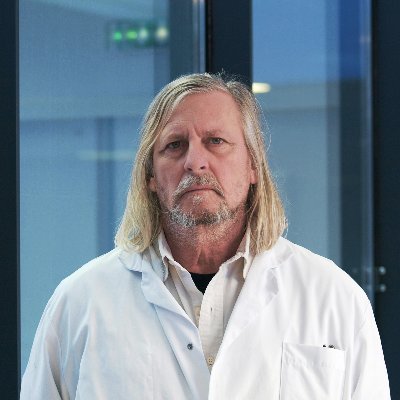
On April 3, as we reported, the International Society of Antimicrobial Chemotherapy issued an expression of concern (without quite calling it that) about the paper, which had appeared in March in the International Journal of Antimicrobial Agents, which the ISAC publishes, along with Elsevier. According to the society, the article, by the controversial French scientist Didier Raoult, of the University of Marseille, and colleagues:
The paper that appears to have triggered the Trump administration’s obsession with hydroxychloroquine as a treatment for infection with the novel coronavirus has received a statement of concern from the society that publishes the journal in which the work appeared.
Why is it so difficult to correct the scientific record in sports science? In the first installment in this series of guest posts, Matthew Tenan, a data scientist with a PhD in neuroscience, began the story of how he and some colleagues came to scrutinize a paper. In the second, he explained what happened next. In today’s final installment, he reflects on the editors’ response and what he thinks it means for his field.
In refusing to retract the Dankel and Loenneke manuscript we showed to be mathematically flawed, the editors referred to “feedback from someone with greater expertise” and included the following:
Why is it so difficult to correct the scientific record in sports science? In the first installment in this series of guest posts, Matthew Tenan, a data scientist with a PhD in neuroscience, began the story of how he and some colleagues came to scrutinize a paper. In this post, he explains what happened next.