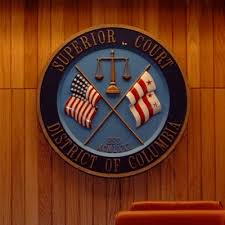
 WASHINGTON, DC — Lawyers for the National Academy of Sciences have asked a District of Columbia court to dismiss a $10 million defamation suit brought by a Stanford University professor.
Mark Jacobson, an engineering professor at Stanford who has published research about the future of renewable energy, alleged he was defamed in a June 2017 article published in the Proceedings of the National Academy of Sciences. In September 2017, Jacobson sued both NAS and the first author of the article for libel in D.C. Superior Court. He also sued NAS for breach of contract.
In response, the co-defendants have each asked the court to dismiss the case under a D.C. law designed to curb so-called “strategic lawsuits against public participation” (SLAPP). Anti-SLAPP laws, which D.C. and 28 states have enacted, generally offer defendants a way to counter what they consider burdensome lawsuits that may have the effect of chilling speech on important issues. In a memo filed Nov. 27, 2017, in support of its motion, NAS claimed that Jacobson filed the suit: Continue reading PNAS asks D.C. court to dismiss $10 million defamation lawsuit
 A former NIH postdoc recruited to a tenure-track position last year committed multiple acts of misconduct in two papers, according to the U.S. Office of Research Integrity.
 Readers of Retraction Watch will be no strangers to the practice of issuing Expressions of Concern — editorial notices from journals that indicate a paper’s results may not be valid. While a good idea in theory — so readers can be aware of potential issues while an investigation is underway — in practice, it’s a somewhat flawed system.
  As many of our readers will know, we’ve been having serious technical issues with the site. We’re cautiously optimistic that they’ve been solved, so although we’re still working on fixes, we’re going to try posting again. Thanks for your ongoing patience.
 The authors of a highly cited 2016 research letter on a way to improve the efficiency of solar panels have retracted their work following “concerns about the reproducibility.”
 A medical journal has
  A glacier researcher has retracted a Nature paper after mistakenly underestimating glacial melt by as much as a factor of ten.
 Authors of a 2018 paper have retracted it after discovering “the conclusions in the article cannot be relied upon.”