Anesthesiology researcher guilty of misconduct in more than 140 papers: Investigation

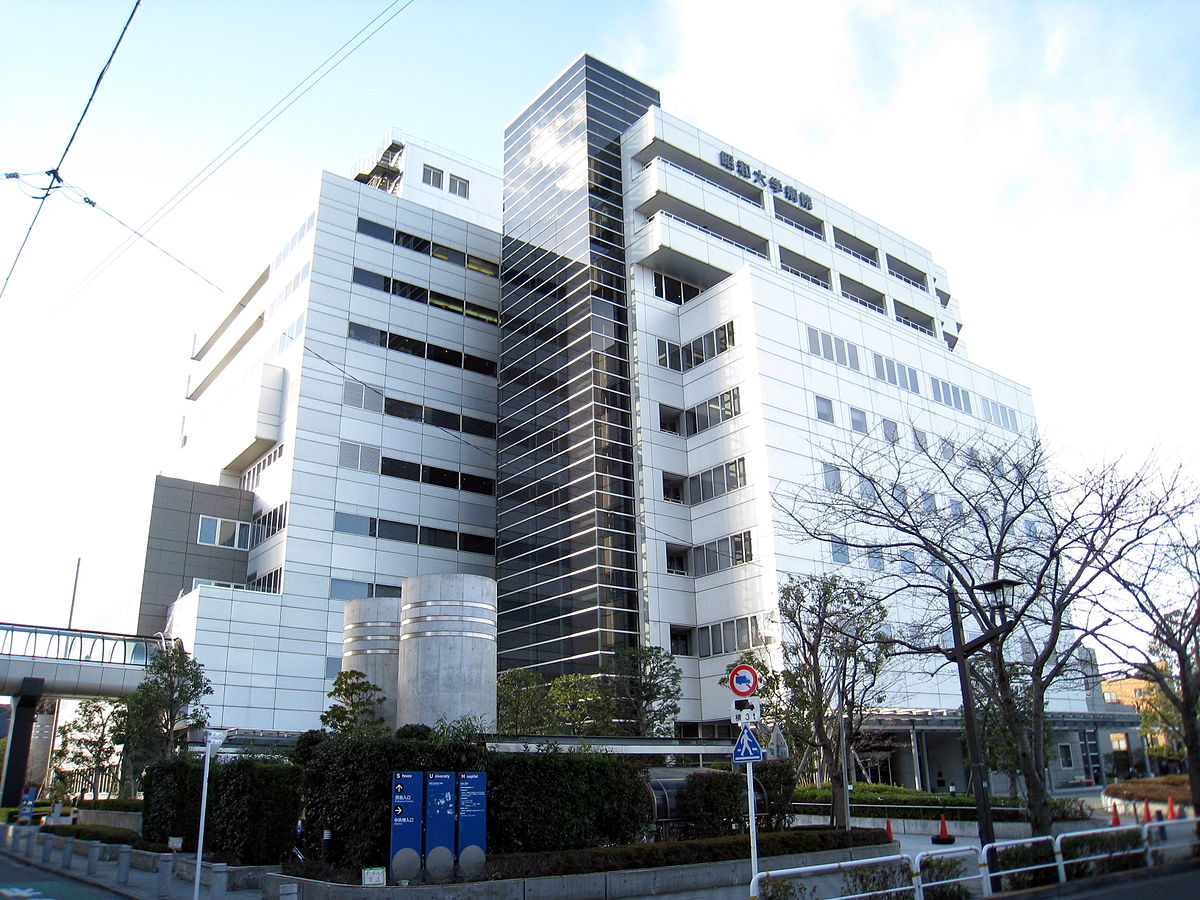
Showa University Hospital, via Wikimedia

A Japanese anesthesiologist has been found guilty of fabricating data and other misconduct in 142 articles, leading to his termination and the sanction of several of his co-authors. 

Showa University says its investigation into Hironobu Ueshima, the existence of which we first reported on last June, found that the prolific researcher had doctored his results, falsified his findings and tinkered with authorship.

The university’s report on the case is available here, in Japanese, and a similar report from the Japanese Society of Anesthesiologists is available here in English. The JSA report cites 142 papers — including 120 letters to the editor, 12 original papers, and 9 case reports — with evidence of misconduct including fabricated data and improper authorship. The investigation also found evidence of misconduct in several unpublished studies by Ueshima. By our count, he has six retractions to date.

Continue reading Anesthesiology researcher guilty of misconduct in more than 140 papers: Investigation

Reporter prompts corrections in Nature, New York Times after researcher fails to disclose ties to Cargill

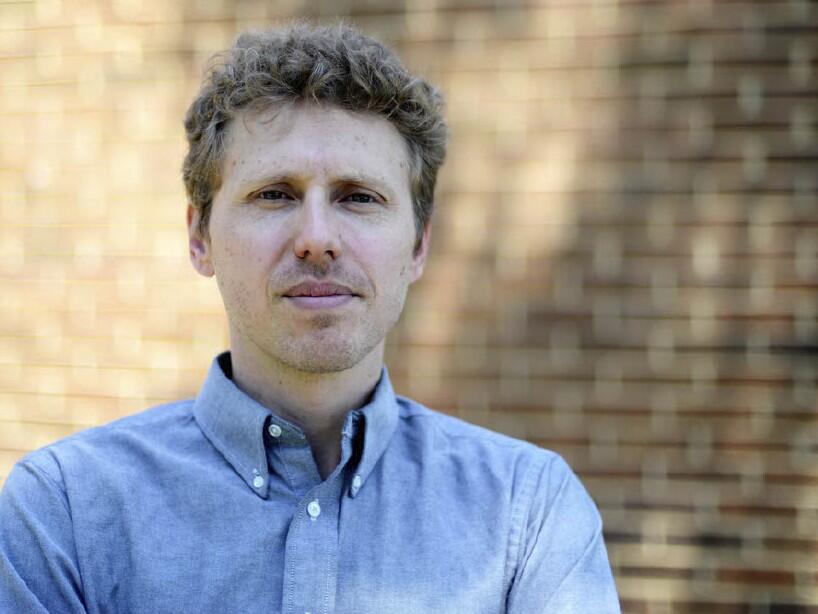
Tim Schwab

A journalist in Washington, D.C. prompted a correction in both Nature and the New York Times after finding that the lead author of a paper on fish farming failed to disclose financial ties to one of the world’s largest aquaculture companies. 

The article, “A 20-year retrospective review of global aquaculture,” found that the practice of fish farming has become significantly more friendly to the environment than it was two decades ago. 

The paper caught the attention of the New York Times, which wrote about the findings. It also grabbed the attention of Tim Schwab, who noticed something a bit, well, fishy, about the study. 

Continue reading Reporter prompts corrections in Nature, New York Times after researcher fails to disclose ties to Cargill

Two Japanese universities revoke PhDs, one for plagiarism and one because of cell line contamination

A scientist in Japan has lost her doctoral degree from Kyoto University after an investigation determined that she had plagiarized in her thesis. 

According to the university, Jin Jing, who received her degree in September 2012 in human and environmental studies, has become the first person at the institution to have a doctorate revoked. In a statement about the move, Kyoto University president Nagahiro Minato said: 

Continue reading Two Japanese universities revoke PhDs, one for plagiarism and one because of cell line contamination

Antiviral: ‘TikTok Doc’ loses paper on faculty development over concerns about harassment suit

Jason Campbell

The now-infamous “TikTok Doc” who was embroiled in a recently settled sexual harassment suit has lost a 2020 paper on, wait for it, faculty development after his co-authors decided that the collaboration risked “reputational damage” to themselves and dismissal of the work. 

Jason Campbell was an anesthesiology resident at Oregon Health & Science University, in Portland, when he became a social media darling. Clips of him dancing in the hospital during the Covid-19 pandemic went viral on TikTok — before Campell was accused of sexually harassing a social worker at the Portland VA hospital, where the anesthesiologist sometimes worked. (Campbell left the institution and reportedly now lives and works in Florida.)

According to The Oregonian, the suit against Cambell and OHSU alleges that: 

Continue reading Antiviral: ‘TikTok Doc’ loses paper on faculty development over concerns about harassment suit

Congratulations! Your already-published article has just been rejected

Eiko Fried

All rejection is hard to take. But, as one psychology researcher has found out, “having a paper rejected half a year after publication is something new …”

We’ll explain.

In January 2021, Eiko Fried, of the Department of Clinical Psychology at Leiden University, in The Netherlands, published an article in Psychological Inquiry titled “Lack of Theory Building and Testing Impedes Progress in The Factor and Network Literature.”

Since then, the paper has been viewed more than 2,400 times and cited a handful of times.

But on May 17, Fried received an email from the journal, which is published by Taylor & Francis, with unfortunate news: His article, according to the support administrator, was “unsuitable for publication.”

Continue reading Congratulations! Your already-published article has just been rejected

‘Regrettably it took too long to investigate and retract this paper.’

Figure 2 of the paper

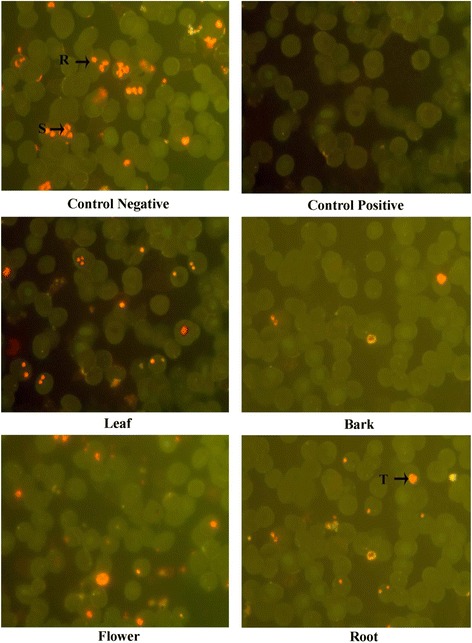
A journal has expressed regret over its sluggish response to image hijinx in a 2017 paper on the antimalarial properties of a kind of pea plant.

The article, “Antimalarial efficacy of Pongamia pinnata (L) Pierre against Plasmodium falciparum (3D7 strain) and Plasmodium berghei (ANKA),” was written by P. V. V. Satish and K. Sunita, of the Department of Zoology and Aquaculture at Acharya Nagarjuna University. 

The paper drew scrutiny on PubPeer four years ago, where commenters noted issues with the figures. 

Time passed, and the paper was cited six times, according to Clarivate Analytics’ Web of Science. Now, according to the retraction notice:

Continue reading ‘Regrettably it took too long to investigate and retract this paper.’

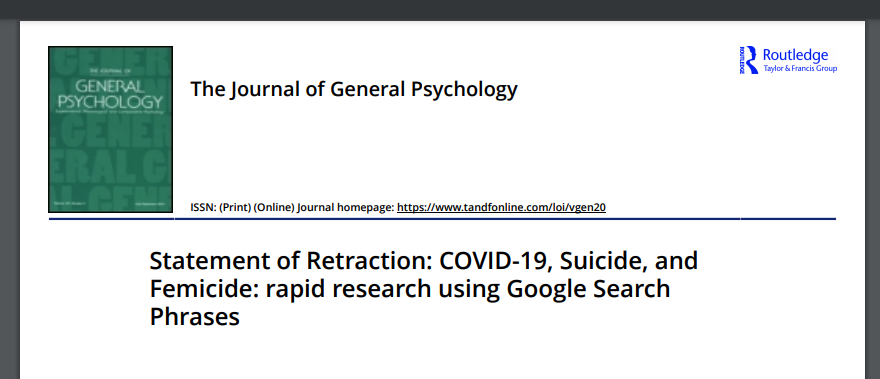
Paper linking frequency of Google search terms to violence against women retracted

The findings were, to say the least, shocking: A researcher in New Zealand claimed that Google searches about violence against women soared during the early months of the Covid-19 pandemic — raising the prospect that quarantines were leading to a surge in intimate partner violence and similar crimes. 

Shocking, yes, but now retracted because the methodology of the study was “catastrophically wrong,” in words of some critics. 

The paper, “COVID-19, suicide, and femicide: Rapid Research using Google search phrases,” was written by Katerina Standish, of the University of Otago’s National Centre for Peace and Conflict Studies and appeared online in January 2021 in the Journal of General Psychology.  

As the author’s institution claimed in its headline for a press release about the article:

Continue reading Paper linking frequency of Google search terms to violence against women retracted

Oh, the gall(stones): A journal should retract a paper on reiki and pain, says a critic

Image by Jürgen Rübig from Pixabay

Talk about missing the trees for the, ahem, forest plots. A researcher is accusing an Elsevier journal of refusing to retract a study that depends in large part on a flawed reference. 

The paper, “The effect of Acupressure and Reiki application on Patient’s pain and comfort level after laparoscopic cholecystectomy: A randomized controlled trial,” appeared in early April in Complementary Therapies in Clinical Practice and was written by a pair of authors from universities in Turkey.

The article caught the attention of José María Morán García, of the Nursing and Occupational Therapy College at the University of Extremadura in Caceres, Spain. Morán noticed that what he considered a critical underpinning of the paper was a 2018 meta-analysis (also by authors from Turkey) with a major flaw: According to Morán and a group of his colleagues, the meta-analysis — also in Complementary Therapies in Clinical Practice — showed the opposite of what its author stated. Indeed, they’d made the case to the journal back in 2018, when the meta-analysis first appeared in a paper titled “Misinterpretation of the results from meta-analysis about the effects of reiki on pain.”

Continue reading Oh, the gall(stones): A journal should retract a paper on reiki and pain, says a critic

Paper likening human sperm to “playful otters” retracted

via Science Advances

Everybody out of the pool. 

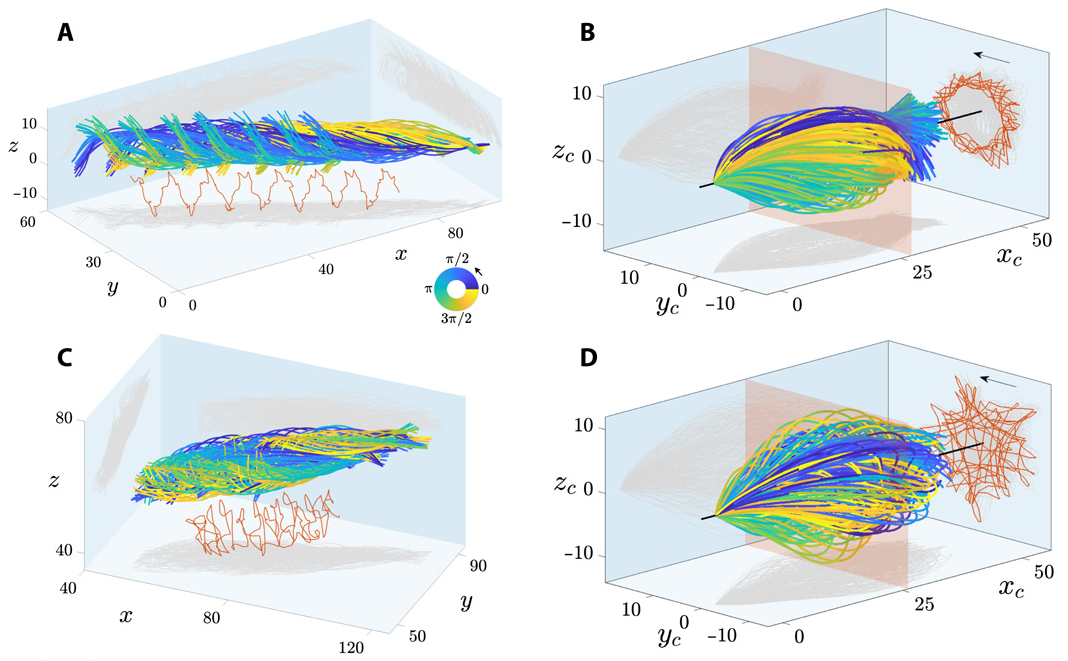
The authors of a 2020 paper in Science Advances on how human sperm propel themselves in a corkscrew fashion like “playful otters” have retracted their article after concluding that their analysis didn’t support their conclusions. 

The article, by Hermes Gadêlha, of the University of Bristol, in England, and several colleagues in Mexico, spawned significant coverage in the lay and science press — including this segment on NPR’s Science Friday and an article in Science (the work behind it was the subject of this YouTube video titled “The great sperm race”).

At the heart of the paper, “Human sperm uses asymmetric and anisotropic flagellar controls to regulate swimming symmetry and cell steering,” was the use of a technology called high-speed 3D microscopy to analyze sperm in motion. Per the abstract

Continue reading Paper likening human sperm to “playful otters” retracted

Researcher loses medical degree for using paper mill to write his dissertation

via Pixy

A university in China has revoked the medical degree of a researcher found guilty of having produced his dissertation with the help of a prodigious paper mill. 

As Elisabeth Bik noted last year in a post on PubPeer, the thesis by Bin Chen, a lung specialist at Soochow University, was one of 121 articles produced by the paper mill that:

Continue reading Researcher loses medical degree for using paper mill to write his dissertation