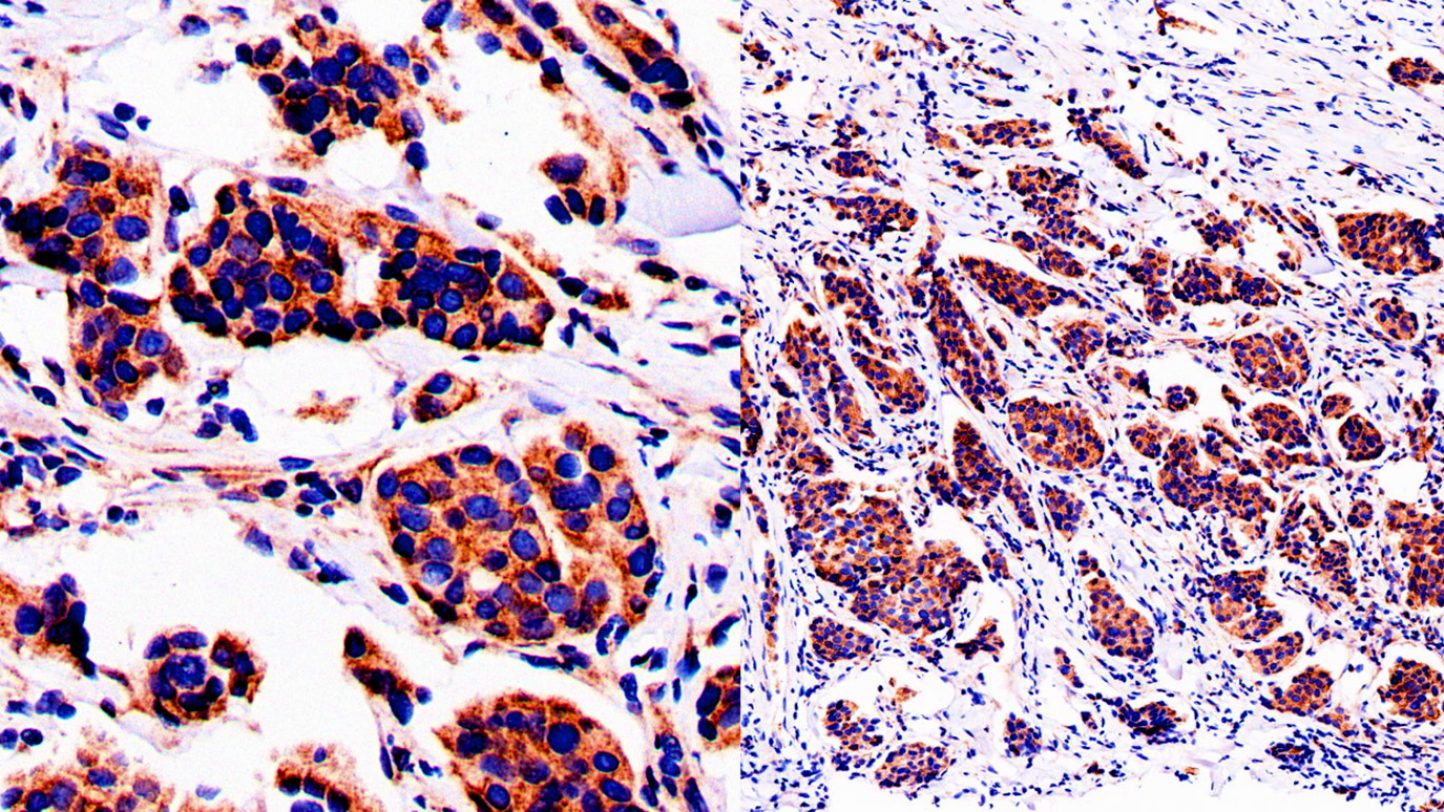
Image courtesy of Li Ma via MD Anderson
Science Translational Medicine has issued an expression of concern over “a series” of data concerns in a paper lauded by MD Anderson Cancer Center last year for identifying “a new driver” of bone metastasis.
The article, published in May 2025, has been the subject of a long and growing thread on PubPeer since April, where critics have been raising concerns about numerous images that appear to have been duplicated. The majority of the paper’s 22 authors are affiliated with MD Anderson in Houston, with at least two authors from Shanghai Jiao Tong University in China.
In June, the journal issued a correction to the paper, stating the authors “identified errors” during cross-checking of the original data, including incorrect and misplaced images.
On Oct. 14, journal editors announced they were placing an expression of concern on the article because of “accumulated concerns” that compromised their confidence in the findings. The journal wanted to alert readers about the issues while they “work with the authors to determine whether they can be addressed through an Erratum,” according to the notice.
According to a statement from Science Translational Medicine, the correction addressed concerns raised on PubPeer in April. At the time, “the editors deemed it more efficient to work with the authors to publish a correction outright, without the intermediate step of an EEoC,” according to the statement.
“Since the publication of the correction in June 2026, however, further issues were raised by readers on PubPeer, in August and September of 2026,” the statement read. “The editors deemed it appropriate to alert readers to the additional concerns by issuing an EEoC, in part to allow more time to assess and potentially resolve the issues.”
When asked if a retraction is being considered, the editors stated they are “working with the authors to determine whether the issues can be resolved with another correction/erratum.”
The work was supported in part by a grant from the U.S. Department of Defense and nine grants from the U.S. National Institutes of Health.
Jiao Tong University, where at least two of the authors are based, is among the Chinese institutions on the Department of Defense’s list of restricted entities. The agency has warned researchers that “collaborating with an individual affiliated with an entity on the [list] constitutes a compliance risk and may negatively impact their eligibility for federal funding.” The National Science Foundation announced a new policy banning its grantees from partnering with institutions on the government’s restricted party lists. NIH hasn’t adopted a similar policy but has recently scrutinized papers by its grantees that include coauthors from China.
None of the authors we attempted to contact returned messages seeking comment.
MD Anderson highlighted the paper on its website shortly after it was published, showcasing the study for identifying “a new driver and therapeutic vulnerability of bone metastasis.” The article examined the role of lipid metabolism – the breakdown and creation of fats – in lab models of bone metastasis. Researchers also reported finding two therapeutic strategies that inhibit bone metastasis and which merited further study.
“Bone metastasis remains a major clinical challenge,” author Li Ma said in the post about the study. “By identifying [acyl-CoA binding protein] as a metabolic driver of this process and demonstrating the efficacy of targeting lipid metabolism in preclinical models, our work opens new therapeutic avenues for halting bone metastasis.”
But in April, PubPeer commenter Yong‐Chang Zhou pointed out numerous instances of duplicate mouse images in several figures, followed by observations of identical numerical values by another PubPeer user in August. In September, yet another PubPeer commenter raised further concerns with the paper, writing “the reported coincidence” between some of the figures appears “statistically extraordinary.”
In response to the April comments, Ma wrote that authors “revisited the source data for the live-mouse bioluminescence imaging experiments and identified several errors in the Supplementary Materials file.”
“These errors arose during figure assembly,” Ma wrote on PubPeer. “We have verified the original data and replaced the affected panels with the correct images. We have contacted the journal and are in the process of making a formal correction.”
In response to the August comments, Ma explained some of the problems stemmed from “copy-and-paste errors introduced during assembly of the Source Data Excel file.” The authors have since corrected the source data for the affected figures, she wrote. In reply to the September comments, Ma defended the work, writing the authors “do not believe the probability calculation proposed in the comment provides an appropriate estimate for these longitudinal tumor-growth data.”
Like Retraction Watch? You can make a tax-deductible contribution to support our work, follow us on X or Bluesky, like us on Facebook, follow us on LinkedIn, add us to your RSS reader, or subscribe to our daily digest. If you find a retraction that’s not in our database, you can let us know here. For comments or feedback, email us at [email protected].