shanecotee / iStock
Anders Møller, an influential evolutionary biologist from Denmark, somehow survived the blow to his reputation after a high-profile retraction and a finding of scientific misconduct more than 20 years ago.
But a new retraction is once again raising the question of whether that fraud was just a blip in his impressive publication record or further proof, as some claim, that much of Møller’s work rests on a shaky foundation.
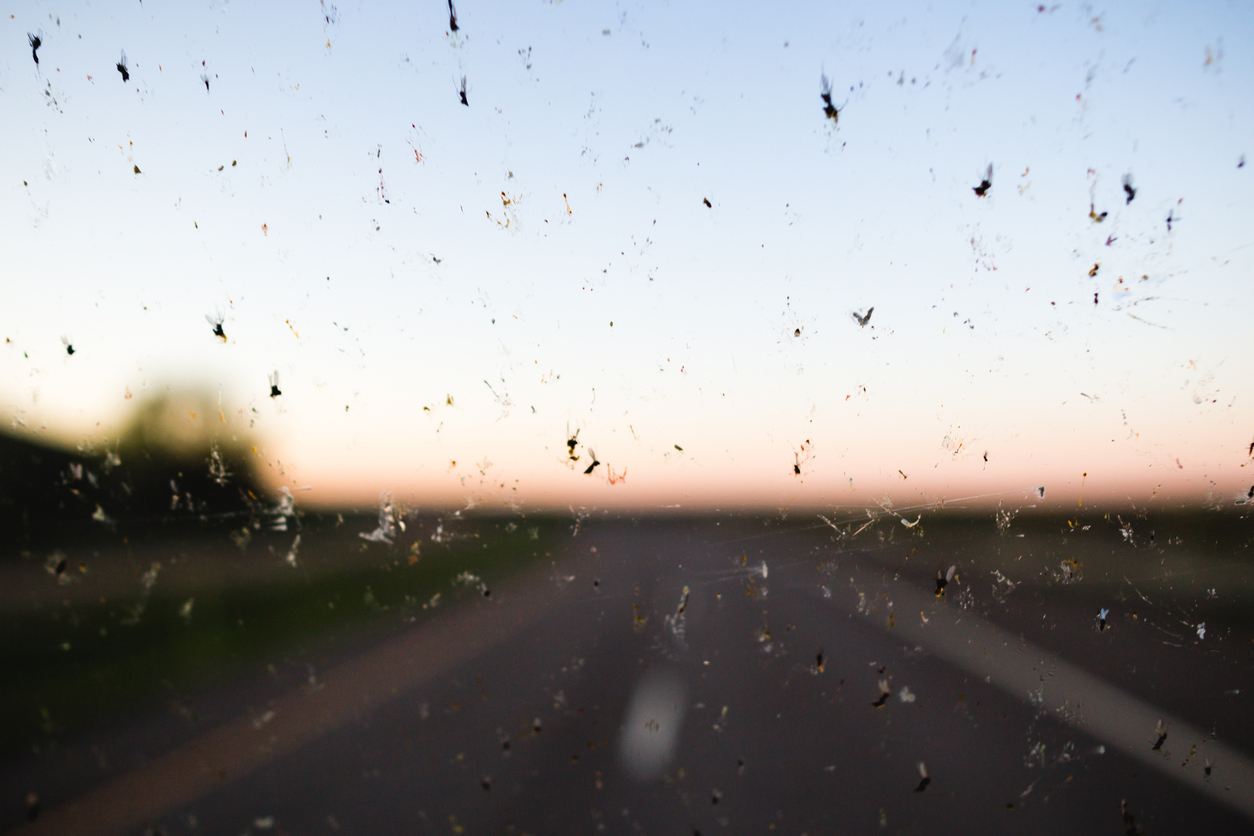
The latest paper to fall: Møller’s 2019 study in the journal Ecology and Evolution that reported a tenfold decline in the bugs splattered on his car windshield over two decades. The journal’s editors wrote in their retraction notice that the dataset contained “duplications” and “inconsistencies” that invalidate its conclusions.
Møller did not respond to the journal’s editors or to emails sent by Retraction Watch. One of Møller’s longtime collaborators, Timothy Mousseau of the University of South Carolina, said Møller has Parkinson’s disease and has been living at an assisted-living facility for the last year.
“He hasn’t been able to open the computer and read email,” he said. “We need to let people know that it’s not that he’s feeling guilty and doesn’t want to admit to something, which I am quite certain is not true.”
Møller’s paper has been cited 120 times, according to Clarivate’s Web of Science, and generated coverage in the Washington Post (“Wait, why are there so few dead bugs on my windshield these days?”) and the Guardian (“Car ‘splatometer’ tests reveal huge decline in number of insects”). A number of experts, however, had always taken it with a grain of salt.
“I know about his work, but I basically don’t take notice of it because I cannot trust what he has been doing,” said Anders Tøttrup, an ecologist who has studied insect declines at the University of Copenhagen, where Møller was previously employed.
In 2004, the Danish Committees on Scientific Dishonesty concluded Møller had made up data in a June 1998 article in Oikos about asymmetry in the growth of oak leaves, which had been retracted a few years earlier. (A second investigation by the National Center for Scientific Research in Paris cleared him of fraud but noted that it was “lacking the material evidence necessary to establish innocence.”)
When the accusations against Møller first emerged, Mousseau and two dozen colleagues wrote a letter of support in Science. “In all our dealings with him, his behavior has been beyond reproach,” they wrote. “We would ask colleagues to restrain from further public condemnation until such time as any allegations have been proven beyond doubt.”
Møller always denied the allegations and moved from Denmark to France, where he was, most recently, a senior research scientist at the University of Paris-Saclay. Prior to his retirement, he continued to publish a couple dozen papers each year on topics ranging from the ecological recovery around Chernobyl to the importance of large feet in eider ducks. His articles have received over 2,000 citations per year, according to Web of Science, and he remains one of the most influential ecologists in the world.
Interest in the global decline of insects took off with a 2017 study in PLOS One showing a 75 percent drop in insect biomass within protected parks in Germany over 27 years of data collection. The following year, the topic made the cover of the New York Times Magazine with a viral story entitled “The Insect Apocalypse is Here.” The article described the “windshield phenomenon” that everyone was noticing, but few had quantified: the vanishing splats.
Six months later, Møller published his now-retracted paper, in which he claimed that over 1,375 drives through the Danish countryside over 22 years, he had tallied up the number of splats on his windshield, and they had declined by 80% on one route and 97% on another.
“I watched hundreds of those measurements at the time,” Mousseau said. “It was the craziest thing because we had to wash the windshield every time we went out.”
In November 2022, an anonymous commenter on PubPeer noted that “the data archived is incomplete, the appendices have some glaring errors, and the analyses are impossible to recreate.”
Another commenter observed in April 2026 that “big chunks of data … seemingly have been copy-and-pasted between different years.”
The retraction of the study “will be a good thing for science communication,” said Manu Saunders, an ecologist at the University of New England in Australia. Insect declines are a genuine, concerning issue, she said, but many of the studies in the field, including Møller’s, relied upon cherry-picked evidence.
“This particular study has been used widely and inappropriately as evidence of the flawed ‘windscreen phenomenon,’” she said.
Like Retraction Watch? You can make a tax-deductible contribution to support our work, follow us on X or Bluesky, like us on Facebook, follow us on LinkedIn, add us to your RSS reader, or subscribe to our daily digest. If you find a retraction that’s not in our database, you can let us know here. For comments or feedback, email us at [email protected].
Re the letter of support in Science: “We would ask colleagues to restrain from further public condemnation until such time as any allegations have been proven beyond doubt.”
As a wise colleague often points out, “beyond a reasonable doubt” is a standard of evidence required to prove criminal charges (at least in the U.S.), and it would be more appropriate to use a civil standard like “preponderance of the evidence” (i.e., “more likely than not”) for research misconduct investigations.
Lets spray toxic chemicals around willy nilly, killing the smallest living creatures, that wont have any effect on the environment or the food chain ???
Probably. But don’t use fake data to make that case.