Computer scientist Richard Fateman got an email in August that was completely “out of the blue”: an offer of coauthorship in articles headed for publication in prestigious journals, in exchange for a fraction of the publication costs.
Fateman, professor emeritus at the University of California, Berkeley, retired 18 years ago, so he was alarmed by the offer from a company called “Springer Journals Online.” He thought it was a scam or a phishing attempt to get money, he told Retraction Watch.
He replied to the email, asking “‘are you for real?’” He also talked to his colleagues at Berkeley to ask if they had ever received similar offers. “I got a response from one or two people saying they’re not entirely surprised,” Fateman said. “And, ‘isn’t it a shame that this is going on?’”
The email, signed by “Dr. Rafael Di Marco Barros, Academic Publication Coordinator,” offered the recipient a choice of manuscripts, expected timelines for publication and target journals, along with available authorship positions. It also specified that coauthors would split the publication costs, and the projects available for collaboration opportunities “are currently approaching the final stages of publication in internationally indexed journals from Elsevier, Springer Nature, Taylor & Francis, Wiley, and SAGE.”
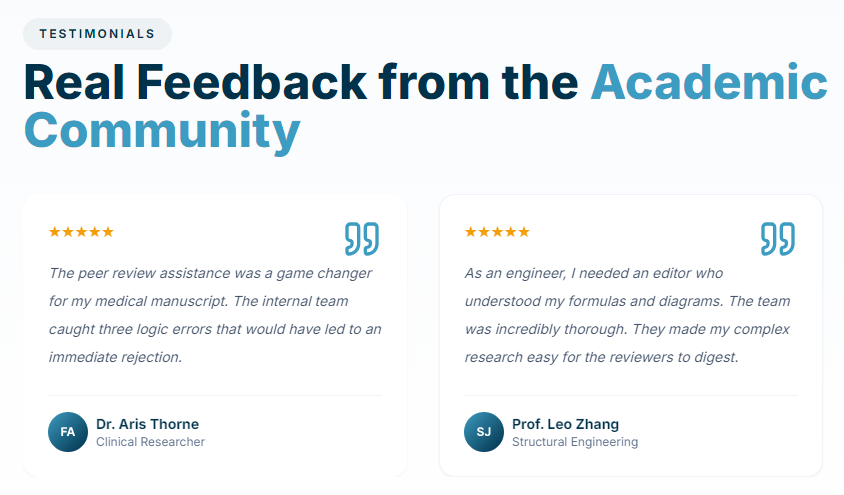
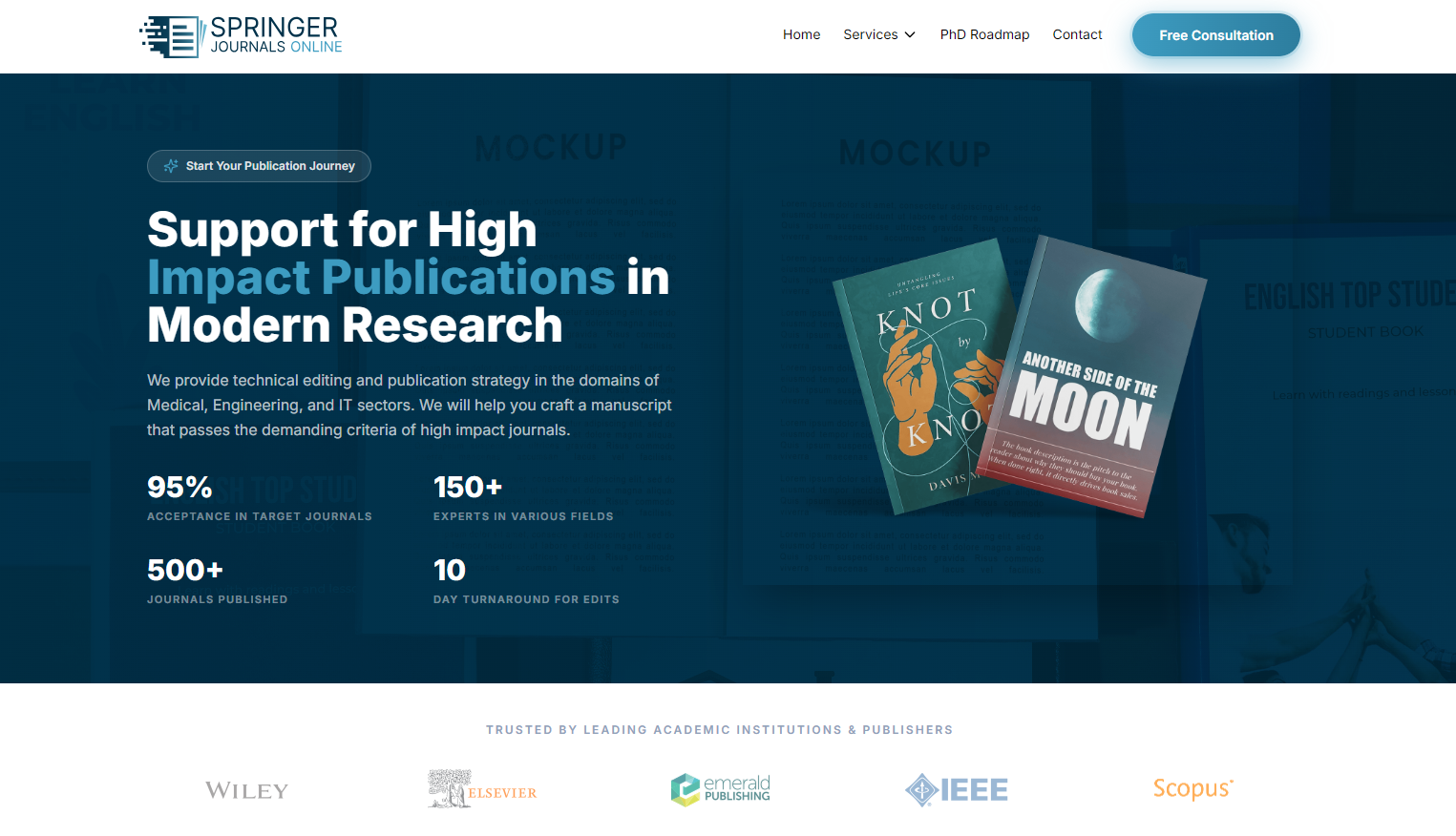
The website for Springer Journals Online boasts a “95% acceptance rate in target journals” and “500+ journals published.” One of the testimonials on the website is attributed to “Dr. Aris Thorne,” well documented as a favored fictional name generated by AI.
Fateman wrote back: “Your invitation seems unethical – adding my name to the author list of a publication I did not participate in writing.”
The agency behind the solicitation has an obviously similar name to the well established publisher Springer Nature, and to a legitimate company Springer Publishing, which publishes 19 journals. But the website for Springer Journals Online lists a New York address on a street that does not exist. The phone number listed has a U.K. country code, and Instagram profile for the agency is based in Pakistan.
Retraction Watch reached out to the agency to learn more about the services it offered, how authorship distributions occurred and the ethical concerns around such content generation. The agency did not respond to an emailed request for comment and the phone number on the website did not connect. When reached by voice call on Whatsapp, the person who answered ended the call after we identified ourselves, and subsequent calls were not answered.
“Springer Nature’s Anti-Piracy and Security Operations Centre are already aware of this organisation, which has no connection to our company, and are working with the relevant authorities to address this issue,” a Springer Nature spokesperson told us.
This offer resembles a practice often employed by commercial operations that facilitate rapid production, submission or sale of scientific papers and authorship slots, an increasingly visible problem in academic publishing. Paper mills and authorship-for-sale networks have been identified in countries including India and China, with commercial intermediaries sometimes matching researchers with manuscripts in exchange for payment. A 2024 study estimates that paper mills account for about 2% of journal submissions across disciplines.
This case also echoes a company calling itself “Springer Global Publication” that in 2024 created convincing replicas of journals published by Elsevier, Springer Nature and other publishers.
Fateman received a response to his reply, which stated the opportunity is intended for researchers who are willing to participate in the research process, review the manuscript and relevant materials, provide substantive feedback, and contribute within their area of expertise.
Rafael Di Marco Barros, a lecturer of medical oncology at King’s College London, told us he did not know of nor is he involved with Springer Journals Online. “I have no affiliations with any journals,” he told us, emphasizing that he is “entirely unfamiliar” with such emails and institutional affiliation. He said his only affiliations are with King’s College London, University of Cambridge and Guy’s and St Thomas’ NHS Foundation Trust.
“I’ve reported it to the fraud office in the U.K. I don’t know what power they will have though,” Barros said.
Fateman did not pursue the offer. But the lack of accountability leads to lower quality scientific research, he said.
“One of the side effects of having too many authors is that no one is really taking responsibility for it, and there are errors in the papers,” Fateman said.
Like Retraction Watch? You can make a tax-deductible contribution to support our work, follow us on X or Bluesky, like us on Facebook, follow us on LinkedIn, add us to your RSS reader, or subscribe to our daily digest. If you find a retraction that’s not in our database, you can let us know here. For comments or feedback, email us at [email protected].