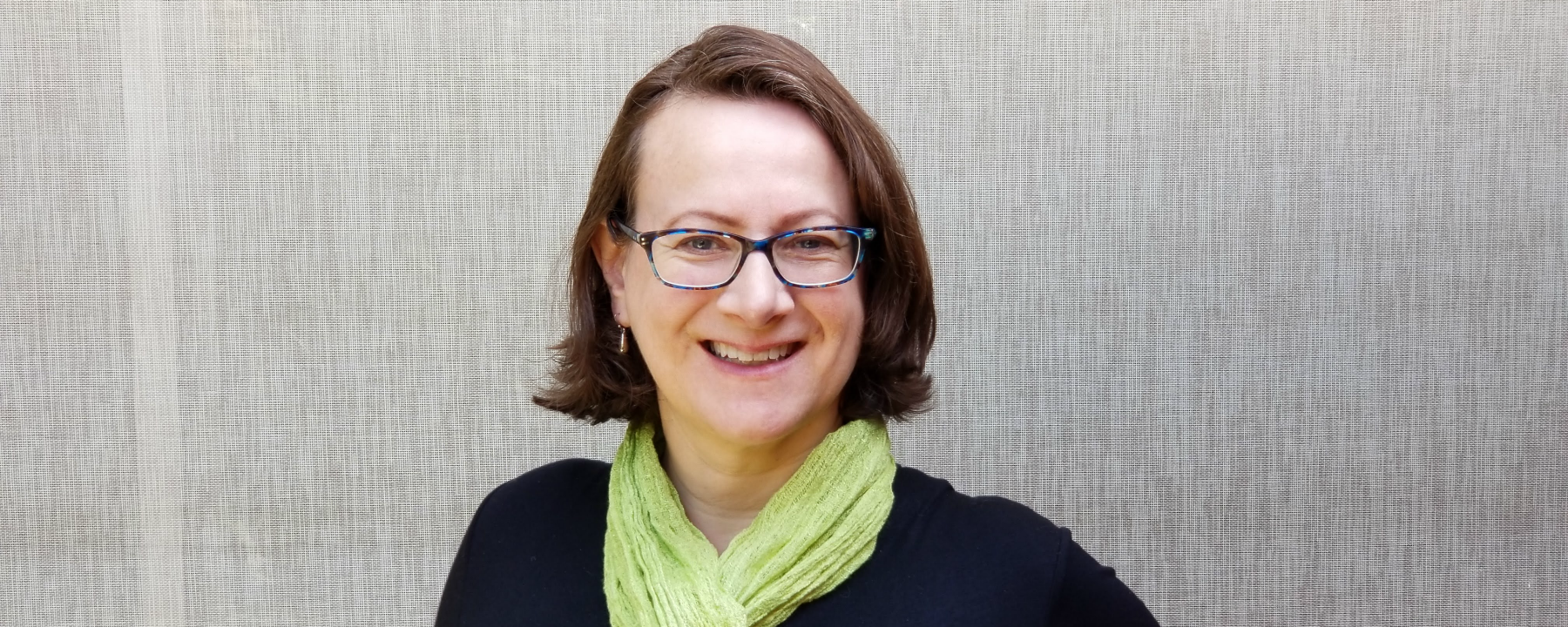
Journals acknowledge that a critical “reader” has a name: Elisabeth Bik

Elisabeth Bik

Followers of this blog know that “a reader” seems to be the force behind a huge number of retractions – and that, despite the apparent unwillingness of journals to name them, they are real people. One of the more prolific “readers” is Elisabeth Bik, the data sleuth whose efforts to identify problematic images has led to the removal of hundreds of dodgy papers.

Journals now seem more willing to give credit where it’s due, by identifying Bik – who has faced threats for her efforts – in their notices.  

A few recent examples: Biomedicine & Pharmacotherapy, an Elsevier title, has name-checked Bik in a dozen retractions of papers dating back to 2017. 

Continue reading Journals acknowledge that a critical “reader” has a name: Elisabeth Bik
The author of a retracted paper learns to be careful what he wishes for

Sometimes leaving well-enough alone is the best policy. Ask Teja Santosh Dandibhotla.

Upset that a paper of his had been retracted from the Journal of Physics: Conference Series, Santosh, a computer scientist at the CVR College of Engineering in Hyderabad, India, contacted us to plead his case. (We of course do not make decisions about retractions, we reminded him.)

Santosh’s article, “Intelligent defaulter Prediction using Data Science Process,” had been pulled along with some 350 other papers in two conference proceedings because IOP Publishing had “uncovered evidence of systematic manipulation of the publication process and considerable citation manipulation.”

Continue reading The author of a retracted paper learns to be careful what he wishes for

Cancer researcher faked data for 24 images in work funded by nine NIH grants: Federal watchdog

Toni Brand

A cancer researcher faked data in a grant application, her PhD thesis, and seven published papers, according to the U.S. Office of Research Integrity.

Toni Brand, who earned her PhD from the University of Wisconsin and served as a postdoc at the University of California, San Francisco (UCSF), “engaged in research misconduct by knowingly or recklessly falsifying or fabricating western blot data, by reusing and relabeling data to represent expression of proteins in control experiments measuring the purity of cytoplasmic and nuclear cell fractionation, measurements of proteins of interest, and measurements of the same protein under different experimental conditions or loading controls,” the ORI said in a report published today.

Continue reading Cancer researcher faked data for 24 images in work funded by nine NIH grants: Federal watchdog

Weekend reads: Plagiarism in biblical scholarship; revelations about publishing ‘lab leak’ preprint; publishing sanctions on Russia

Would you consider a donation to support Weekend Reads, and our daily work? Thanks in advance.

The week at Retraction Watch featured:

Our list of retracted or withdrawn COVID-19 papers is up to 219. There are more than 33,000 retractions in our database — which now powers retraction alerts in EndNoteLibKeyPapers, and Zotero. And have you seen our leaderboard of authors with the most retractions lately — or our list of top 10 most highly cited retracted papers?

Here’s what was happening elsewhere (some of these items may be paywalled, metered access, or require free registration to read):

Continue reading Weekend reads: Plagiarism in biblical scholarship; revelations about publishing ‘lab leak’ preprint; publishing sanctions on Russia

Doing the right thing: Neuroscientist announces retractions in ‘the most difficult tweet ever’

Myriam Sander

A group of neuroscientists in Germany and Hungary is calling for the retraction of two of their recent papers after discovering a fatal error in the research. 

Myriam Sander, a memory researcher at the Max Planck Institute for Human Development in Berlin, took to social media on Wednesday to alert her followers to the decision. In what Sander called the “most difficult tweet ever,” she wrote: 

Continue reading Doing the right thing: Neuroscientist announces retractions in ‘the most difficult tweet ever’