
‘Reused over and over again:’ Image recycling leads to 5-year funding ban for cancer researcher

Sudhakar Yakkanti

A former researcher at Boys Town National Research Hospital in Nebraska has agreed to a five-year ban from the U.S. Office of Research Integrity (ORI) on receiving federal science funding after being found guilty of having fabricated data in numerous grant applications and articles. 

According to the ORI, Sudhakar Yakkanti, a Harvard-trained cancer specialist who from 2004 to 2012 held the post of Director of the Cell Signaling, Retinal & Tumor Angiogenesis Laboratory at Boys Town: 

Continue reading ‘Reused over and over again:’ Image recycling leads to 5-year funding ban for cancer researcher
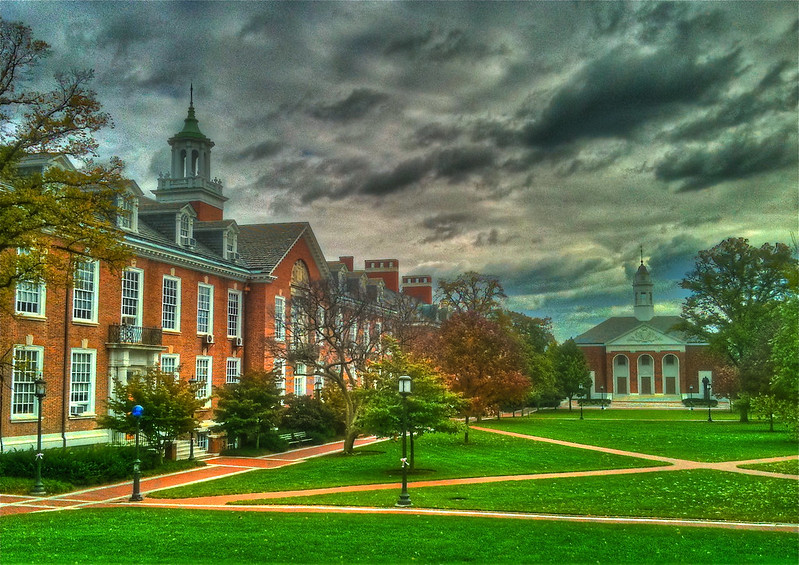
Former Johns Hopkins postdoc sanctioned by Feds for data fabrication

Johns Hopkins, via Flickr

A former postdoc at Johns Hopkins University has been hit by the U.S. Office of Research Integrity (ORI) with a four-year ban on receiving federal research funding after being found  guilty of misconduct in several studies and her doctoral dissertation. 

We covered problems with several of Deepti Malhotra’s papers in February of 2016. At the time, Hopkins refused to tell us if the issues stemmed from misconduct.  But nearly four years later, the ORI has announced that Deepti Malhotra, while at the Johns Hopkins Bloomberg School of Public Health:

Continue reading Former Johns Hopkins postdoc sanctioned by Feds for data fabrication

What’s the hernia? Authors lose surgery paper for miscounting cases

Inguinal hernia

A group of pediatric surgeons in China has lost their 2016 paper on a technique for repairing abdominal defects in children because they apparently had trouble keeping those defects straight. 

The article, “A new technique for extraperitoneal repair of inguinal hernia,” appeared in the Journal of Surgical Research, an Elsevier title. The authors reported that a laparoscopic method of repairing inguinal hernias in children was superior to conventional, open surgery. According to the authors, they had nearly 1,900 patients to prove their point. 

But as the retraction notice indicates, the numbers didn’t add up. 

Continue reading What’s the hernia? Authors lose surgery paper for miscounting cases

Exclusive: King’s College London finds “poor research practices” but no misconduct in two recent cases

King’s College London (KCL) found evidence of poor research practices by three of its faculty, but “no intention to deceive” and no misconduct, according to documents obtained by Retraction Watch.

One case involves work by cancer biologists Farzin Farzaneh and Ghulam Mufti, while the other involves work by Mahvash Tavassoli, also a cancer researcher. Both involve problems with images and were brought to the attention of KCL in January of this year by pseudonymous whistleblower Claire Francis.

In the Farzaneh and Mufti case, writes Tim Newton, KCL’s dean of research governance, ethics and integrity in an October 31 letter:

Continue reading Exclusive: King’s College London finds “poor research practices” but no misconduct in two recent cases

Weekend reads: Grad student who alleged discrimination dismissed; academics who play dumb; when papers cite predatory works

Before we present this week’s Weekend Reads, a question: Do you enjoy our weekly roundup? If so, we could really use your help. Would you consider a tax-deductible donation to support Weekend Reads, and our daily work? Thanks in advance.

The week at Retraction Watch featured:

Here’s what was happening elsewhere:

Continue reading Weekend reads: Grad student who alleged discrimination dismissed; academics who play dumb; when papers cite predatory works

Stem cell researchers have papers retracted for image manipulation

A group of dentistry researchers in Japan, whose work on stem cells has been the subject of an institutional investigation, have now lost two papers in PLOS ONE for image problems. 

The authors, from Aichi Gakuin University in Nagoya, were led by Makio Mogi, a medicinal biochemist at the school. Mogi asked for at least one of the retractions. 

The first article, published in 2013, was titled “Matrix metalloproteinase-3 in odontoblastic cells derived from Ips cells: unique proliferation response as odontoblastic cells derived from ES cells.” It has been cited 18 times, according to Clarivate Analytics’ Web of Science. According to the notice

Continue reading Stem cell researchers have papers retracted for image manipulation