Worried about scarce research funding? Does the prospect of paying rent on that meager post-doc salary keep you up at night? Fear no more!
Innoscience Research in Kuala Lumpur, Malaysia, to the rescue.
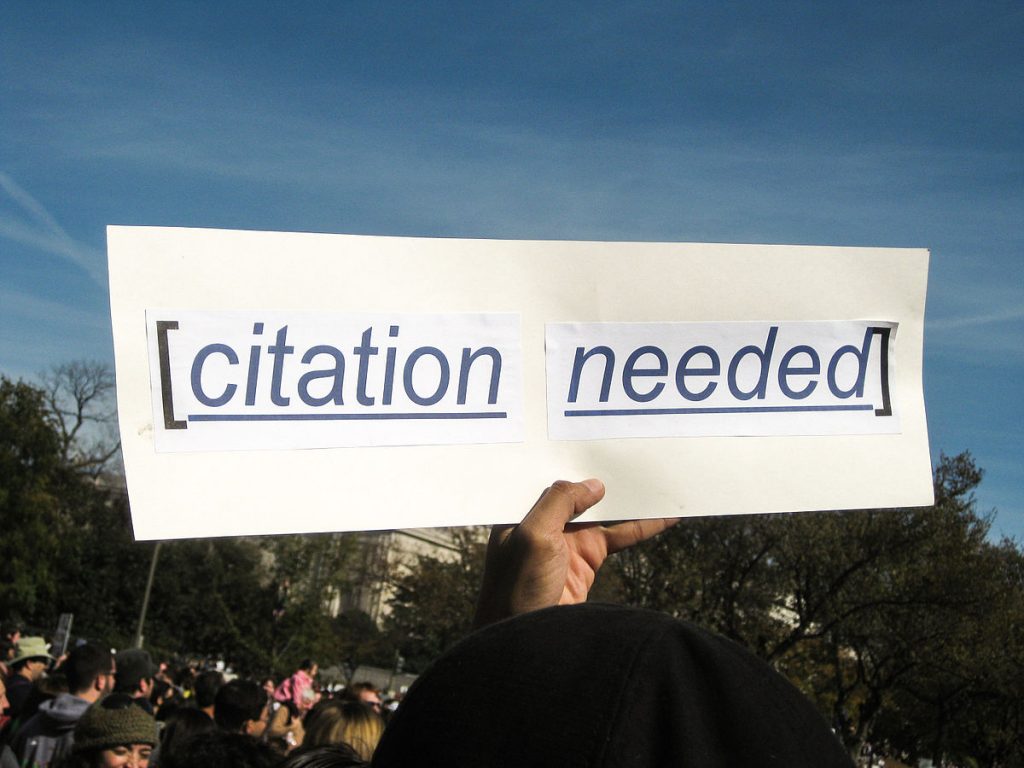
The company has launched an innovative (read: shady) scheme to pay researchers to cite studies from several journals it controls. How much can you earn? That depends. The payout is structured this way: $6 a citation and up to five cites, or $30, per paper, or $150 in total across all five journals.
Clarivate, the company behind the Impact Factor, a closely watched — and controversial — metric, is calling out more than 20 journals for unusual citation patterns.
The 21 journals — 10 of which were suppressed, meaning they will not receive an Impact Factor in 2020, and 11 of which received an expression of concern — are fewer than half of the nearly 50 that the company suppressed or subjected to an expression of concern last year from its Journal Citation Report (JCR). The suppressions, the company notes, represent .05% of the journals listed — a total that increased dramatically this year from about 12,000 to about 20,000.
Clarivate suppressed 10 journals for excessive self-citation which inflates the Impact Factor, or for “citation-stacking,” sometimes referred to as taking part in “citation cartels” or “citation rings:”
Observers describe the quantity of research information now produced variously as “torrent,” “overload,” “proliferation,” or the like. Technological advances in computing and telecommunication have helped us keep up, to an extent. But, I would argue, scholarly and journalistic ethics have not kept pace.
As a case in point, consider the journal article literature review. Its function is twofold: to specify where new information fits within the context of what is already known; and to avoid unknowingly duplicating research projects the public has already paid for. Paradoxically, however, information proliferation may discourage honest and accurate literature reviews. Research information accumulates, which increases the time required for conducting a thorough literature review, which increases the incentive to avoid it.
Most dismissive reviews that I have encountered are raw declarations. A scholar, pundit, or journalist simply declares that no research on a topic exists (or couldn’t be any good if it did exist). No mention is made of how or where (or, even if) they searched. Certain themes appear over and over, such as:
A journal has allowed a geophysicist who cited his own work hundreds of times across 10 papers to retract the articles and republish them with a fraction of the self-citations.
From 2017 to 2019, Yangkang Chen published some of the papers in Geophysical Journal International, an Oxford University Press title, while he was a postdoc at Oak Ridge National Laboratory in the U.S., and some as a faculty member at Zhejiang University in China. In April, the journal subjected the works to expressions of concern.
The research process is rarely straightforward. There are a myriad of ways in which it can go wrong, from the inception of a hypothesis that goes on to be disproved, to failed experiments and rejected manuscripts, hopefully ending in the “happily ever after” of adding to the scholarly record through publication and worldwide dissemination… before starting all over again. Being able to build on the corpus of existing knowledge is essential for future discoveries and innovation: As Newton wrote back in 1675 “If I have seen further, it is by standing upon the shoulders of giants.”
Sadly, we know that even once published, many scientific results are not easily reproducible, and some are amended or retracted. Fraud and misconduct might be the attention-grabbing explanations for the lack of reproducibility in research, but more often than not, it is honest mistakes or making decisions with inaccurate or incomplete information that lead to errata, corrigenda or retraction of articles. Many have argued we need to be more honest about this – and to see retraction as a good thing. Correction of the version of record should be embraced, rather than avoided, and the stigma surrounding retractions should be removed.
Following pushback from members of the taxonomy community, Clarivate Analytics, the company behind the Impact Factor, has reversed its decision to suppress two journals from receiving those scores this year.
As we reported in late June, Clarivate suppressed 33 journals from its Journal Citation Reports, which meant denying them an Impact Factor, for high levels of self-citation that boosted their scores and ranking. Many universities — controversially — rely on Impact Factor to judge the work of their researchers, so the move could have a dramatic effect on journals and the authors whose work appears in them.
At least two more journals are fighting decisions by Clarivate — the company behind the Impact Factor — to suppress them from the 2019 list of journals assigned a metric that many rightly or wrongly consider career-making.
In a letter to the editorial board of Body Image, an Elsevier journal that was one of 33 suppressed by Clarivate for excessive self-citation, editor in chief Tracy Tylka and nine journal colleagues write:
More than 70% of the citations in one journal were to other papers in that journal. Another published a single paper that cited nearly 200 other articles in the journal.
The list includes some of publishing’s biggest players: Nine journals published by Elsevier, seven by Springer Nature, six by Taylor & Francis, and five by Wiley.
A medical journal in Italy has retracted at least 17 papers by researchers in that country who appear to have been caught in a citation scam. The journal says it also fired three editorial board members for “misconduct” in the matter.
The retractions, from Acta Medica Mediterranea, occurred in 2017 and 2018, but we’re just finding out about them now; 14 involve roughly the same group of neuroscientists, while three are by different authors from some of the same institutions as the first team.
The journal last year issued two statements on its website about the cases, which it began investigating in 2018. The first, on Feb. 1, 2019 (we think), declared:
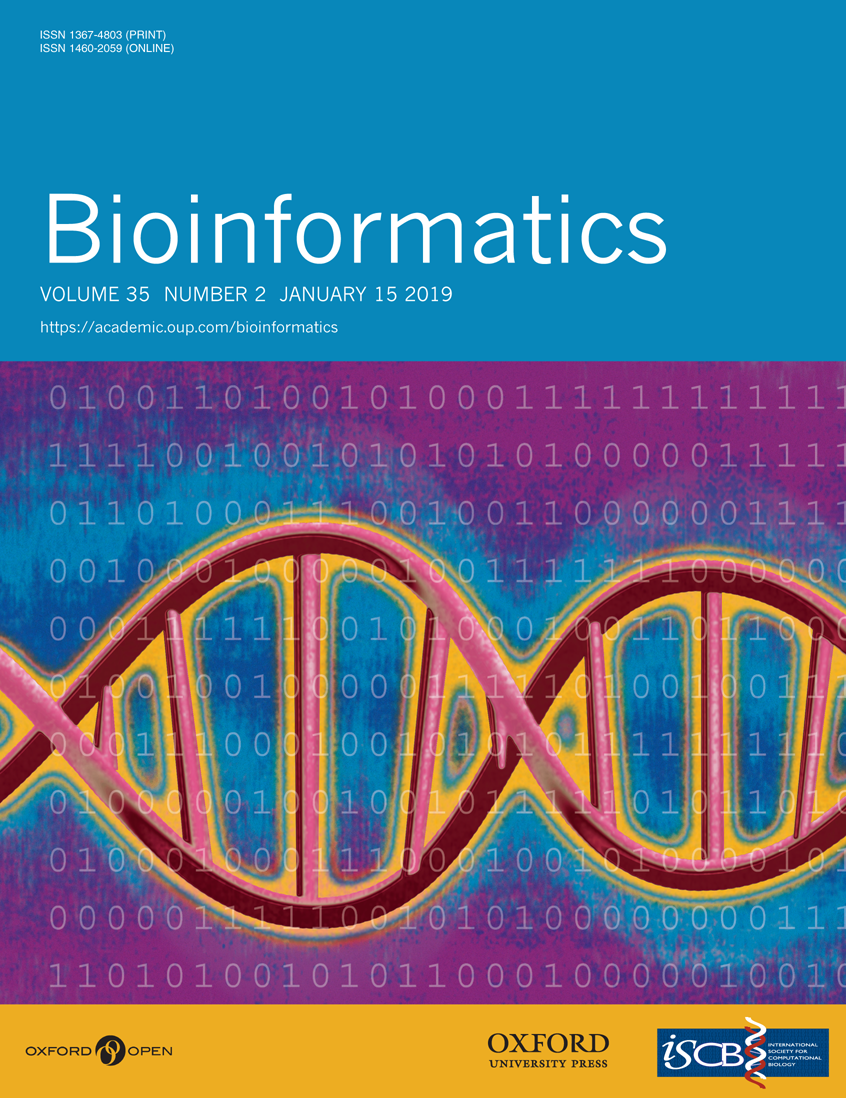
Some peer reviews evidently are tempted to ask authors to cite their work, perhaps as a way to boost their own influence. But a recent episode at the journal Bioinformatics suggests, the risk can outweigh the reward.