‘Shocked and flabbergasted’: Journal updates duplicate article it had said was “sufficiently” different from original

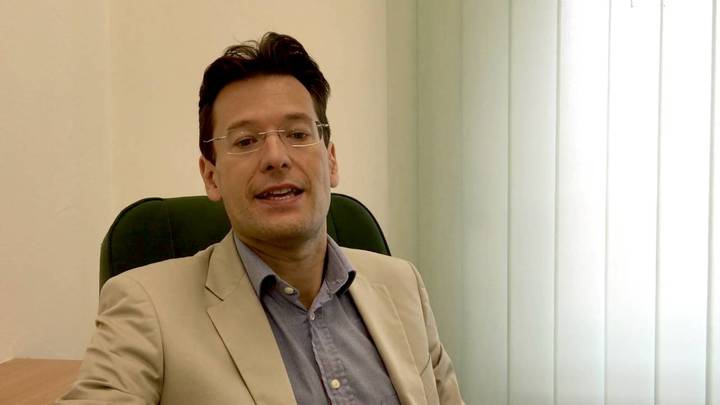
Ralf Engels

A journal for conference proceedings which published a duplicate article has updated the later version, after originally telling the researcher who noticed the duplication that the articles were different enough to warrant publishing both.  

The article, titled “Production and storage of polarized H2, D2, and HD molecules,” was published twice in the journal Proceedings of Science, in 2018 and in 2019. The first version represented proceedings from a talk given at the 2017 XVII International Workshop on Polarized Sources, Targets & Polarimetry in Kaist, South Korea; the second was from the 23rd International Spin Physics Symposium in Ferrara, Italy, held in 2018. 

The later version has minor differences from the first, including more technical details about the study’s methods.

PoS, which is run by the International School for Advanced Studies based in Trieste, Italy, functions as a repository for various conference proceedings. It is run by a small staff, and each submission is reviewed by an individual conference’s editorial board.

A researcher, who asked to remain anonymous, contacted PoS after coming across the two nearly identical versions of “Production and storage of polarized H2, D2, and HD molecules.” A journal representative first told the researcher that the journal would investigate the situation, then that “the contributions differ sufficiently in order to warrant both their publication,” according to an email seen by Retraction Watch.

Continue reading ‘Shocked and flabbergasted’: Journal updates duplicate article it had said was “sufficiently” different from original

“Flagrant and frankly, inexcusable” data duplication leads to retraction

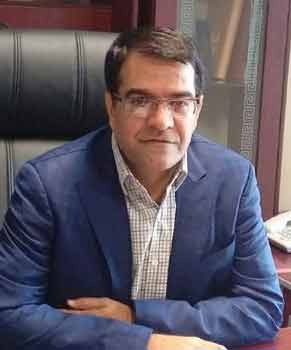
Bardia Askari, who flagged the duplication

A biochemistry study has been retracted nearly a year after a whistleblower found significant overlap between the article and one published in a different journal by the same research group.

The study, “Berberine ameliorates renal injury in diabetic C57BL/6 mice: Involvement of suppression of SphK–S1P signaling pathway,” appeared in the journal Archives of Biochemistry and Biophysics in July 2010. It has been cited 76 times. 

The study examines how berberine, a compound found in plants such as tree turmeric, might improve kidney injury in diabetic mice. People sometimes take berberine supplements to help treat diabetes, but the evidence for its effectiveness is mixed. The authors of the paper are researchers at Sun Yat-sen University in Guangzhou, China.

The study was retracted on May 23 at the request of the journal’s editor-in-chief, according to the retraction notice. It states, in part:

Continue reading “Flagrant and frankly, inexcusable” data duplication leads to retraction

President of Iranian university in ‘serious breach of ethical standards’ 

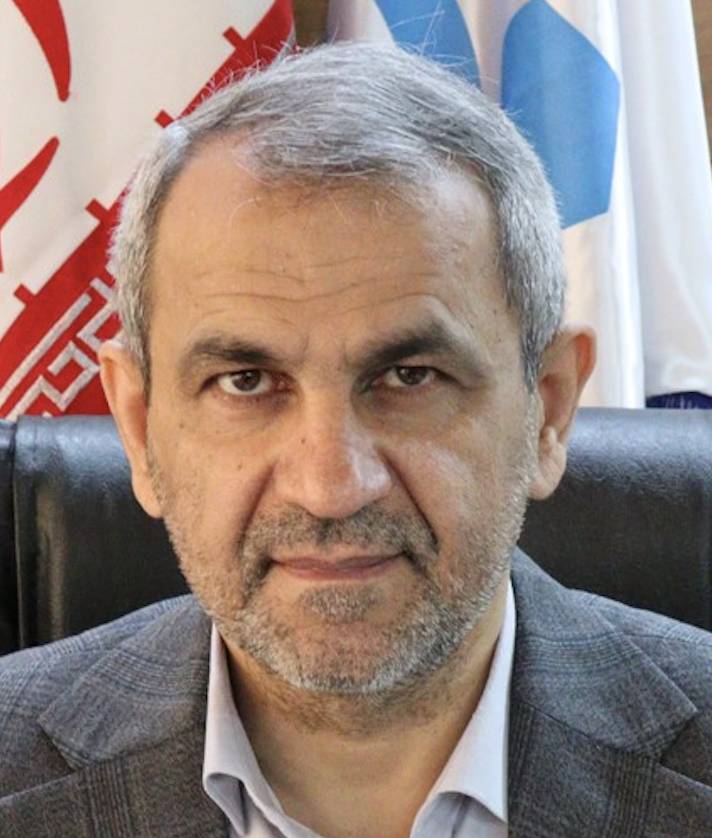
Bahram Azizollah Ganji

The president of an Iranian university and a colleague appear to have published the same microelectronics paper twice, according to allegations seen by Retraction Watch.

The articles, by Bahram Azizollah Ganji and Kamran Delfan Hemmati of Babol Noshirvani University of Technology, deal with the design of a new capacitive accelerometer with a high dynamic range and sensitivity. Both appeared online in 2020, first in the Slovenia-based Journal of Microelectronics, Electronic Components and Materials and later in the higher-impact Springer journal Microsystem Technologies. The former version has yet to be cited, according to Clarivate’s Web of Science, while the latter has been cited twice.

The editors of Microsystem Technologies were made aware of the allegations on November 16 in an email that cited “significantly identical content” in the two papers. “Pretty much the entire introduction section and almost all figures are an exact copy from” the authors’ previous article, the email stated.

Continue reading President of Iranian university in ‘serious breach of ethical standards’ 

Pain researchers lose three papers after Cochrane group questioned data

Marco Monticone

A group of pain management researchers have had three of their papers retracted since September, after another group published a critique of their work earlier this year. 

The critique, published in the journal Pain in April, found that ten studies led by physiatrist  Marco Monticone of the University of Cagliari in Italy may not be reliable. The studies had several inconsistencies, including data that diverged from almost all similar studies, impossible statistical significance values, and duplicated or very similar data from other studies by the group, though the studies were purportedly separate clinical trials.

Continue reading Pain researchers lose three papers after Cochrane group questioned data

Authors request retraction of study in Nature journal and look into four more papers

Wenbin Lin

A group of researchers at the University of Chicago has asked a Nature journal to retract a paper after PubPeer commenters pointed out numerous duplicated images in the article.

The paper, “Synergistic checkpoint-blockade and radiotherapy–radiodynamic therapy via an immunomodulatory nanoscale metal–organic framework,” was published last month in Nature Biomedical Engineering. According to its senior author, Wenbin Lin, the technology is already in a human trial.

After five different comments on PubPeer, Lin at first said he and his colleagues would correct the paper:

Continue reading Authors request retraction of study in Nature journal and look into four more papers

University president in Japan self-plagiarized and will forfeit some pay

Toshiaki Miyazaki

The head of a Japanese university has been found guilty of research misconduct for self-plagiarism – technically, duplication – and has agreed to pay a one-time cash penalty for his transgressions. 

According to the University of Aizu, a computer science and engineering school in Aizuwakamatsu, Toshiaki Miyazaki, the president and CEO, failed to appropriately cite his own work in four papers: 

Continue reading University president in Japan self-plagiarized and will forfeit some pay

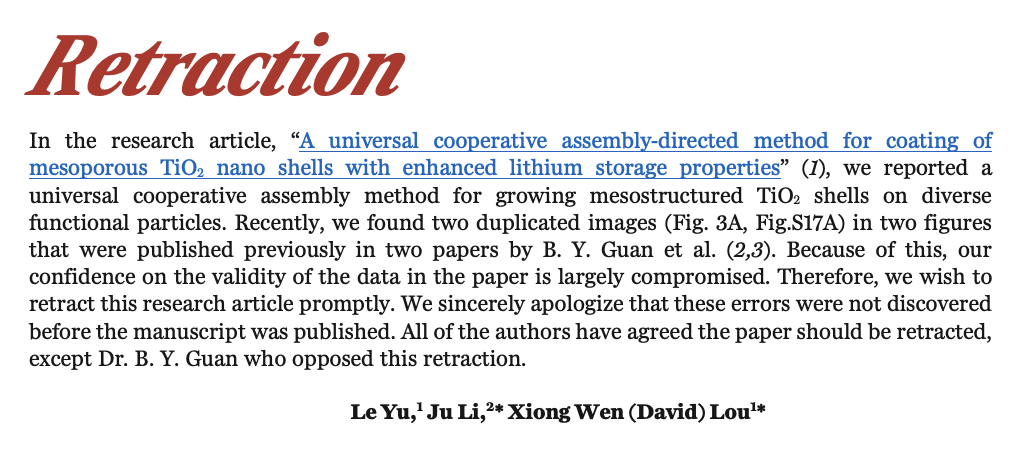
Nanotech paper retracted for duplicated images

Researchers in the United States and Singapore have lost a 2016 article in Science Advances after some of the group learned that one of their colleagues appears to have used duplicated images in the work.

The article, “A universal cooperative assembly-directed method for coating of mesoporous TiO2 nanoshells with enhanced lithium storage properties,” was written by Bu Yuan Guan, then of the School of Chemical and Biomedical Engineering, Nanyang Technological University, along with colleagues at that institution and Ju Li, of the Department of Nuclear Science and Engineering and the Department of Materials Science and Engineering at the Massachusetts Institute of Technology. 

The paper has been cited 167 times, according to Clarivate Analytics’ Web of Science. 

According to the retraction notice

Continue reading Nanotech paper retracted for duplicated images

Elsevier corrects a retraction notice following questions from Retraction Watch

An Elsevier journal has corrected a retraction notice after we asked questions about what exactly it was saying — but not before the journal’s editor tried to defend what turned out to be a mistaken passage.

The article, “Measurement of performance parameters and improvement in optimized solution of WEDM on a novel titanium hybrid composite,” was published online in Measurement in December 2020. The retraction notice, which appeared online on September 17 of this year, read:

Continue reading Elsevier corrects a retraction notice following questions from Retraction Watch

Editor declines to correct paper with duplicated image after earlier study disappears

Figure 6b in a 2015 paper (left) in Construction and Building Materials, showing a material with copper oxide nanoparticles. Figure 6 (right) is from a separate study, published in the Journal of American Science, showing a material with titanium dioxide nanoparticles.

Possession is nine-tenths of the law — at least, it seems, for one journal editor, who is refusing to retract a study despite learning that one of its images previously appeared in another journal. The reason? The other study has been removed from the web. 

The paper is among 40 articles in Construction and Building Materials flagged by a whistleblower who goes by the pseudonym Artemisia Stricta. The whistleblower says that most of the issues are serious, and are:

Continue reading Editor declines to correct paper with duplicated image after earlier study disappears

Researcher at Tehran medical school loses three papers because “overlap without cross-referencing is not legitimated”

Hamid Akbari Javar

A pharmacy researcher at Tehran University of Medical Sciences has had three papers retracted, and one corrected, because he duplicated his other articles.

Hamid Akbari Javar is the common author on all four papers, which appear in the African Journal of Pharmacy and Pharmacology, the International Journal of Pharmaceutical Sciences and Research, the Indian Journal of Pharmaceutical Sciences, and the International Journal of Molecular Medicine

Narges Shokri, of the School of Pharmacy of Ardabil University of Medical Sciences, also in Iran, is an author of the three retracted papers, but not the corrected paper in the International Journal of Molecular Medicine.

Here’s the notice for “Comparison of Calcium Phosphate and Zinc Oxide Nanoparticles as Dermal Penetration Enhancers for Albumin,” in the Indian Journal of Pharmaceutical Sciences:

Continue reading Researcher at Tehran medical school loses three papers because “overlap without cross-referencing is not legitimated”