Corrections, biases, and humility in science: Q&A with Tuan V. Nguyen

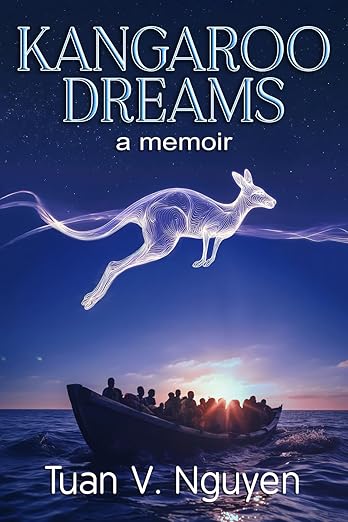
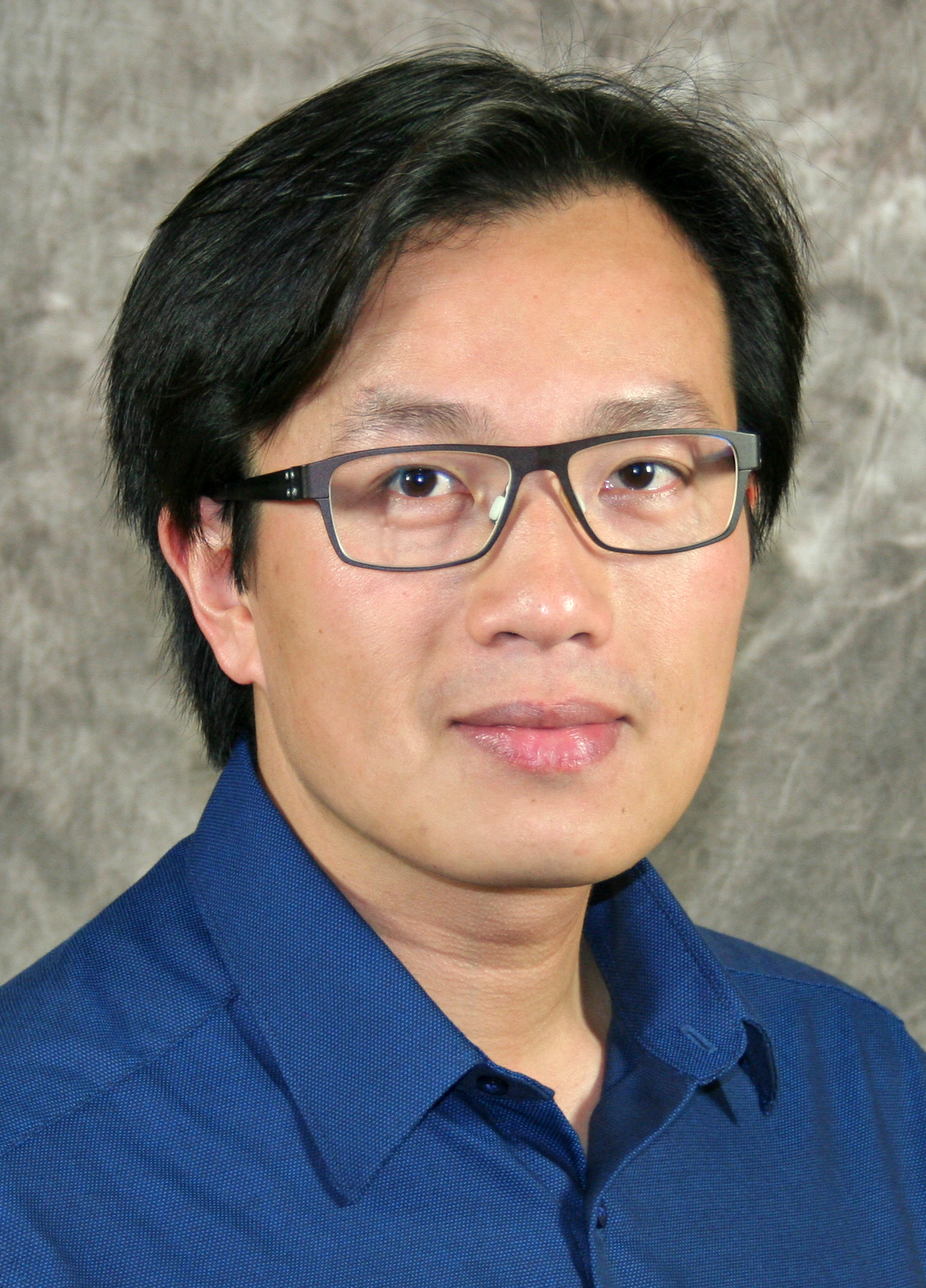
In a new memoir, Kangaroo Dreams, Tuan V. Nguyen, D.Sc., Ph.D., provides a unique perspective on medical research. Nguyen escaped Vietnam in 1981 as part of the mass “boat people” exodus of refugees, taking to dangerous waters just a few months after his older brother attempted the same and disappeared. Making his way to Australia through grit and luck in 1982, Nguyen started his new life as a dishwasher before steadily building a career in science, ultimately specializing in bone research.

Nguyen is now distinguished professor of predictive medicine and director of the Center for Health Technologies at the University of Technology Sydney and adjunct professor of epidemiology at the University of New South Wales. He’s also a Leadership Fellow of the Australian National Health and Medical Research Council and a member of the Order of Australia. Dedicated to the memory of his lost brother, Kangaroo Dreams weaves Nguyen’s personal journey with a thoughtful examination of contemporary medical research. We interviewed him in writing to learn more. (Responses have been lightly edited for length and clarity.)

Retraction Watch: You were co-author on a 1994 Nature paper subsequently corrected in 1997 which reported individuals with a particular vitamin D receptor gene benefitted from relatively high bone mineral density. When the research team made this finding, you write, “A nagging unease, however, bothered me. The results, while undeniably impressive, seemed almost too good to be true.” The team published the findings only to discover – after a Nature reader challenged the results – that a lab member who was ill likely contaminated samples, skewing the results. Did you regret not having pushed harder on your initial doubts? What held you back?

Continue reading Corrections, biases, and humility in science: Q&A with Tuan V. Nguyen

Meet the founder of a 100,000-strong Facebook group driving change in scientific integrity in Vietnam

Van Tu Duong

Retraction Watch readers may have noticed an uptick of items in the RW Daily and Weekend Reads about scientific integrity issues in Vietnam over the past year. Many of those items had their genesis, and were circulated, on a Facebook group that now has close to 100,000 members — and was recently removed temporarily by Facebook. We asked Van Tu Duong, a researcher at Purdue University in West Lafayette, Indiana, USA, who founded the group, to tell us more about the history of the effort. This email interview has been lightly edited for flow and clarity.

Tell us about this history of the group. Why did you find it, and when?

Continue reading Meet the founder of a 100,000-strong Facebook group driving change in scientific integrity in Vietnam

Journals pull two papers after blogger shares plagiarism suspicions

Journals have retracted two papers after they were flagged by a pseudonymous blogger, who suspected all had copied text from other sources.
What’s more, a third paper seems to have simply disappeared from the journal’s website, after the blogger, Neuroskeptic, alerted the journal to the text overlap.

Neuroskeptic became suspicious about the three unrelated papers – about food chemistry, heart disease, and the immune system and cancer – after scanning them with plagiarism software. After alerting the journals, two issued formal retractions for the papers – but neither specifies plagiarism as the reason.

The retractions were the result of a larger project, Neuroskeptic told us:

Continue reading Journals pull two papers after blogger shares plagiarism suspicions

Asthma study yanked for serious ethical violations

springerplusA paper in SpringerPlus on treating asthma with antioxidants was retracted on September 25 for something of a trifecta of ethical problems.

The retraction notice indicates that the patients never consented, there was no ethical review, and the university supposedly overseeing the study had no knowledge of it:

Continue reading Asthma study yanked for serious ethical violations

Three more retractions for Vietnamese physicists who plagiarized a plagiarized paper

Last week, we brought you the story of Thong Duc Le and his colleagues, physicists who were forced to retract four papers, including one that cited, as we noted “their own study that had already been retracted for plagiarism.”

The team has now retracted three more papers: Continue reading Three more retractions for Vietnamese physicists who plagiarized a plagiarized paper

Astrophysics retraction trail includes paper that plagiarized another already retracted for…plagiarism

Sometimes, the full story of scientific misdeeds isn’t clear until several retraction notices appear. Take the case of a group of Vietnamese astrophysicists led by Thong Duc Le.

If you were to read a Physics Letters B retraction notice about one of the group’s papers, “Search for cosmological time variation of the fine-structure constant using low-redshifts of quasar,” you wouldn’t have any idea why the paper was retracted, nor that the move was related to any other retractions: Continue reading Astrophysics retraction trail includes paper that plagiarized another already retracted for…plagiarism