Winning science fair project in Vietnam beset by misconduct allegations as major high school competition looms

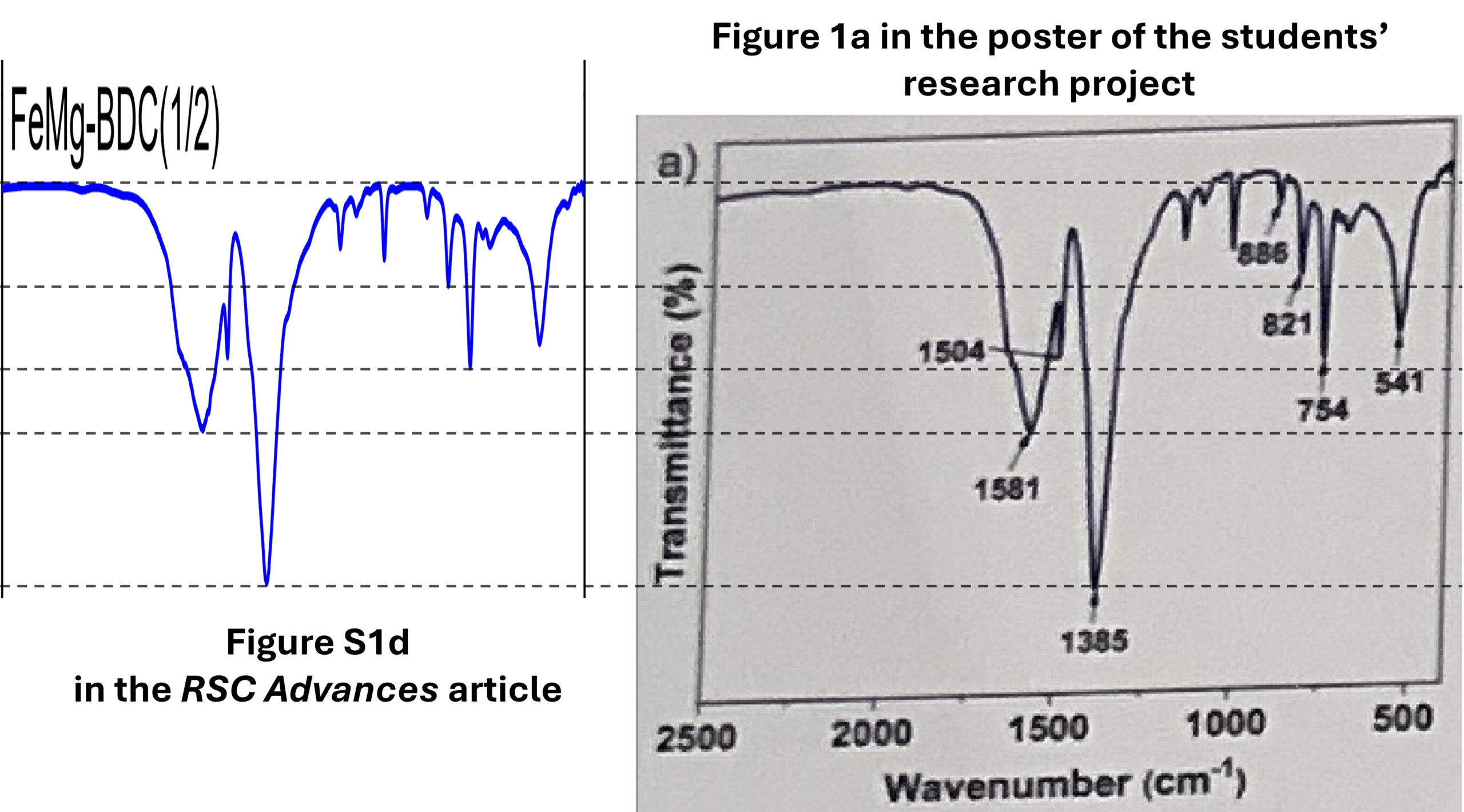
Comparison provided by Van Tu Duong

A science competition for middle and high school students in Vietnam is embroiled in controversy as its winners head to next week’s Regeneron International Science and Engineering Fair – widely considered the most prestigious event of its kind. Allegations include cheating and plagiarizing. 

Observers in Vietnam noticed the suspect work appears to be especially advanced to have been conducted by two high school students, one of whom is studying mathematics and the other geography. Under the rules of the Vietnam Science and Engineering Fair (ViSEF), the project – titled “Development of multifunctional fire-resistant, heat-insulating, and antimicrobial polyurethane composite materials for application in construction and daily life” – had to have been completed in 12 months while the two student-authors also continued their school work. 

Sleuths in a Vietnamese scientific integrity group have found multiple overlaps between the students’ poster and research published in RSC Advances in February 2025. A graph in the students’ poster is almost identical to one in the published paper, according to sleuth Van Tu Duong, although it is plotted in a different color and thickness (see the comparison above). This observation has led to allegations that the students had access to the researchers’ raw data. 

Continue reading Winning science fair project in Vietnam beset by misconduct allegations as major high school competition looms

Researcher claims his case report was stolen by someone else at his hospital

A researcher claims a case report he coauthored was plagiarized by doctors at the same institution three years later — a paper he was alerted to when a journal sent it to him for review. 

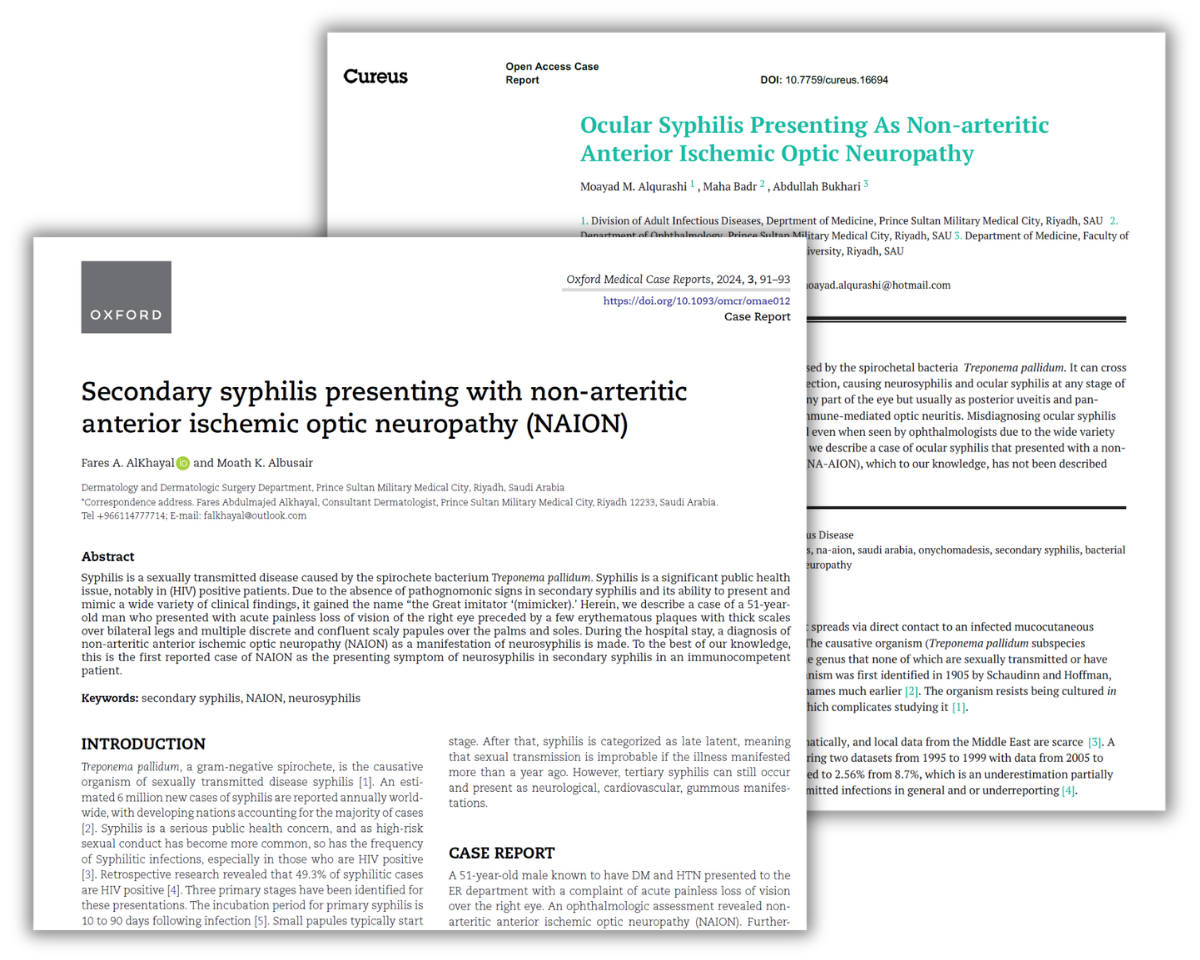
Moayad Alqurashi, an infectious diseases specialist at King Fahad Armed Forces Hospital in Saudi Arabia, was the lead author on a 2021 case report published in Cureus about a patient who came to the emergency room with rapid vision loss. Doctors eventually diagnosed the patient with neurosyphilis, with non-arteritic anterior ischemic optic neuropathy, or NAION, as the presenting symptom. At the time, Alqurashi was a trainee at Prince Sultan Military Medical City in Riyadh.

Alqurashi told Retraction Watch that in 2023, while a reviewer for Skin Health and Disease, a Wiley title, he was invited to assess a report similar to the case he had written about. He said he notified the journal of similarities between the two cases, and the journal never published the report. The authors of that article had seen the same patient as part of a different department.

Continue reading Researcher claims his case report was stolen by someone else at his hospital

AMA ethics journal shutters after 26 years

The American Medical Association will cease publication of its ethics journal at the end of this year. 

The AMA Journal of Ethics, an open access, peer-reviewed journal was founded in 1999 under the name Virtual Mentor

“The loss of the AMA JoE will be most acutely felt by medical students and trainees, since it had a unique production model that included them in the process,” said Matthew Wynia, a physician and bioethicist at the University of Colorado whose work has been featured in the journal and who previously led the AMA Institute for Ethics.

Continue reading AMA ethics journal shutters after 26 years

Springer Nature psycholinguistics journal retracts over a dozen articles for authorship, peer review issues

A journal has retracted 16 papers after a whistleblower flagged it for “irregularities” in peer review, among other concerns. 

The Journal of Psycholinguistic Research, a Springer Nature title, published the papers between 2021 and 2024. The articles covered research ranging from studies of the work of Haruki Murakami and Kazakh literature to English reading fluency and the teaching competence of parents of children with cochlear implants.

Thirteen of the 16 articles have been cited one to five times, according to Clarivate’s Web of Science; one article has been cited 19 times, the highest of the bunch. 

Continue reading Springer Nature psycholinguistics journal retracts over a dozen articles for authorship, peer review issues