Michigan State museum director “vigorously” denies “virtually all” of university panel findings against him

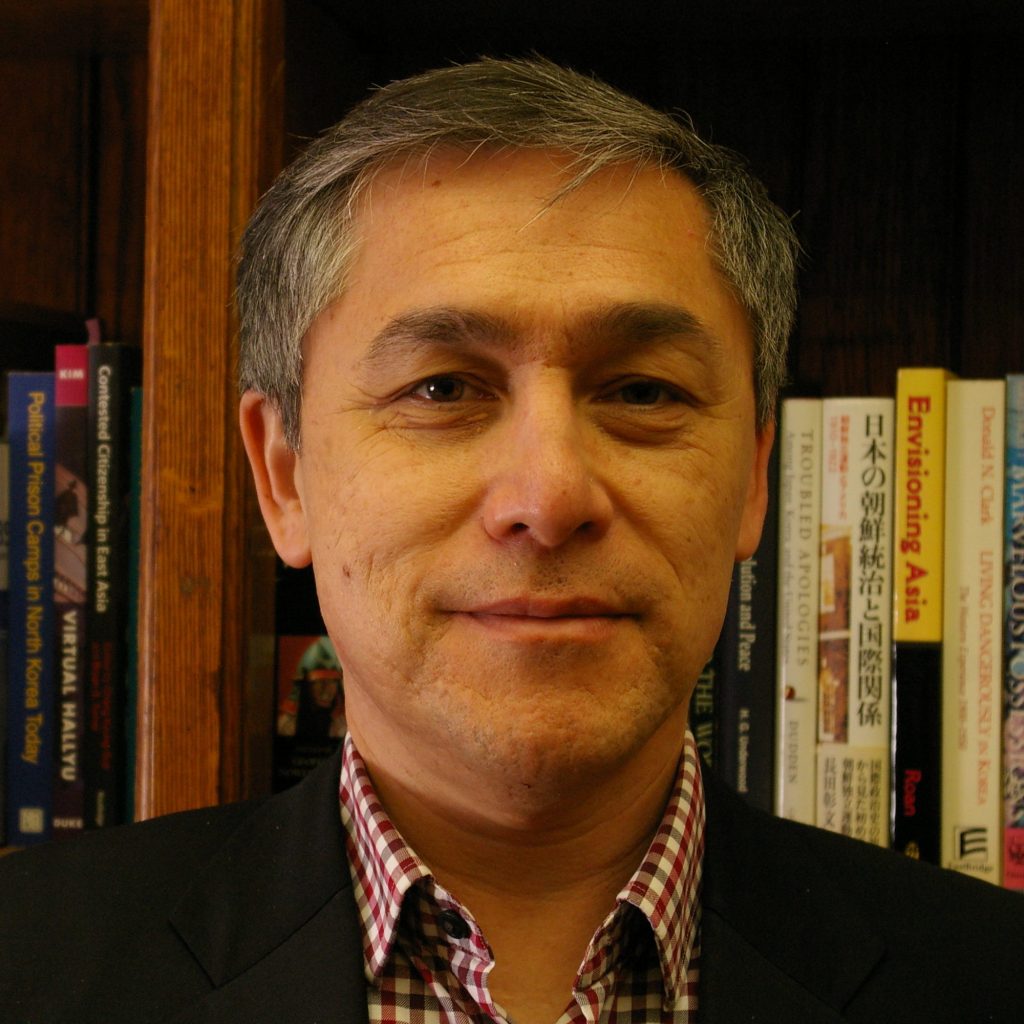
Mark Auslander

Earlier this month, we broke the story of a misconduct inquiry against Mark Auslander, the director of the Michigan State University Museum in East Lansing. (That story was picked up by a number of news outlets in Michigan.)

Auslander was found guilty by a university committee of having plagiarized, falsified data and committed other offenses stemming from his involvement in the repatriation to Bolivia of a 500-year-old mummy.  The claimant in the case was William Lovis, a professor emeritus of anthropology at MSU and curator emeritus of anthropology for the museum.

According to the report: 

Continue reading Michigan State museum director “vigorously” denies “virtually all” of university panel findings against him

Retraction notice claims authors submitted ‘fictional’ science

Source

Talk about a brutal retraction notice.

The Journal of Translational Medicine has retracted a 2017 paper after multiple investigations into the work concluded that the data were fabricated. At least two of the authors hotly dispute that conclusion, as you’ll see. [Warning: Colorful language ahead.]

The study,  “Stromal vascular fraction cells for the treatment of critical limb ischemia: a pilot study,” came from a group of researchers in Lithuania led by Adas Darinskas. At the time of publication, Darinskas listed his affiliation as the National Cancer Institute of Lithuania, in Vilnius. Now he works at Innovita Research, a company trying to develop:

Continue reading Retraction notice claims authors submitted ‘fictional’ science

Disgraced Korea scholar, formerly of Columbia, loses paper for plagiarism

Charles Armstrong

A former historian at Columbia University who resigned last year in the wake of a plagiarism scandal involving his award-winning book on North Korea has lost a 2005 paper for misusing his sources. 

In 2017, Charles Armstrong, once a leading figure in Korean scholarship, returned the 2014 John King Fairbank Prize from the American Historical Society after allegations emerged that he had plagiziared widely in his book, “Tyranny of the Weak: North Korea and the World, 1950–1992.” 

At the time, Armstrong admitted to having made “citation errors” in the work. However, Balazs Szalontai, an academic in Korea, insisted that the the errors were in fact plagiarism and that they were sweeping. 

Now, in what Szalotai told us was the earliest instance of Armstrong’s plagiarism that he has found, the journal Cold War History is retracting an article by Armstrong. According to the notice:   

Continue reading Disgraced Korea scholar, formerly of Columbia, loses paper for plagiarism

Authors retract Nature paper on dramatic increases in streamflow from deforestation

Source

The authors of a 2019 Nature paper on hydrology have retracted it after commenters pointed out a slew of errors with the work. 

The article, “Global analysis of streamflow response to forest management,” was written by Jaivime Evaristo, of the Copernicus Institute of Sustainable Development at Utrecht University, in The Netherlands, and Jeffrey McDonnell, of the Global Institute for Water Security at the University of Saskatchewan, in Canada. In it, Evaristo and McDonnell produced an estimate of the effects of deforestation on the volume of the world’s rivers. 

Their conclusion: “forest removal can lead to increases in streamflow that are around 3.4 times greater than the mean annual runoff of the Amazon River” — nearly enough to double the volume of all the world’s rivers in total.  

Disturbing (for those of us not in the field) thought experiment aside, the estimate turns out to be off the mark. 

The retraction notice states: 

Continue reading Authors retract Nature paper on dramatic increases in streamflow from deforestation

A paper on cats and female students uses up one of its nine lives

via Pixabay

Facing a social media storm, a biology journal has temporarily removed a paper arguing that the proliferation of feral cats around university campuses in China is directly related to the proportion of female students — who evidently are more welcoming than men of the wild felines.  

The article, “Where there are girls, there are cats,” appeared in Biological Conservation, launching a withering Tweet storm with, at last count, more than 275 replies. The comments ranged from incredulous to outraged, with at least one user noting that the paper was submitted, revised and accepted within a period of about 10 days.

Continue reading A paper on cats and female students uses up one of its nine lives

Fourth retraction for Haruko Obokata, focus of STAP cell scandal, after Harvard investigation

Charles Vacanti

More than five years after Nature retracted two highly suspect papers about what had been described as a major breakthrough in stem cell research, another journal has pulled a paper about the work. 

The scandal over so-called STAP stem cells took down more than just a few articles. The case centered on Haruko Obokata, a Japanese researcher who conducted the studies as a post-doc in the Harvard lab of Charles Vacanti. Obokata lost her doctoral thesis from Waseda University in 2015 because it plagiarized from the U.S. National Institutes of Health. She also retracted a paper in Nature Protocols

Continue reading Fourth retraction for Haruko Obokata, focus of STAP cell scandal, after Harvard investigation

Harvard group retracts Nature paper

via Wikimedia

A group of researchers based at Harvard University have retracted an influential 2017 letter in Nature after a change in lab personnel led to the discovery of errors in the analysis. 

The article, “Microglia-dependent synapse loss in type I interferon-mediated lupus,” emerged from a collaboration including scientists at Harvard Medical School, the Rockefeller University in New York City, the University of Magdeburg, in Germany. 

The senior author of the research letter — which has been cited 75 times, earning it a highly cited designation from Clarivate Analytics’ Web of Science — was Michael C. Carroll, a prominent immunology researcher. [See disclosure at the end of this post.] Also on the list was Ronald Herbst, who at the time was vice president of research at MedImmune but has since left that company for another biotech firm. The first author was Allison Bialas, at the time a post-doc at Harvard. 

According to the abstract: 

Continue reading Harvard group retracts Nature paper

‘Those unfortunate events:’ Second retraction for stem cell scientist in Canada accused of misconduct

McMaster’s University Hall, via Wikipedia

Citing a misconduct investigation, the journal Stem Cells has retracted a 2009 article coauthored by a researcher whose work has been under suspicion for roughly five years. 

The paper was titled “Cell adhesion and spreading affect adipogenesis from embryonic stem cells: the role of calreticulin.” The retraction notice, which is behind a paywall, states: 

Continue reading ‘Those unfortunate events:’ Second retraction for stem cell scientist in Canada accused of misconduct

Journal flags papers two years after university investigation finds researcher faked data

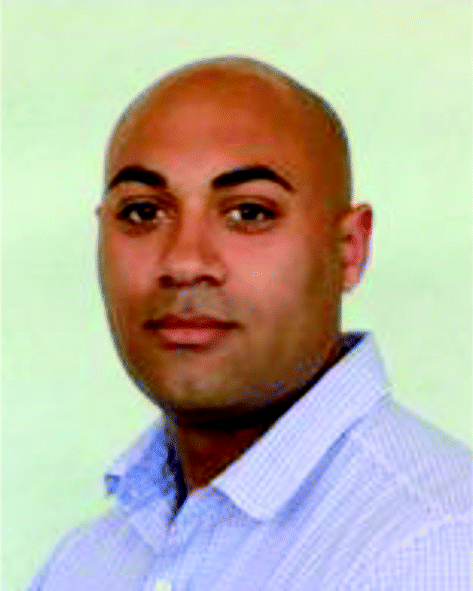
Daniel Antoine

Nearly two years after a University of Liverpool investigation determined that a former researcher there fabricated his data, the journal Molecular Medicine has issued expressions of concern about four papers by that researcher.

As we reported in 2018, Daniel J. Antoine — once a promising young liver specialist — was found to have made up much of his spectroscopic findings. According to the university: 

Continue reading Journal flags papers two years after university investigation finds researcher faked data

Entire board of law journal resigns in a ‘small act of resistance’

The defense resigns.

The entire editorial board of the European Law Journal, along with its two top editors, has quit over a dispute about contract terms and the behavior of its publisher, Wiley. 

In a statement posted on the blog of the European Law Blog, editors-in-chief Joana Mendes, of the University of Luxembourg, and Harm Schepel, of the University of Kent, in England, wrote:

Continue reading Entire board of law journal resigns in a ‘small act of resistance’