A “miracle doctor” in China and his colleagues have lost a 2007 paper on the ability of the martial art qigong to treat cancer after the journal that published the work said it failed to properly vet the findings.
Well, the first part of that is true. The second part is implied. We’ll explain.
The first author on the study was Yan Xin, whose biography states that he is a “miracle doctor” and one of the world’s experts in the healing properties of qi — the universal life force in traditional Chinese medicine and philosophy. His co-authors include researchers at Harvard, McMaster University in Canada, and the New Medical Science Research Institute in New York City.
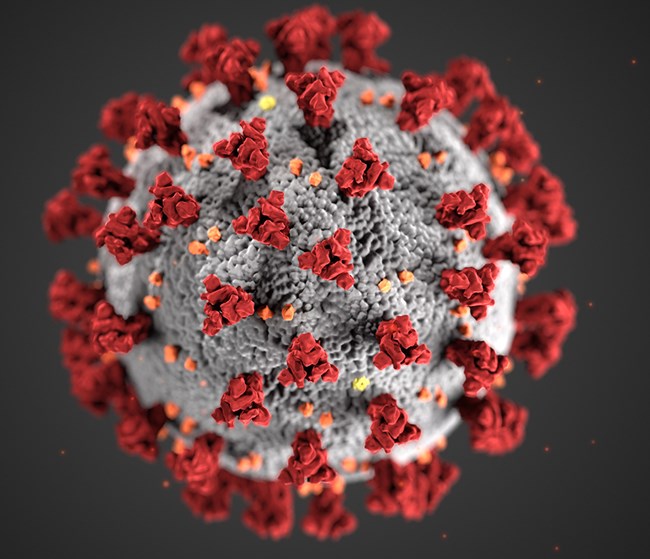
A study that warned of the perils of using face masks as a precaution against contracting Covid-19 appears slated for retraction, Retraction Watch has learned.
The 2020 paper, “Facemasks in the COVID-19 era: A health hypothesis,” was written by Baruch Vainshelboim, who listed his affiliation as Stanford University and the VA Palo Alto Health System. But the study gained wide circulation earlier this month, thanks in part to some conservative politicians, and became the subject of fact-checks by the Associated Press and Snopes, which pointed out that
The paper was published by an exercise physiologist with no academic connection to Stanford University or the NIH in a journal that accepts “radical, speculative and non-mainstream scientific ideas.”
Cureus has retracted a pair of case studies after the authors revealed that the informed consent they’d received from the patients had been revoked.
The fate of articles — both by authors in the United Kingdom — highlight the precariousness of papers that rely on consent from patients or, in one instance, their proxies.
One paper, “Failure of an Ancient Breast Implant Can Lead to Significant Morbidity,” described the case of a 90-year-old woman who ruptured a 60-year-old breast implant. (The first silicone breast implants arrived in 1962, so the 60-year-old prosthesis would have been among the earliest to be inserted.)
A paper suggesting that smokers were significantly less likely than nonsmokers to contract Covid-19 has been retracted because the authors failed to disclose financial ties to … the tobacco industry.
The article, which appeared as a preprint and then as an “early view” in the European Respiratory Journal last July, came from a group at the University of Piraeus, in Greece, and the University of Utah. The first author was Theodoros Giannouchos, currently a post-doc at the University of Utah, and the senior author was Konstantinos Farsalinos, a fairly prominent name in the world of vaping research.
Researchers in India have lost four papers in journals belonging to the Royal Society of Chemistry over concerns that the images in the articles appear to have been doctored.
The senior author on the articles is Pralay Maiti, of the School of Material Science & Technology at Banaras Hindu University, in Varanasi.
A journal has retracted the 2014 report of a clinical trial of a supplement touted as a way to reduce the risk of cardiovascular disease after beginning to suspect that the data were not reliable.
The authors were Adam Bernstein and Michael Roizen, of the Wellness Institute at Cleveland Clinic, and Luis Martinez, who at the time was the president of the Xyrion Medical Institute, in Puerto Rico.
Roizen, an anesthesiologist and the founding chair of the Wellness Institute, is the co-creator of the RealAge test, which he developed along with Mehmet Oz.
Roizen and Oz have been hawking palmitoleic acid — an omega-7 fatty acid that is the subject of the now-retracted study — for some time. In this 2019 article, for example, the pair wrote:
An article claiming that anal swabs can be used to detect SARS-CoV-2 in patients cured of Covid-19 has been retracted after the journal found that the authors failed to get permission from the patients to conduct the study.
To be clear: We’re not sure if the researchers — from Weihai Municipal Hospital, in Shandong, China — didn’t tell the patients they were taking anal swabs (which seems, well, unlikely) or that they didn’t tell them they would be using the results of the swabs in a study (the more reasonable interpretation). But the notice is vague on that point.
You may recall that in January the Chinese government in January launched a program to implement widespread anal swabbing to look for SARS-CoV-2 — a plan that, as the Washington Post reported, did not meet with cheers from the local population.
The author of a 2014 review article about the role of vitamin D in Parkinson’s disease has alerted readers to the fact that roughly one-sixth of her references have since been retracted. But she and the journal are not retracting the review itself.
The paper, “A review of vitamin D and Parkinson’s disease,” appeared in Elsevier’s Maturitas, which is the official journal of the European Menopause and Andropause Society. The author is Amie Hiller, a neurologist at Oregon Health & Science University in Portland, and the work has been cited 26 times, according to Clarivate Analytics’ Web of Science.
According to Hiller, she recently became aware that 10 of the 63 references in her article were to papers by Yoshihiro Sato, a bone researcher in Japan whose 103 retractions put him in the third position on the Retraction Watch leaderboard. Sato’s misdeeds run from lack of IRB approval to fabrication of data, in articles dating back to the mid-1990s.
Hiller’s letter on the subject, recently published in Maturitas but not linked from the original review, states that:
A decade has passed since the breaking of the scandal involving Joachim Boldt, a world-renowned critical care specialist who has held steady as the number two author on the Retraction Watch leaderboard. But the case continues to produce developments that have dramatically increased Boldt’s retraction tally.
Journals have retracted at least 53 papers by Boldt since May 2020, bringing his total number to 153, by our count. That includes 24 articles removed so far in 2021. In September 2020, the British Journal of Anaesthesia announced that it was retracting all but one of the more than two dozen Boldt papers that it had published — leaving the last one standing because it didn’t have solid evidence that it contained fabricated data.
The impetus for the purge was a 2018 report from Justus Liebig University (JLU) Medical School, where Boldt worked between 1982 and 1996. The university concluded that, among other things, Boldt appears to have fabricated data from several theses of students he helped supervise, publishing the doctored results without their knowledge.