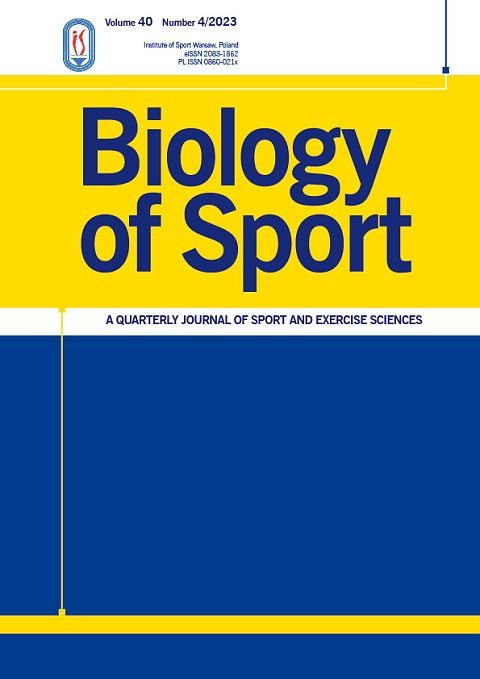
A Polish sports journal is investigating papers published by its editor-in-chief that include nonexistent references following a Retraction Watch inquiry. The editor denied using AI and said he will correct the fake references.
Piotr Zmijewski, a researcher at Józef Piłsudski University of Physical Education in Warsaw, was an author on nine of 120 papers in the most recent edition of Biology of Sport, the official journal of the Institute of Sport – National Research Institute in Warsaw. In addition to serving as the journal’s editor, he is also listed as the journal’s social media editor.
Two of Zmijewski’s recent articles were flagged on PubPeer for “unverifiable references” in the papers that “relate to substantial portions of the publication.” One, on elite soccer players in the English Premier League, contains two references to works that do not exist. A second study looking at the ages of male and female soccer players references 16 sources that do not exist, and four that cite “real papers but with invented titles, years, volumes, pages or DOIs,” the commenter wrote.
Four of Zmijewski’s other papers in the journal have also been flagged on PubPeer, all for unverifiable references.
References that do not exist can indicate hallucinations generated by artificial intelligence programs, like ChatGPT, and can call into question the originality of the work.
“I can confirm that I personally did not use AI in preparing or editing these manuscripts,” Zmijewski told us. He said an “early-career researcher responsible for managing a shared reference database had used AI-assisted tools to organise and format bibliographic entries without informing the other co-authors,” and that he planned to correct the references.
“Our assessment suggests that the inaccuracies are limited to bibliographic references and do not affect the original research data, analyses, reported results or main conclusions,” he said.
The Institute of Sport – National Research Institute did not respond to our request for comment. When we reached out to the journal’s publisher Termedia, Donata Ziółkowska, the publisher’s house editor, thanked us for bringing the information to their attention and said they were launching an investigation into the issue.
Graham Kendall, the deputy vice chancellor at MILA University in Nilai, Malaysia, first posted about Zmijewski on LinkedIn earlier this year. Since Zmijewski became editor-in-chief of the journal in 2025, he published more articles than he had in any other year — 13 — all in Biology of Sport, Kendall noted.
Gert Helgesson, who has researched the issue of editors publishing in their own papers, told us it is “not clearly unethical for editors in chief to publish frequently in their own journal, but it certainly is questionable and shows poor judgment.”
“When they do, there needs to be routines in place to safeguard good editorial standards,” Helgesson, a professor of medical ethics at the Karolinska Institutet in Stockholm, Sweden, told us.
Zmijewski told us manuscripts co-authored by the editor-in-chief at Biology of Sport “are handled by an independent Associate Editor and reviewed by at least two independent reviewers.”
“While I acknowledge [Helgesson’s] recommendation that editors-in-chief should generally refrain from publishing research in their own journals, this is not an absolute prohibition,” Zmijewski said. “My decision was based on the relevance of the research to the journal’s scope.”
Like Retraction Watch? You can make a tax-deductible contribution to support our work, follow us on X or Bluesky, like us on Facebook, follow us on LinkedIn, add us to your RSS reader, or subscribe to our daily digest. If you find a retraction that’s not in our database, you can let us know here. For comments or feedback, email us at [email protected].