J.M. Schmidt et al./JGR: Space Physics 2014
The University of Sydney has once again investigated the work of a former research fellow in its physics department, this time resulting in the retraction of two papers over concerns that data in several figures were likely fabricated.
In September, the Journal of Geophysical Research: Space Physics retracted two articles by Joachim Schmidt, who was at the University of Sydney from 2010 to 2021.
As Retraction Watch reported in 2023, the university previously investigated work from Schmidt and his supervising professor, Iver Cairns. Researchers at the University of Michigan had raised concerns about a figure in a draft manuscript supposedly created using a simulation model developed by the Michigan team. Sydney’s investigation found Schmidt had used Adobe Photoshop to create or alter the images, which could not be reproduced by digital forensic experts or by Schimdt himself.

That investigation determined Schmidt alone was responsible for the fabrication and falsification.
The university’s latest inquiry came about after JGR: Space Physics told Cairns, Schmidt and Vasili Lobzin, a space scientist at Australia’s Bureau of Meteorology, an “anonymous concern” had been brought to the journal in 2024, according to the retraction notices.
A news article about Schmidt and Cairns’ work in the Australian magazine The Monthly reported that it had alerted the American Geophysical Union, which publishes JGR: Space Physics, in June 2024 to concerns about two papers the pair had written.
A spokesperson for AGU declined to comment on whether The Monthly was the source of the anonymous complaint. After the journal notified the article’s authors about the concerns, Cairns notified the university in early 2025.
“Last year Professor Cairns informed our Research Integrity team of his concerns related to a number of publications he had co-authored with a former senior postdoctoral fellow, and we commenced a new investigation,” a University of Sydney spokesperson told Retraction Watch.
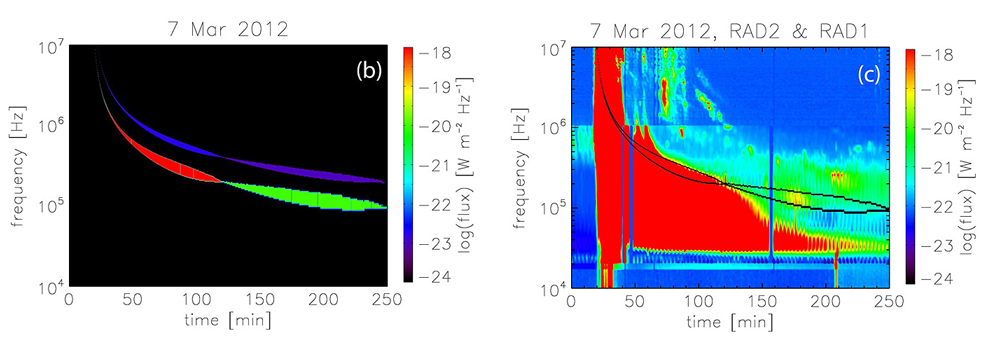
The papers, published in 2013 and 2014, examined solar radio bursts using simulations of coronal mass ejections. At issue was the authors’ use of a computer program called BATS-R-US to generate images from papers they published between 2013 and 2016 — the same software in question in the 2023 inquiry.
To investigate, the university granted Cairns access to the computer files Schmidt left behind. Cairns found evidence of experimental work, but also found some images were incorrect. The notices identified several figures showing theoretical radio emissions from solar events, but “were not constructed using outputs from the simulations but instead were likely fabricated,” both retraction notices state.
Another paper by Schmidt and Cairns published in 2016 was retracted in April for the same reason.
The articles have been cited 22 times each, according to Clarivate’s Web of Science.
Cairns declined to comment, citing the ongoing investigation. Schmidt did not respond to a request for comments.
Neither investigation found evidence of wrongdoing on the part of Cairns, according to the University of Sydney spokesperson.
Like Retraction Watch? You can make a tax-deductible contribution to support our work, follow us on X or Bluesky, like us on Facebook, follow us on LinkedIn, add us to your RSS reader, or subscribe to our daily digest. If you find a retraction that’s not in our database, you can let us know here. For comments or feedback, email us at [email protected].