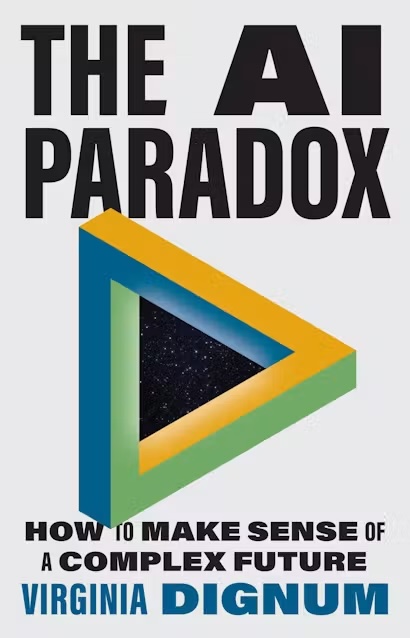
Sweden’s national committee on research misconduct has dismissed a case against an expert in the social ramifications of artificial intelligence following allegations her recent book contained hallucinated references and other signs of AI use.
The author, Virginia Dignum, a professor in responsible AI at Umeå University, denied references in her book The AI Paradox were fabricated and said she made “ordinary editing mistakes.”
Frank Drewes, head of the computing science department at Umeå University, told Retraction Watch the institution received a report containing the allegations from an anonymous individual on July 6 and referred the case to the National Board for Assessment of Research Misconduct (NPOF) in Uppsala, in accordance with Swedish regulation.
NPOF ruled on Sept. 4 that the allegations fall outside their remit and will not be investigated. “The referral is consequently closed, and the complaint is dismissed,” an English translation of the report states.
In its report, NPOF said Dignum “does not regard the book as research, but rather as a popular science work… No research claims are made in the book. She wrote the book in her spare time, not within the scope of any research funding.”
Umeå and the misconduct board did not find any evidence to contradict Dignum’s claims. “Based on the description of the book, its content, and its target audience—and in light of the known circumstances of its creation—the Board concludes that it does not constitute research,” the board concluded.
Drewes told us the university “will not take any specific measures in response to the current complaint” now that NPOF has closed the case.
Dignum has not responded to multiple requests for comment. But in a Sept. 5 post on LinkedIn noting the dismissal, she wrote she was “relieved,” adding the case “points to something the academic community hasn’t resolved: what ‘acceptable AI use’ in writing actually means.”
In an earlier LinkedIn post published on August 27, she said someone made an anonymous complaint of research misconduct against her to Umeå with two claims: AI-detection tools flagged parts of her book as generated by AI, and the book contained referencing errors.
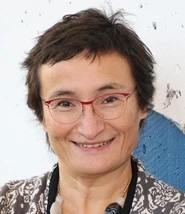
Dignum wrote: “All six sources exist; none were invented, and all have since been corrected in the ebook and future print runs.” A few of the erroneous references came from using AI to convert citations into a format known as BibTeX, she added.
Princeton University Press, which published the book in February, did not respond to requests for comment. The publisher did release an updated version of the ebook with corrections to several references.
“These were errors of carelessness, not fabrication. In a sense, is ironic (sic) to see AI being credited, with my own, human, errors,” she wrote.
Dignum admitted she used AI tools to “check phrasing and suggest alternative wording” and that this is “accepted academic practice.”
“The text itself is entirely my own and I take all accountability for it,” she wrote in the Aug. 27 post. “More broadly: it is impossible to prove a text is not AI-generated, since models can produce text resembling almost anything. Such accusations are easy to make and nearly impossible to refute, which is exactly why they should be treated with caution, not as evidence in themselves.”
What level of AI use in academic writing is acceptable is unclear, said David Resnik, a bioethicist at the National Institute of Environmental Health Sciences. The issue in general is in “ethically murky ground,” he added.
Retraction Watch received similar claims by email in March and then in July and August this year. The person who sent the latter claims used an alias and declined to provide their real name. They denied contacting the university or Dignum but said they contacted the book’s publisher, some academic journals and other data sleuths about the issues.
“Whistleblowers are a mixed blessing,” Resnik said. “They can do a lot of good when they reveal illegal or unethical research practices. But they can also do a lot of bad when they are going after things that are maybe minor concerns.” Institutions receiving reports from whistleblowers must follow up, establish committees and investigate, he added. “Lots of hours of time can be spent following up a complaint that may turn out to be fairly inconsequential,” he said.
Like Retraction Watch? You can make a tax-deductible contribution to support our work, follow us on X or Bluesky, like us on Facebook, follow us on LinkedIn, add us to your RSS reader, or subscribe to our daily digest. If you find a retraction that’s not in our database, you can let us know here. For comments or feedback, email us at [email protected].