S.H. Gebrechorkos et al./Nature 2025
Nature has retracted a paper on the atmosphere’s role in the severity of droughts around the world after the authors discovered they made a coding error that skewed their measurements. The authors say they’ve already written a revised version of the paper.
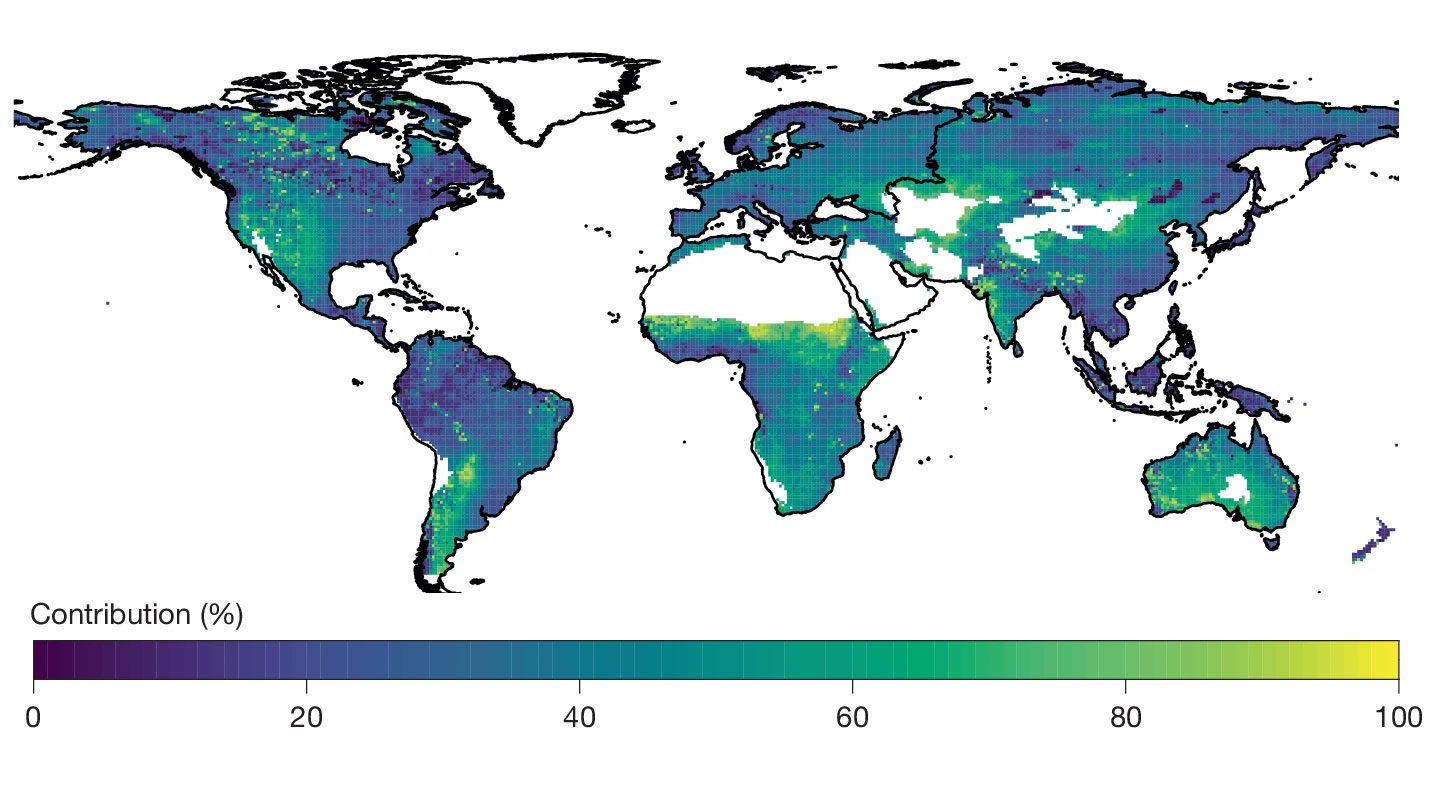
The article, published in June 2025, found an increase in “atmospheric thirst,” or atmospheric evaporative demand — a measure of how much water the atmosphere draws from rivers, lakes, soil and so on — has exacerbated the severity of droughts by about 40%. The New York Times covered the work, claiming the study found atmospheric thirst “played an even bigger role than previously thought” in drought severity. The paper has been cited 337 times, according to Clarivate’s Web of Science.
But the authors discovered “a calculation error” that was “not related to our data or methodology, but a coding error,” lead author Solomon Gebrechorkos told Retraction Watch in a statement sent by the University of Oxford in England. Of the 11 authors on the paper, three, including Gebrechorkos and senior author Simon Dadson, are affiliated with the university.
According to the September 2 notice, the coding issue was “a timestepping error” that resulted in dates that were not “properly parsed when subsetting the data.” In addition, values based on an earlier version of an evaporation model “were inadvertently used” in a figure, the authors didn’t use area-weighted grid cells to calculate global averages and “it was not clearly explained how masking was applied in calculations,” the notice states.
The errors “changed the percentages reported, but none of the paper’s conclusions are affected,” Gebrechorkos said in the statement. “The new number will be slightly lower but the conclusion remains the same: that it is reasonable to conclude that global warming likely contributed to exacerbate global drought severity.”
The study’s results coincided with national irrigation patterns and smaller studies the authors said were “limited by the quality of available global data.”
“Although the authors are willing to correct and clarify the above matters, given the scope of the necessary corrections and the need for additional revision and peer review, the authors have decided to retract the paper and to resubmit a fully revised and corrected version for peer review,” the retraction notice reads.
Nature issued an expression of concern for the paper on May 14. “We have invited the authors to submit a new manuscript with appropriate/corrected calculations, but this is yet to be submitted,” Karl Ziemelis, Chief Applied and Physical Sciences Editor at Nature, told us. He also noted the submission would be treated independently from the now-retracted paper.
The researchers have “already prepared a revised manuscript incorporating additional datasets, and we’ve thoroughly checked our code to prevent similar errors going forward,” Gebrechorkos said in the statement.
“My team’s new research brings clarity to the dynamics of drought,” Gebrechorkos wrote in an article for The Conversation published on the same day as the Nature paper.
According to the peer review report published with the paper, the two reviewers initially had several questions and critiques of the manuscript, although none was related to the issues cited in the retraction notice. Referee #2 questioned the initial manuscript’s novelty, writing “I am asking myself if this paper is worth a publication in Nature, instead of a climate-based journal.” But following revisions, the same reviewer wrote, “I am positively surprised by the new version of the manuscript,” concluding “the paper is now ready, in my opinion for publication.”
The retraction marks the first for any of the authors, according to the Retraction Watch Database.
In December, Nature retracted a paper projecting high costs of climate change following criticism of its methodology. This retraction marks the seventh for the journal this year.
Update, Sept. 2, 2026, 12 pm ET: After publication we received a reply from the author stating the new number will be “slightly lower” than the original estimate. The response has been added to the fifth paragraph above.
Like Retraction Watch? You can make a tax-deductible contribution to support our work, follow us on X or Bluesky, like us on Facebook, follow us on LinkedIn, add us to your RSS reader, or subscribe to our daily digest. If you find a retraction that’s not in our database, you can let us know here. For comments or feedback, email us at [email protected].