A Texas court has dismissed a lawsuit by a biochemist accused of research misconduct who claimed her former institution violated her due process rights during its investigation.
Sonia Melo sued The University of Texas MD Anderson Cancer Center in Houston in 2025, alleging the institution failed to follow its policies during a misconduct investigation into her work. MD Anderson found in May 2024 Melo had engaged in research misconduct while a postdoctoral fellow between 2012 and 2014, according to court documents.
Attorneys for MD Anderson requested a judge dismiss the suit in February, arguing the institution is a governmental entity entitled to sovereign immunity that protects it from lawsuits seeking money. Under Texas law, public hospitals are shielded from most suits by immunity rules. Some loopholes for medical negligence exist, such as when medical equipment harms patients.
In a one-page order issued April 20, Judge Lee Kathryn Shuchart with Harris County’s 61st District Court granted MD Anderson’s plea. Shuchart did not provide a reason for the decision. She dismissed Melo’s suit with prejudice, meaning the case cannot be refiled.
Melo, now at the University of Porto in Portugal, told Retraction Watch the case is not closed. She has appealed the decision to the Texas Judicial Branch 15th Court of Appeals.
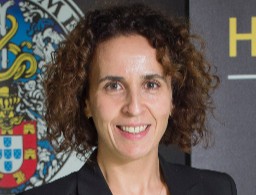
“The recent dismissal was not based on an examination of the factual merits of the claims, nor was it a finding that MD Anderson’s actions were proper,” she told us. I continue to stand behind the concerns raised in my petition and remain committed to pursuing appropriate legal review.”
MD Anderson and an attorney representing the institution did not return messages seeking comment.
MD Anderson began investigating Melo’s work in January 2019 after receiving allegations of research misconduct in a 2014 paper in Cancer Cell. An investigation committee substantiated the claims in 2024, and MD Anderson barred Melo from employment at MD Anderson, performing research there and receiving research-related funding directly or indirectly from the institution, according to court records.
In August 2025, Cancer Cell marked the paper with an expression of concern about “the integrity of several figures in the publication.” The notice details several duplicated and relabeled images found in the institution’s probe, and notes that MD Anderson “concluded there are no authentic, original, and uncontested data to verify the results presented in the publication.”
The notice states Cancer Cell editors are reviewing the concerns and will update the scientific community with their conclusion.
A spokesperson for Elsevier told us the publisher could not comment on the ongoing investigation.
Melo has denied wrongdoing in the case. In her lawsuit, she claimed the institution deprived her of due process rights by failing to follow its research misconduct policy. She also claimed MD Anderson closed a previous probe into the same concerns about her work following anonymous allegations on PubPeer. An internal inquiry in 2016 “confirmed that all original source data for the Cancer Cell manuscript were available and properly documented,” and “no further action was warranted,” according to her lawsuit.
We previously covered Melo losing an early career grant in 2016 following the retraction of one of her papers in Nature Genetics. At least five other papers by Melo have received corrections, including in Cancer Cell, two papers in Nature and two articles in PNAS.
Like Retraction Watch? You can make a tax-deductible contribution to support our work, follow us on X or Bluesky, like us on Facebook, follow us on LinkedIn, add us to your RSS reader, or subscribe to our daily digest. If you find a retraction that’s not in our database, you can let us know here. For comments or feedback, email us at [email protected].
This is just my personal opinion after seeing/reading so many misconduct cases. If the accused is really innocent, then why not spend the energy and money by redoing the whole research that have led to that publication and prove once and for all that you are indeed innocent? and that the error(s) detected was(re) not due to misconduct?
How would that work? We have to take many aspects of experimental work on faith–we don’t get to watch the experiments being done. Once there is credible reason to think someone misrepresents their data, how could they redeem themselves by simply providing more data?
If you browse PubPeer you will fairly quickly find reports where the authors of the challenged data provided new “clean” data which proved to be just as false as the originals. A common case (because it’s easy to detect, I think, not necessarily because it’s intrinsically the most frequent) is that there are duplicate blots, and they are replaced with more duplicate blots. (It may be that groups who do this never were able to do the original experiments, leaving them in a bind when asked for replacement ones.)
One could imagine paying an independent lab to replicate, but that will often be impossible due to specialized expertise and/or limited materials. There’s only about three places in the world that could duplicate what my current lab is doing, and I doubt any of them would agree to do so for pay–they have their own research to do.
The accused have to redo the required research until the experts are satisfied. Not others.
Allowing crooks a redo just gives them an opportunity to better hide their tracks the second time, so when the case is entirely clear there should be no second chance.
Sweet! Now, this leads us to the following issue. How to make research institutions (Unis) to remove the accused (once the case is beyond any reasonable doubt), and replace them with new, fresh and young post-docs (pds). Fresh and young pds may lack the experience and publications, but there are many talented and honest ones. Hiring them pays back in the long run. The crooks almost always find their way back to research due to “Epstein effect”. Scientists with authority are not serious about kicking out the caught-frauds may indicate the ‘authority’ themselves are frauds at least in a subtle way that they are reluctant to take strict action(s)? And by not hiring them again elsewhere? Just makes me wonder…