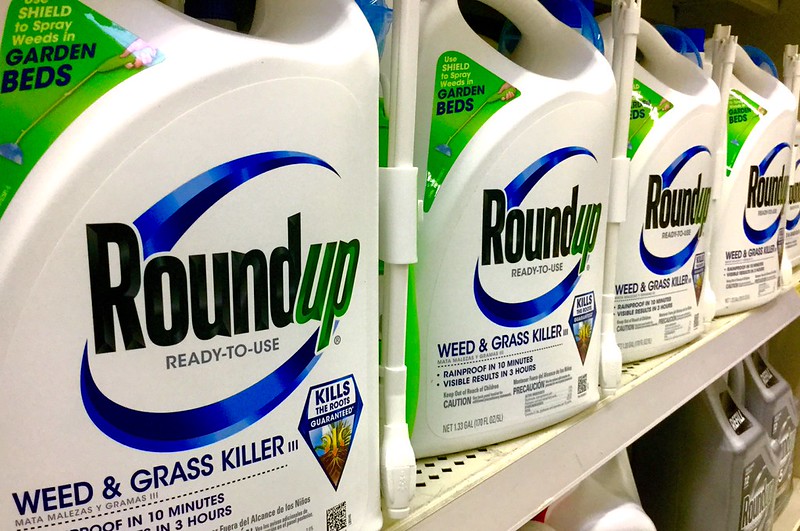
Tayor & Francis is investigating two papers about the weed killer Roundup following claims the articles were ghostwritten by the company that developed the herbicide.
The review comes after an Elsevier journal last year retracted a paper about Roundup linked to court documents that revealed company employees wrote the article but were not named as coauthors. Authors of the two latest papers under scrutiny stand by their work and deny any ghostwriting occurred.
Glyphosate, the active ingredient in Roundup, is highly contentious, with critics arguing the substance is carcinogenic and supporters contending the chemical is safe. The U.S. Supreme Court is currently weighing whether states can hold companies liable for failing to include cancer warnings on products containing the substance.
In December 2025, Regulatory Toxicology and Pharmacology retracted a 2000 review article about glyphosate by Gary Williams, then a pathologist at New York Medical College in Valhalla, and two colleagues. The retraction came eight years after emails surfaced in court that revealed employees of Monsanto, which developed Roundup, ghostwrote the paper.
Taylor & Francis is now looking into two more papers about glyphosate by authors named in the same court documents. A spokesperson for the publisher told Retraction Watch it “recently received information related to two papers in Critical Reviews in Toxicology:” A 2015 review article led by toxicologist Helmut Greim of the Technical University of Munich and a 2013 paper by toxicologists Larry Kier and David Kirkland that support the safety of glyphosate.
“As a result of this new information, these papers are currently subject to an investigation by Taylor & Francis’ publishing ethics and integrity team,” the spokesperson told us. “As with all such investigations, we are seeking to address the concerns raised promptly, and cannot provide any further detail until the investigation is complete.”
Authors of the two papers are mentioned in internal Monsanto documents released in 2017 during the course of a lawsuit alleging exposure to glyphosate caused people to develop non-Hodgkin’s lymphoma. In an email discussion about producing a scientific paper with outside scientists, a Monsanto employee wrote, “an option would be to add Greim and Kier or [David J.] Kirkland to have their names on the publication, but we would be keeping the cost down by us doing the writing and they would just edit & sign their names so to speak. Recall that is how we handled Williams Kroes & Munro, 2000.”
Over the last year, researchers Alexander Kaurov, Jason MacLean and Naomi Oreskes have urged Critical Reviews in Toxicology to request retraction of the two papers. Kaurov and Oreskes, a historian of science at Harvard University, previously analyzed the impact of the Williams study and wrote about their findings in Science and Undark. The scholars’ work led to the Williams retraction.
The Kier and Greim papers are arguably more consequential for glyphosate regulation than the Williams paper, said Kaurov, a researcher at Victoria University of Wellington in New Zealand.
“In regulatory use, the two often travel together,” said Kaurov, noting a 2018 document from the Environmental Protection Agency about glyphosate that cites both papers. The EPA maintains glyphosate is unlikely to be a human carcinogen.
In 2015, the World Health Organization’s International Agency for Research on Cancer classified glyphosate as “probably carcinogenic to humans.” Since then, regulators have used Greim’s paper to counter the finding and justify reapprovals of glyphosate, MacLean told us. Reliance on the article has “unduly skewed the regulation and adjudication of glyphosate’s cancer risks,” said MacLean, who has acted as an expert witness for plaintiffs in glyphosate litigation.
Christian Strupp, a coauthor of that article, told us he and his colleagues “stand by the scientific integrity of the publication, which has undergone professional peer review, and await clarification from the publishers as to any concerns raised.”
Kirkland, the coauthor of the 2013 paper, told us the article “was not ghostwritten.” He and Kier “state clearly” in the text they had “sole responsibility for the writing and content of the paper,” Kirkland told us in an email.
“As an editor of Special Issues for Mutation Research (at that time), I firmly believed it was important to ignore any suggestions from the glyphosate manufacturers in relation to our review process, our interpretation of results and our conclusions in order that our review would be independent,” he said.
Kirkland said Taylor & Francis informed the authors of some concerns with the paper, but the publisher has not provided details about the nature of the concerns. If asked for more information, he “will be happy to collaborate with their investigation,” he said.
A spokesperson for Bayer, which acquired Monsanto in 2018, provided a statement from the company calling the allegations about the papers “absurd.” The statement added a Monsanto employee, David Saltmiras, was a coauthor of the Greim paper and was “clearly identified as such” in the article.
“This appears to be yet another attempt by the litigation industry – this time specifically including a paid plaintiff expert from the Roundup litigation – to discredit sound science for its own purposes and financial benefit,” Bayer said in the statement.
The retraction of the Williams article remains the subject of intense debate. A group of 66 researchers have written an editorial calling for Regulatory Toxicology and Pharmacology to reverse its retraction of the paper. The group contends there was no evidence of scientific weakness in the paper that justified retraction.
Christopher Borgert, a pharmacology researcher who is leading the campaign, told us the rationale given for the retraction “is not defensible,” and the ghostwriting concerns about the paper are “flimsy.” Borgert said the editorial was originally accepted by Archives of Toxicology, but that he withdrew it. He said another journal has provisionally accepted it, but he declined to name the journal.
But Martin van den Berg, co-editor-in-chief of Regulatory Toxicology and Pharmacology, told us the journal would not be reversing the retraction. The decision to remove the paper was fully independent, based on the COPE guidelines. “Any suggestion otherwise should be considered mud smearing and bullying,” he said in an email.
Kaurov, MacLean and Oreskes responded to Borgert’s upcoming editorial in a post on their blog Reckoning Science that called the piece an “editorial that defends a ghostwritten paper by citing additional ghostwritten papers.”
Update, 6/15/26: This story was updated to clarify Oreskes had also requested retraction of the papers.
Like Retraction Watch? You can make a tax-deductible contribution to support our work, follow us on X or Bluesky, like us on Facebook, follow us on LinkedIn, add us to your RSS reader, or subscribe to our daily digest. If you find a retraction that’s not in our database, you can let us know here. For comments or feedback, email us at [email protected].
Glyphosate was removed from residential Roundup products in 2023. It is, however, still in agricultural products. Your phrase “Glyphosate, the active ingredient in Roundup,…” may be misleading to most people.
Here in the UK at least you can still buy glyphosate-based Roundup for domestic use as well as Roundup containing pelargonic acid or acetic acid as glyphosate replacements. So there is nothing misleading about what is said in the article.
Unless you live in America, where I cannot buy Roundup residential products with glyphosate.
The professor got the point on that one.
Your argument is that you point of view is the universal one, which is a false and selfish default POV.
But you knew that.
This opens up a can of worms in terms of how much of reach in our gov corporate America has in our gov in general. Michael R. Taylor is a high priced lawyer and was on Monsanto’s payroll for years. He also had leadership positions in the US Food and Drug Administration and United States Department of Agriculture. Much of his time in both was when independent studies where linking glyphosate to cancer and the ingredient was being researched in other countries. With Monsanto and Roundup being pushed out of some due to rising cancer rates after allowing Monsanto gmo seeds and roundup being introduced in their food supply. It took Bayer buying Monsanto before Roundup even got a carcinogen label put on it. Because Bayer is a foreign company and didn’t have deep ties to our gov. Something that seems to be shifting the other direction over the last few years…
Bayer did not and has not “put a carcinogen label” on glyphosate. They, like other science-based organizations, contend that it is not carcinogenic. Only trial lawyers and their hired-gun “scientists “ have determined it to be carcinogenic and they have convinced those on juries that it is – thus making millions for themselves and doing nothing to improve public health.
It’s good that this is being exposed, but it’s clear that it’s targeted because of controversy surrounding Monsanto.
Ghostwriting by industry is a widespread problem. Just think of all the “non-controversial” drugs, pesticides, etc. that are “not controversial” in part because the papers are never subjected to this level of scrutiny.
For all we know, whatever replaces Roundup might be even more questionable in this regard.
The practice has to be rooted out completely, not just in these obviously targeted cases.
I certainly wouldn’t drink it or get it on my skin, but there’s no scientific evidence it causes cancer.
You needed to put the defense of the paper within the first few paragraphs. The allegations of “ghost writing” when one author discloses that they work for the company is just propaganda. It’s a review paper that wasn’t retracted for misrepresenting the data. It’s damning of the state of academia. It should be published and rebutted if wrong. You can’t retract because you don’t trust them. It’s a review article!
*Please add a share that simply copies the permanent URL to the article.*
I don’t want to have to open my email and delete the big message it creates for me just to text someone an article link, and I have to switch browsers from limited Chrome to full Chrome to get the URL on Android, or else it gives me the front page instead of the permanent URL.
Mother jones has a good article on roundup uses in forestry.