Librarian finds ‘preposterous number’ of fake references in paper from Springer Nature journal

Gunnar Ridderström/Pexels

As a hospital librarian, Jessica Waite is typically successful at tracking down elusive articles for clinicians at Royal Hallamshire Hospital in England. So when a colleague couldn’t locate two references in a paper and asked for help, the librarian grew suspicious.

“These were recent references, which usually we have no problem finding,” Waite told us. “I looked at the issues of the journals where the article should have been, and there were completely different articles, so I immediately thought that the articles we had been asked to find were not real.”

The references were from an article exploring mental health integration after bowel diversion surgery published in Digestive Diseases and Sciences (DDS), a Springer Nature title. 

Continue reading Librarian finds ‘preposterous number’ of fake references in paper from Springer Nature journal

Publisher demands $500 from impersonated author to retract paper

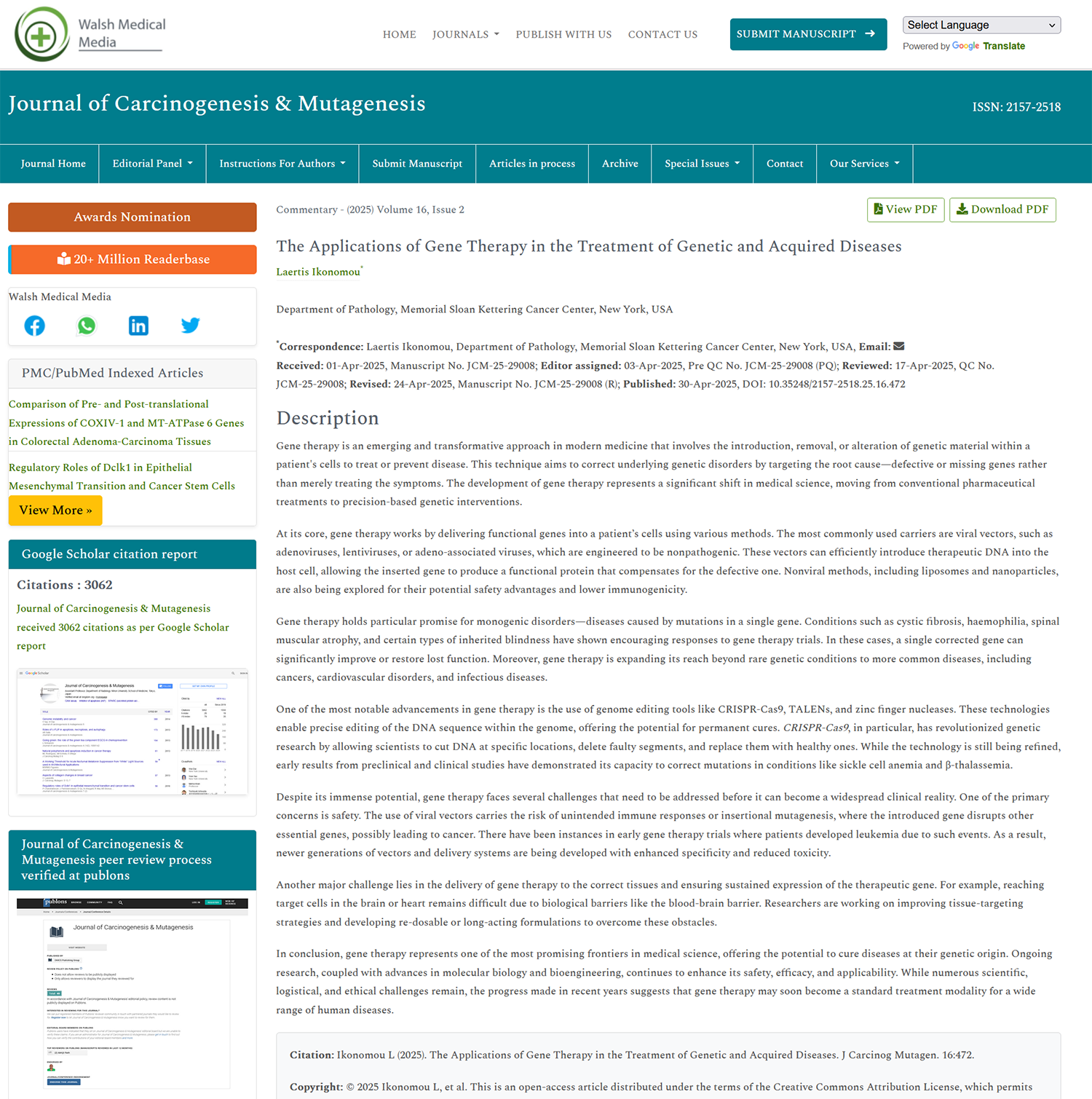
Last year, we wrote about a Walsh Medical Media journal that refused to withdraw an author’s paper unless he paid a fee — even though he didn’t write or submit the article. For one reader, some details of that story were familiar.  

Laertis Ikonomou, an associate professor at the University of Buffalo in New York, discovered last September he was listed as an author on a commentary he had never seen before that had been published in the Journal of Carcinogenesis & Mutagenesis. He immediately requested the journal remove the article, and, like our previous story, the journal demanded a fee to do so. But after a few exchanges, the journal just changed the author on the paper to a different name. 

The Journal of Carcinogenesis & Mutagenesis is one of 77 published by Walsh Medical Media. The publisher calls itself a “global leader” in open access publishing and, although it bills itself as a healthcare publishing company, has journals with specialties ranging from chemical engineering, coastal zone management, and intellectual property rights, as we have previously reported.

Continue reading Publisher demands $500 from impersonated author to retract paper

Controversial comet theory struck by two new retractions

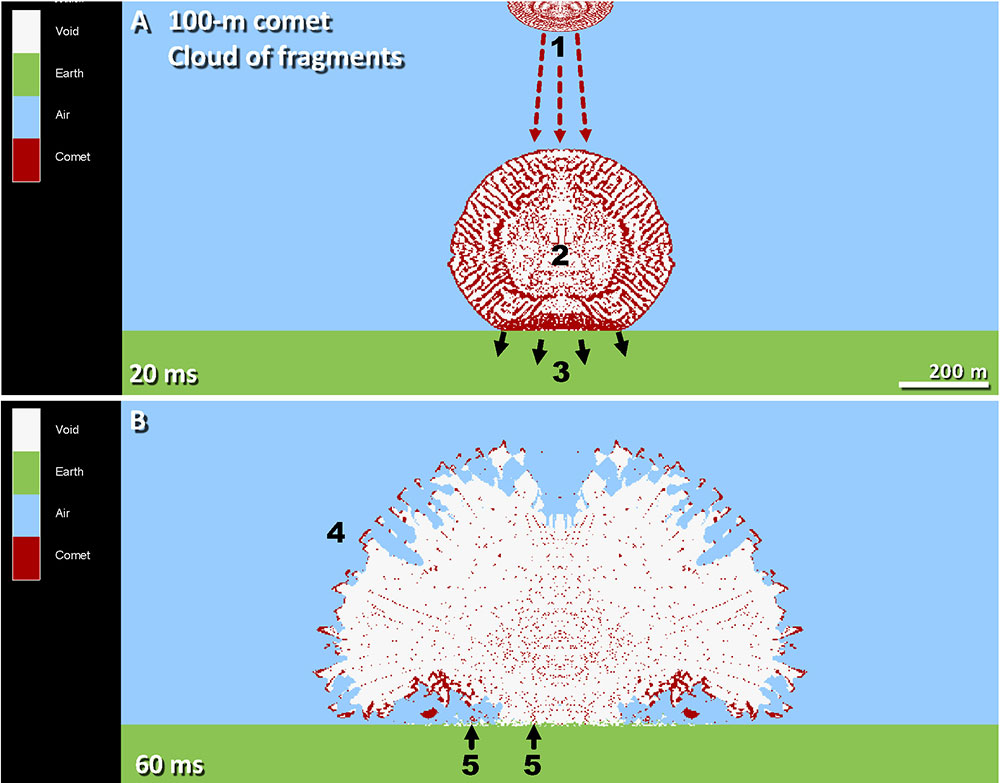
In a now-retracted paper, the authors report they found shocked quartz formed by an airburst from clouds of comet fragments that hit earth more than 12,000 years ago. Source

PLOS One has retracted two papers from the Comet Research Group, a controversial cadre of researchers who, according to their webpage, seek “to find evidence about comet impacts and raise awareness about them before your city is next.”

The same research group was also behind a September 2021 paper — published in Scientific Reports and covered by Retraction Watch here, here, and here — that claimed a cosmic airburst flattened the city of Tall el-Hammam 3,600 years ago, providing physical support for the biblical story of Sodom and Gomorrah. The widely publicized paper was retracted last April after mounting concerns from outside researchers about the methodology, interpretations and data in the article. 

The group’s two new papers focus on different aspects of the Younger Dryas Impact Hypothesis, which posits that a “disentangling comet” broke up in Earth’s atmosphere before plummeting to the ground, initiating a comet-driven cataclysm that leveled humans and mammoths and much else approximately 12,800 years ago.

Continue reading Controversial comet theory struck by two new retractions

A medical journal says the case reports it has published for 25 years are, in fact, fiction

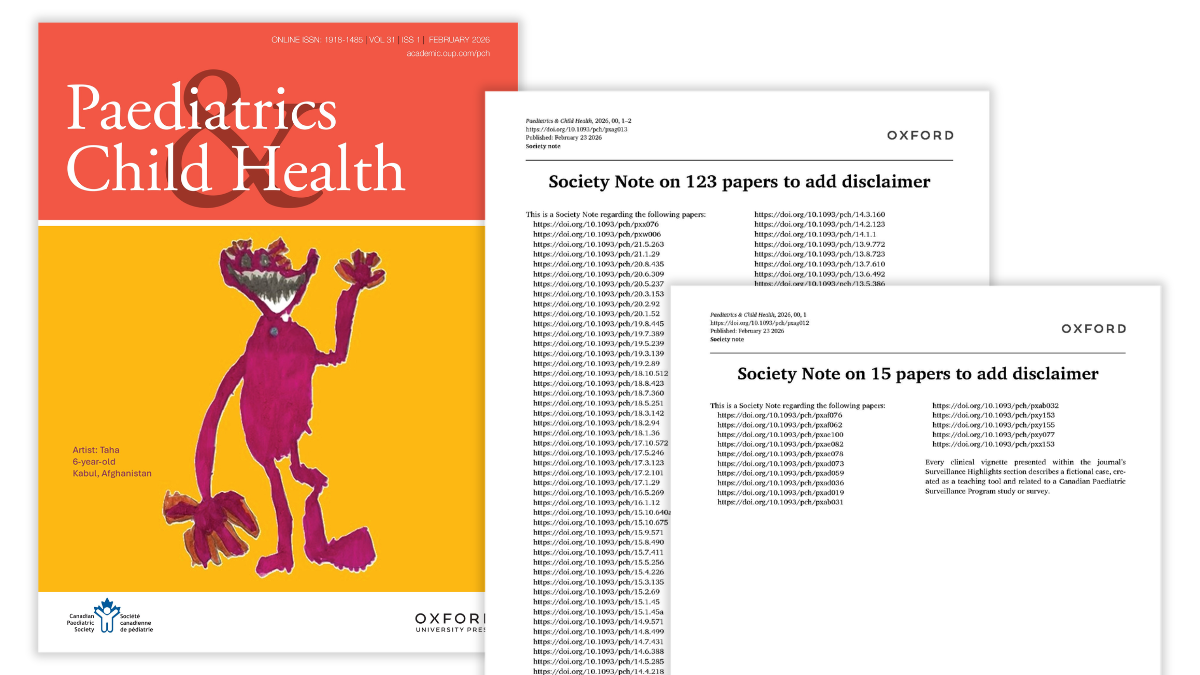
A Canadian journal has issued corrections on 138 case reports it published over the last 25 years to add a disclaimer: The cases described are fictional.

Paediatrics & Child Health, the journal of the Canadian Paediatric Society, has published the cases since 2000 in articles for a series for its Canadian Paediatric Surveillance Program. The articles usually start with a case description followed by “learning points” that include statistics, clinical observations and data from CPSP. The peer-reviewed articles don’t state anywhere the cases described are fictional.

The corrections come following a January article in New Yorker magazine that mentioned one of the reports — “Baby boy blue,” a case published in 2010 describing an infant who showed signs of opioid exposure via breast milk while his mother was taking acetaminophen with codeine. The New Yorker article made public an admission by one of the coauthors that the case was made up. 

Continue reading A medical journal says the case reports it has published for 25 years are, in fact, fiction

Preprint server removes study attributing increased infant mortality to vaccines

Alachua County/Flickr

A preprint server has withdrawn a study that suggested children vaccinated in the second month of life are more likely to die soon after when compared to those who did not receive the vaccinations. 

The paper, posted at Preprints.org last December, was written by Karl Jablonowski and Brian Hooker of Children’s Health Defense, a New Jersey-based nonprofit organization founded by U.S. Secretary of Health and Human Services Robert F. Kennedy Jr. The group is known for anti-vaccination advocacy.

Jablonowski and Hooker conducted their analysis using a dataset provided by the Louisiana Department of Health. It included 1,775 children who died before turning 3 years old between 2013 and 2024 and had a record of being vaccinated. The preprint suggested children who received six recommended vaccinations in the second month of life were more likely to die in their third month compared to those who had not received the vaccinations. 

Continue reading Preprint server removes study attributing increased infant mortality to vaccines