On Feb. 18, a researcher in Italy sent a disgruntled email to the editorial board of a Wiley tourism journal. Salvatore Bimonte had waited more than a year for his manuscript to be peer-reviewed, he complained, and then months more while the editor-in-chief was “actively working on” the revised version Bimonte submitted.
When Bimonte’s paper was finally rejected after 18 months — for reasons such as the topic not being “highly suitable” and the work not being submitted in the form of a case study — the researcher felt compelled to vent his frustration to the entire editorial board of the International Journal of Tourism Research (IJTR).
“Maybe, I would have been treated better if I had cited some of the editor in chief’s papers,” Bimonte, of the University of Siena, wrote in boldface in the email, which we have seen. Two days later, an unhappy editor at the journal quit, Retraction Watch has learned.
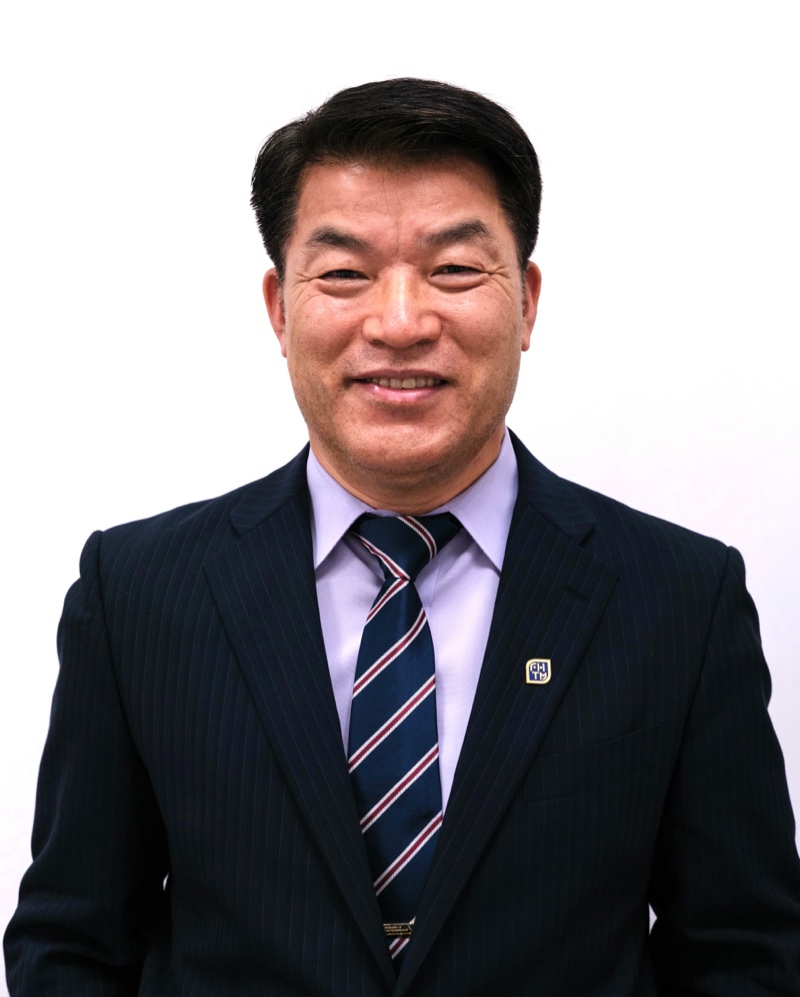
Since May 2023, the editor-in-chief of IJTR has been Timothy J. Lee. A professor at Macau University of Science and Technology in Macao, Lee promotes that he’s among the world’s top-cited researchers in 2025, and the number one citation-reaper in the category “Health & Wellness” on Google Scholar. He is a member of the editorial boards of “12 leading academic journals” and was the editor-in-chief of Taylor & Francis’ erstwhile International Journal of Tourism Sciences.
For several years before Lee took the helm at IJTR, his research — on topics like the “the economic value of urban forest parks” and the “influence of historical nostalgia on a heritage destination’s brand authenticity” — received a small, but steady, trickle of citations in the journal he now oversees.
In 2024, that trickle became a gushing river.
A Retraction Watch analysis of data from Clarivate’s Web of Science shows that of the 186 papers the IJTR published that year, 134, or nearly three-fourths, cited Lee’s work, often multiple times. The editor’s outsize influence continued through 2025 and has held up so far this year as well. Excluding self-citations, a total of 55% of the papers published in IJTR from 2024 until today contain references to Lee’s research. That’s a “staggering” number, according to Alberto Baccini, a colleague of Bimonte at the University of Siena, who studies publication metrics. Baccini said he had not seen a similar citation pattern at any other journal.
When first reached for comment, Lee told us that, “because the journal has been in transaction [sic] for a couple of years, the stat figures are not particularly stable or objectively reliable.”
“Just do not judge numbers based on a very subjective sample population over a short period of time,” he added.
After we sent him our full analysis, Lee explained that since he was “one of the very few editors of top-tier academic journals in the tourism discipline,” he had been invited to give lectures at “many mainland Chinese universities.”
“Over the last 2 to 3 years, half of all submitted papers came from China, and many were of high quality and suitable for publication,” he added. “Although I do NOT tell them to do so in an invited lecture, there was a strong myth among many Chinese researchers that, to be accepted, they had to cite papers published by the journal’s editor, and many papers published by Chinese authors cited my articles.”
A Wiley spokesperson told us the publisher is aware of the concerns about citation patterns at IJTR. Wiley has “introduced an additional layer of screening in this journal to evaluate papers before proceeding to publication,” the spokesperson said by email. “We are working closely with the editor-in-chief to ensure that best practices are being followed.”
Many of the authors who cited Lee are indeed based in China, often at Lee’s own institution, the Web of Science data show. But dozens work in other countries, including South Korea, United States, Malaysia, England and Turkey. All told, 107 of the 218 citing papers, or 49%, published from 2024 until today do not include an author in China.
Baccini said because the citations go to Lee’s work, wherever it may be published, the editor is the primary beneficiary, “not the journal.” While there is no evidence Lee coerced anyone to cite his work, Baccini added, such “evidence is nearly impossible to obtain because peer review is a completely secret process. Unless authors come forward to declare they were pressured to cite the editor-in-chief, the scientific community remains in the dark.”
For Juan Gabriel Brida, an editor at IJTR and an economist at Universidad de la República in Montevideo, Uruguay, Bimonte’s email became the last straw. He resigned on February 20 over what he called Lee’s “poor management” of the journal. Lee “doesn’t involve other members of the editorial board, and articles sit for over a year before receiving reviews,” Brida told us.
Lee did not comment on Bimonte’s case, but said Brida and another editor who resigned before Bimonte’s email had “their own personal reasons to resign. They are not as fast as I am. I am finalising many papers this month instead of waiting for them to complete the process. Also, I plan to recruit another 5 new associate editors in a couple of months; almost 10 very good candidates worldwide applied. Once they are recruited, we will achieve very good teamwork and harmony among us.”
“I have a monthly meeting with Wiley staff at the end of each month to update and discuss current issues,” Lee added. “There has been a major change to the submission and review system at my journal over the last 12 months, which has also caused delays in the process. The number of submitted papers has almost tripled in the last 3 years.”
According to a machine translation of a press release from Macau University celebrating Lee’s appointment to editor-in-chief, the professor’s “stated goal” was “to elevate the journal’s ranking to Q1 in [Clarivate’s Journal Citation Reports] within the next three years, with an impact factor exceeding 10.”
Lee “encourages faculty and students of the Macau University of Science and Technology’s School of Hotel and Tourism Management to cite IJTR articles as extensively as possible in their academic works and to promote the journal to colleagues and students worldwide,” the press release stated.
To Baccini, the case illustrates what the publish-or-perish mantra has done to science: “This system has transformed the role of editorial boards – and especially editors-in-chief – from gatekeepers for the scientific community into operatives for publishers, rewarded for boosting metrics.”
Like Retraction Watch? You can make a tax-deductible contribution to support our work, follow us on X or Bluesky, like us on Facebook, follow us on LinkedIn, add us to your RSS reader, or subscribe to our daily digest. If you find a retraction that’s not in our database, you can let us know here. For comments or feedback, email us at [email protected].
Sadly, editorial malpractice is very common in academia and is often overshadowed by author-centric misconduct. Another example from “international journal on mechanical sciences”:
https://doi.org/10.1016/j.ijmecsci.2023.108467
I’m sure everyone appreciates their parents, but writing a paper in their name and citing oneself 194 times in a single paper is excessive and reflects a clear misuse of academic power.
That is “impressive.”
But your comment helps me understand the context of comments in a desk-reject decision by this same individual on my only submission to IJMS: “Broaden and update the literature review to better connect to the current effort in the field in the context of mechanical sciences; for papers like this one we expect no less than 90 journal papers including 25 recent ones (2024->) to be critically discussed. Do not cite text books or manuals.”
Seems I dodged a bullet not having a paper possibly get published there…
Another journal and editor to investigate for similar publication issues is Clinical Anatomy. Many anatomists will no longer publish in the journal because of editorial concerns.
I read this article and was not surprised by what was written here. I submitted and article to the same journal. We waited more than 1 and a half years and then was told after emailing the editor in chief that the journal was transitioning hence the delay. When we were told we need to do revisions after peer review, we did this. We were then also sent a list of authors and studies we should cite. Lee was there and a few other Chinese names. And this communication came directly from Lee. After revisions amd working on what we were asked to improve in it took another few months and then the paper was rejected.
Please make the communications available to RW. They can update the story with your information.
I have same issue from this journal. I submitted a paper, manuscript central, later it transformed to wiley portal. Waited for review one year, got very encouraging comments from reviewers and editors with list of references to cite, submitted corrections, but after wait of another year paper rejected without reviewer comments. Editor rejected the paper stating that the title is no suitable for this journal. After 2 and half year with 3rd stage of review he realized that this paper is not suitable. Highly disappointing
I had published several articles under the previous editor. However, the moment this character took over, communication between the journal and the author stopped. I contacted this ‘editor’ on numerous occasions to inquire about articles I had submitted over the course of several months to no avail. After nearly one full year, I had enough and withdrew all three. Unfortunately, this story is not an isolated case. I wish RW dug much deeper into what is going on in ‘social sciences’ journals, including business management, entrepreneurship, tourism and hospitality.
i had the same same experience with this particular editor. the EIC before him was fantastic he really did lots of good things to this journal. Once this EIC took over lately the journal went down hill.
I exposed his practices on TRINET, the Tourism Research Information Network. Glad he is getting more exposure. Such practices are unconscionable.
We submitted our manuscript exactly 25 months ago. The first feedback arrived after approximately a year, and the requested revisions were only minor. We submitted the revised version completely and on time. Despite this, 25 months have now passed in total, and there is still no progress.
This is not just a ‘lengthy process.’ 25 months is an extraordinary delay for an academic paper. During this time, our data has become outdated, and the contextual relevance of our topic has weakened. Furthermore, our academic planning has been severely disrupted.
Despite our repeated attempts to reach out, we have received no response. The current status of the manuscript remains completely unknown. Failing to reach a decision on a paper for 25 months while completely cutting off communication is a serious issue.
Reasonable timeframes, transparency, and editorial responsibility should be the fundamental principles of scientific publishing. Waiting 25 months is simply unacceptable.
Publishers like Wiley need to step in and take concrete actions rather than just observing. In cases of such extreme editorial dysfunction, the publisher must immediately intervene and temporarily revoke the current Editor-in-Chief’s control over the delayed backlog. An independent or interim editorial team should be assigned to expedite final decisions on these severely delayed manuscripts.
Furthermore, the publisher should offer affected authors transparent updates and the option for an expedited transfer to another suitable journal within their portfolio, honoring the peer-review that has already been completed. Moving forward, publishers must implement automated oversight mechanisms that trigger direct publisher intervention when an editor holds a paper for an unreasonable duration without communication.
> Baccini said he had not seen a similar citation pattern at any other journal.
It is a pity that such findings do not get the attention they deserve. Two years ago, Maarten van Kampen discovered exactly the same pattern elsewhere.
https://pubpeer.com/publications/169AF21B0B0F7193CE167C31456770
Thanks for the link. Although I usually browse PubPeer, I was not aware of this case.
The current situation surrounding the International Journal of Tourism Research (IJTR) should not be framed merely as an individual editor’s misjudgment. Rather, it reflects a broader and deeply troubling pattern involving the strategic use of editorial authority to inflate citation metrics through coordinated networks of affiliated researchers. The issue extends beyond one editor; it raises serious concerns about a group of scholars who have systematically benefited from an arrangement in which editorial influence appears to have been leveraged to increase personal citation counts.
Evidence suggests that researchers who frequently collaborate with or are institutionally aligned with the editor have disproportionately cited his work and, in return, appear to have benefited from expedited review and publication processes. If this pattern is substantiated, it represents not only an abuse of editorial power but also a collective distortion of academic evaluation systems. A thorough and independent investigation into the citation patterns of those most closely connected to the editor is therefore essential. Accountability should not stop at the level of the editor-in-chief; it must also extend to those who knowingly participated in and benefited from such practices.
The explanation offered by the editor—that heightened citation rates stem from widespread misconceptions among Chinese scholars—lacks credibility and is deeply problematic. Many editors worldwide are highly active, give invited lectures, and maintain strong international visibility. Yet similar citation anomalies do not routinely occur in their journals. To suggest that Chinese researchers disproportionately cited the editor’s work due to a “myth” about acceptance requirements risks unfairly undermining the academic integrity of an entire national scholarly community. Such a claim warrants formal clarification and, if necessary, an official apology. Responsibility for citation patterns in a journal ultimately rests with its editorial leadership, not with generalized assumptions about specific author populations.
To understand why such practices emerge, we must examine the structural incentives shaping contemporary academia. Increasingly, academic success is quantified through publication counts, citation metrics, journal rankings, and designations such as “Highly Cited Researcher.” In environments where institutional rewards—including financial incentives—are directly tied to citation performance, the temptation to form mutually reinforcing citation networks becomes significant. When editorial authority is combined with metric-driven evaluation systems, the risk of strategic citation inflation rises sharply. In such contexts, citation cartels or informal alliances may emerge, distributing reputational and material benefits among participants. The fact that some scholars achieve elite citation status under these conditions calls for careful scrutiny of how such metrics were accumulated.
Concerns regarding editorial ethics of IJTR extend beyond citation patterns. Numerous authors have reported prolonged editorial delays—sometimes exceeding one or two years—followed by abrupt rejection decisions after revision. In contrast, manuscripts associated with particular networks appear to move through review unusually quickly. While delays can occur during journal transitions, persistent asymmetry in review speed raises legitimate questions about fairness and conflict of interest. Editorial discretion must never be exercised in a manner that advances personal academic interests.
More broadly, this case illustrates a systemic vulnerability in contemporary scholarly publishing. When editors are incentivized—implicitly or explicitly—to boost journal metrics, and when academic careers depend heavily on quantitative indicators, the traditional role of editors as impartial gatekeepers risks being replaced by a metric-driven managerial function. Such transformation undermines trust in peer review, disadvantages independent scholars, and damages the credibility of the field.
Despite the fact that these concerns were already raised publicly in 2025, the citation inflation practices associated with Timothy Lee and a network of closely aligned researchers do not appear to have ceased. The persistence of these patterns suggests a troubling assumption—that the controversy will eventually dissipate without meaningful consequences. Meanwhile, the academic integrity of our field continues to erode. Scholars who conduct their research with rigor, independence, and ethical commitment bear the cost of a system distorted by strategic citation practices and unequal editorial treatment.
Some argue that such matters should be left to universities or affiliated institutions to investigate, and that public academic discourse is not the appropriate venue for judgment. Yet one must ask: how would universities or institutions ever be compelled to act if the scholarly community remains silent? Institutional review mechanisms are often reactive rather than proactive. Without collective awareness and principled engagement from within the field, serious ethical concerns risk being normalized through inaction.
The responsibility to safeguard the integrity of tourism research does not rest solely with publishers or universities. It rests with all of us who participate in and benefit from this academic community. When structural incentives reward citation accumulation and editorial influence can be strategically leveraged, silence becomes complicity. Ethical standards are not self-enforcing; they depend on the vigilance and courage of scholars who are willing to speak when norms are compromised.
This moment therefore calls for collective intellectual responsibility. It calls for transparent dialogue, independent scrutiny, and principled solidarity among researchers who value fairness over opportunism. Our field’s credibility—and the trust placed in it by students, institutions, and society—depends on our willingness to confront uncomfortable truths. Ethical awareness without action only enables further erosion of integrity. It is time for conscientious scholars to stand together in defense of transparent, fair, and accountable academic practice.
Thank you, ChatGPT, for your perspective. In the future, brevity would be appreciated.
I don’t think this was written by ChatGPT but translated through ChatGPT. A good pespective.